When brands work with a knitwear factory for the first time, the most confusing thing isn't "which factory can do it" but "what kind of service do I need."
What's the difference between a "sweater OEM factory" and a "sweater ODM manufacturer"? Are "custom sweater by sample" and "custom sweater by image" the same thing? How do "full-package production" and "pattern making" connect?
If these concepts aren't clear, sending out inquiries can easily lead to a factory quotation that doesn't match what you actually need.
This article starts from the brand's practical needs and systematically sorts through common cooperation models — OEM factory, ODM manufacturer, private label, custom by image, custom by sample, sample replication, pattern making, full-package production, and bulk customization — to help you find the model best suited to your current stage.
Step 1: Understand What OEM and ODM Mean for Your Knitwear Order
The first step for a brand working with a knitwear factory is determining the cooperation model. The two most common are sweater OEM and sweater ODM.
1.1 Sweater OEM Factory — You Provide the Design, the Factory Produces
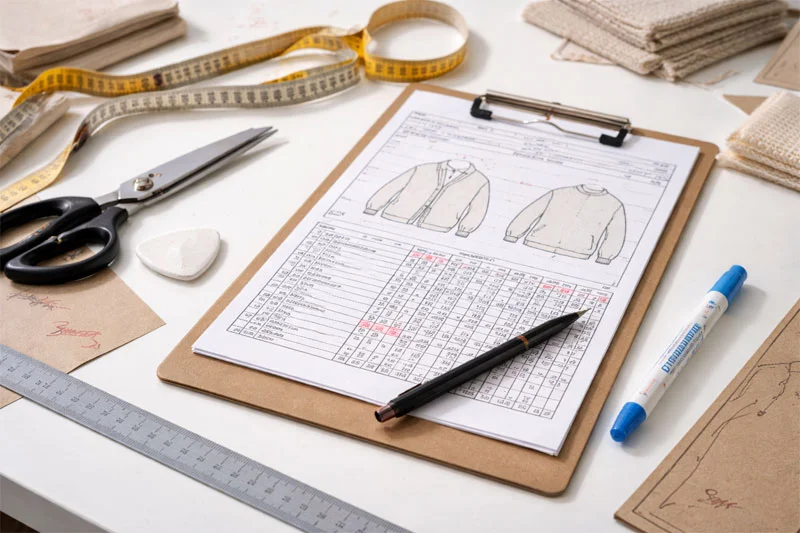
OEM (Original Equipment Manufacturing) means the brand provides a complete design package — style drawings, size spec sheet, and Tech Pack — and the factory produces according to your specifications.
Suitable for:
- Brands with their own design team that need an OEM factory for production
- Those with clear requirements for fit and craftsmanship who don't want factory modifications
- Those with existing samples or pattern-making foundation, only needing bulk production
OEM advantages: Complete control over the product; fully independent design style.
OEM considerations: Requires complete design documents. For a detailed Tech Pack checklist, refer to What Information Is Needed for Sweater Development by Image? Tech Pack Checklist.
1.2 Sweater ODM Manufacturer — The Factory Develops from Scratch
ODM (Original Design Manufacturing) means the factory develops products based on the brand's style positioning, reference images, and requirements, using their own pattern room and yarn resources. The brand selects and adjusts from the factory's proposals.
Suitable for:
- Start-up brands or new category expansion without a full team yet
- Those with a design direction concept but lacking implementation capability
- Those wanting to quickly produce styles by adapting existing patterns
ODM advantages: Saves the brand's own development investment; factory has existing patterns and yarn resources for higher efficiency.
ODM considerations: Recommend clarifying intellectual property ownership to prevent the factory from supplying the same style to other brands. For detailed OEM vs ODM comparison, refer to OEM Knitwear Processing vs ODM Sweater Customization.
| Comparison Dimension | Sweater OEM Factory | Sweater ODM Manufacturer |
|---|---|---|
| Design source | Provided by brand | Provided by factory/co-created |
| Brand control | ⭐⭐⭐⭐⭐ | ⭐⭐⭐ |
| Development cycle | 7–10 days for sampling | 10–15 days (including design discussion) |
| Minimum order quantity | 300 pcs | 300 pcs |
| Suitable brands | Medium-large brands with design teams | Startups or brands needing fast rollout |
2. Complete Process for Sweater Private Label Manufacturing
Private label (custom brand) means the factory produces according to the brand's style and craft requirements, then affixes the brand's hang tags, main labels, and care labels onto the finished garments, shipping them under the brand's own name.
The private label process typically follows:
- Style confirmation → Brand provides style images or reference images
- Sample development → Factory produces samples; brand confirms fit, material, and color
- PP sample approval → Confirm bulk consistency and dimensional accuracy
- Bulk production → Scheduled production per delivery timeline
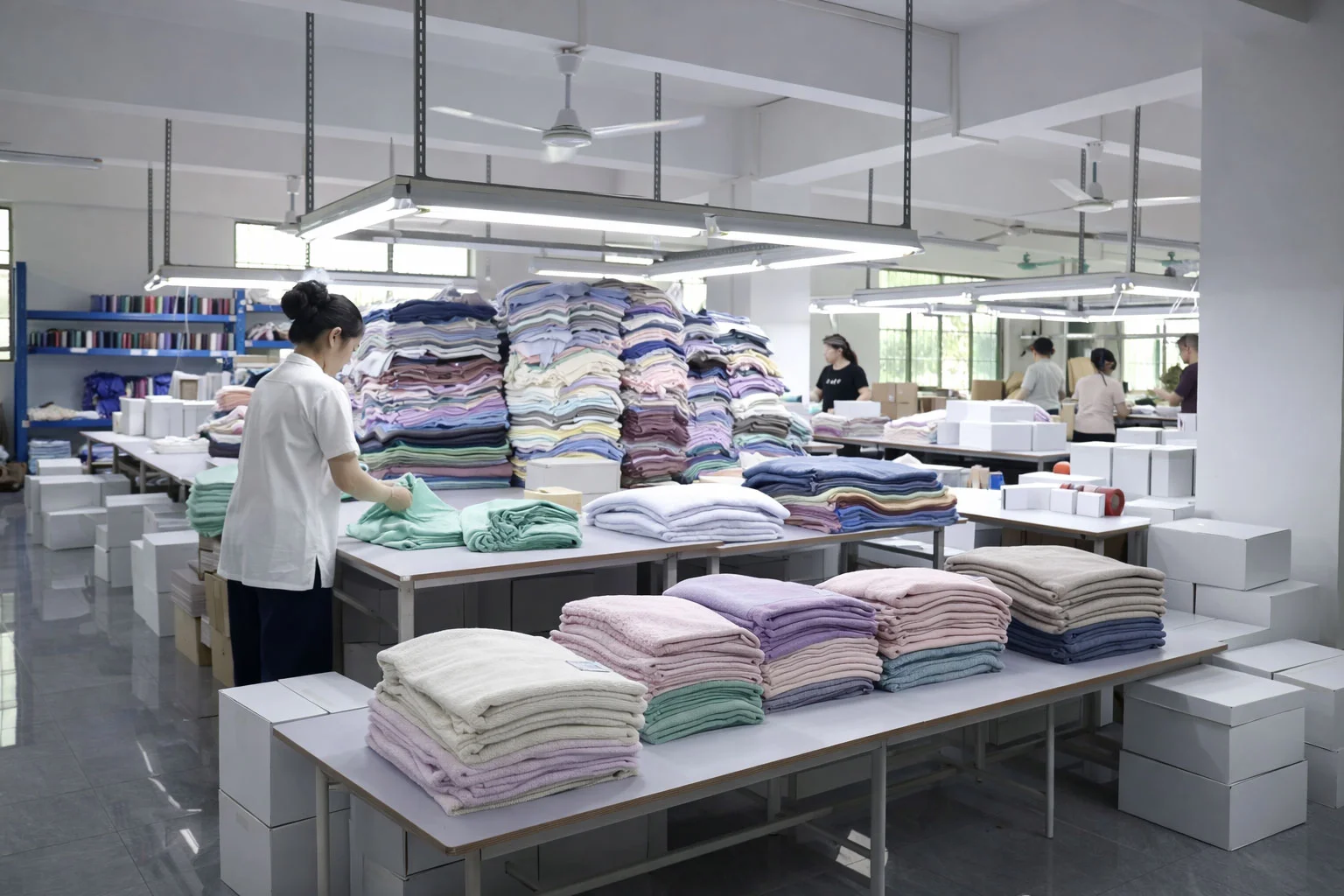
- Private label packaging → Brand's hang tags, main label, care label, packaging bags
- Shipment & delivery → Delivered per the brand's export or domestic logistics requirements
The difference between private label and regular OEM lies in complete brand identity — from the product itself to the packaging, everything carries the brand's information. The consumer receives a "brand's own product."
For MOQ and delivery time questions, refer to Sweater Bulk Order MOQ & Production Cycle Guide.
3. Custom by Image vs Custom by Sample vs Sample Replication
These three look similar but differ in actual service content.
3.1 Custom Sweater by Image
The brand provides only rendering, style drawing, or reference image — no physical sample. The factory needs to interpret the design intent from the image and complete the process evaluation and sampling.
Best for: Brands with design inspiration but no physical sample yet.
Notes:
- The more detailed the images, the better — front, back, and detail annotations
- Best accompanied by size requirements and process descriptions
- The factory will offer yarn and process recommendations based on experience
3.2 Custom Sweater by Sample
The brand sends an existing physical sample to the factory, which reproduces it.
Best for:
- Wanting to replicate a specific style you've seen
- Having a standard sample and needing to verify if the factory can achieve equivalent quality
Advantages: The factory sees the actual garment — understanding of fit, hand feel, and craftsmanship is more accurate than from images, leading to higher sampling success rates.
3.3 Sweater Sample Replication
Sample replication is a special form of sample production — the brand provides a reference sample, and the factory needs to precisely replicate it, including fit, composition, hand feel, color, and detail craftsmanship.
Best for:
- Reordering existing best-selling styles
- Bringing samples from abroad and needing a local factory that can match the quality exactly
Difficulty: Sample replication is harder than development from scratch because the factory needs to determine internal process parameters without disassembling the sample. It's recommended to provide at least one 1:1 size spec sheet. For common issues at this stage, refer to Common Issues in Sweater Sampling & Communication Pitfall Guide.
4. Pattern Making and Full-Package Production
4.1 Pattern Making — The First Step from Design to Bulk
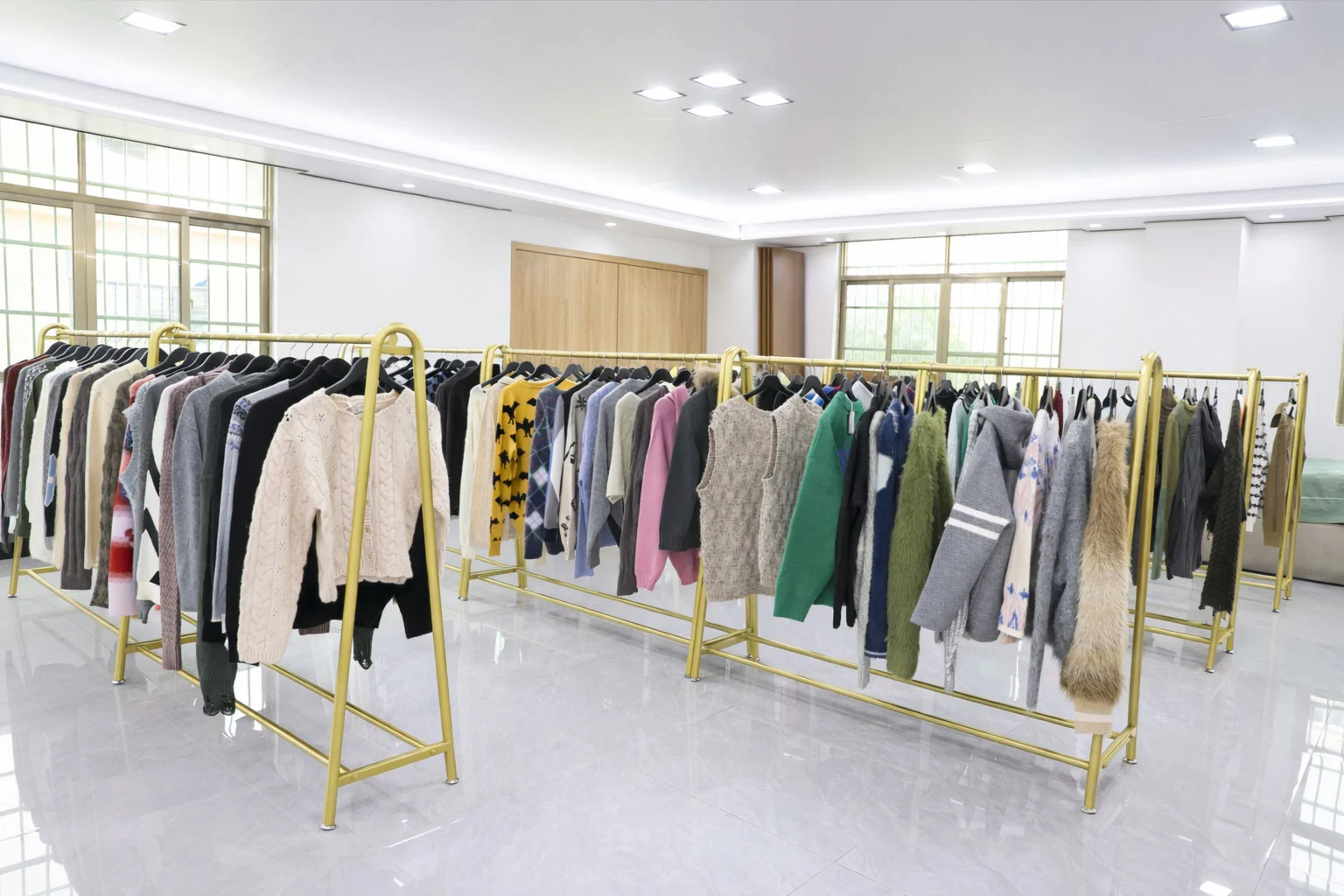
Pattern Making is the most critical step in the entire production process. A professional pattern-making factory provides:
- Yarn recommendations — Suggests yarn composition based on style and budget
- Gauge matching — Determines which gauge (3G–16G) best suits the effect
- Computerized pattern programming — Converts the design into a machine-readable pattern program
- Sampling — Knits the sample to confirm fit
For detailed gauge selection knowledge, refer to How to Choose 3G/5G/7G/12G/14G Gauge.
Many brands think "just get a pattern made" and that's it, but pattern making and bulk production are continuous — a good pattern determines the quality floor of bulk production. So it's recommended to confirm the bulk factory during the pattern stage.
4.2 Full-Package Production — The Most Hassle-Free Option
Full-package production means the factory handles all material procurement (yarn, accessories, packaging) and production — the brand only provides design and process requirements and receives the finished product.
Advantages of full-package production:
- No need to source yarn yourself — Just specify requirements (e.g., "combed cotton" or "Merino wool"), and the factory procures
- No need to worry about accessories — Zippers, buttons, elastic thread, ribbing — the factory provides everything
- Turnkey delivery — The brand only needs to receive the finished product
Full-package considerations:
- Yarn cost is the biggest expense; ask the factory for an itemized price (yarn unit price × quantity)
- Recommended to confirm the yarn during sampling and keep a yarn sample
- Confirm the packaging plan before bulk production (hang tags, main label, care label, bag, carton)
For detailed cost structure breakdown, refer to How Are Sweater Processing Fees Calculated? Knitwear Factory Cost Structure.
5. Bulk Customization and Brand Sweater OEM Factories
5.1 Common Order Types for Bulk Customization
| Order Volume | Suitable Scenario | Recommended Cooperation Model |
|---|---|---|
| 300–1,000 pcs | New style trial, small brand first order | OEM + full-package production |
| 1,000–5,000 pcs | Online brand reorder, direct-to-store supply | OEM + private label |
| 5,000–10,000 pcs | Brand large-scale distribution | OEM/ODM both suitable |
| 10,000+ pcs | Long-term repurchase, chain brands | Annual framework agreement recommended |
5.2 What Capabilities Should a Brand Sweater OEM Factory Have?
When looking for a long-term OEM factory, brands should consider these as baseline requirements:
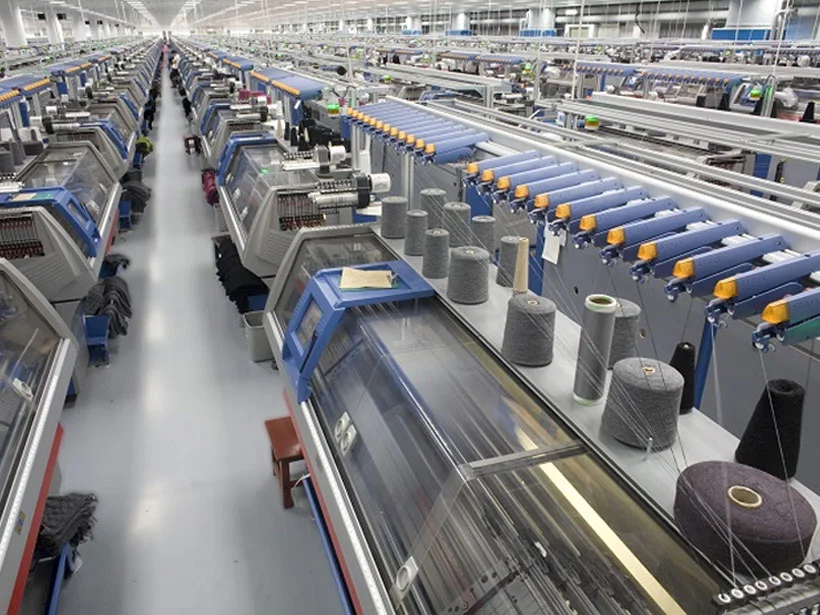
- ✅ Own computerized flat knitting machines and linking team (not a trading company)
- ✅ In-house pattern room (can independently develop patterns and samples)
- ✅ QC system (multi-point inspection from yarn to finished garment)
- ✅ Private label capability (main label, care label, hang tag, packaging one-stop)
- ✅ Export capability (foreign trade documentation, audit cooperation, logistics support)
For a complete factory evaluation checklist, refer to How to Tell If a Knitwear Factory Is Reliable? Factory Audit Checklist.
6. Key Points for Export Sweater Factory Selection
If the brand does export business, choosing an export sweater factory requires extra attention:
6.1 Export Compliance Capability
- ✅ OEKO-TEX Standard 100 — Harmful substance testing for textiles
- ✅ REACH compliance — EU chemical management regulations
- ✅ BSCI/Sedex audit — Social responsibility audit
- ✅ HTS customs code classification — Accurate export customs declaration
For complete export compliance information, refer to Sweater Export to EU/US: Quality Testing, Compliance Audits & Certification Guide.
6.2 Foreign Trade Communication Capability
- Whether the factory has English-speaking sales staff
- Whether they support WhatsApp/email communication
- Whether they understand international sizing systems and packing requirements
6.3 Export Delivery Capability
- Lead time: 20–26 days (after sample approval)
- Shipment method: FOB Shenzhen/Guangzhou or EXW factory pickup
- Packaging: Hanging or folding packaging per the brand's export requirements
Linknit (Dongguan Tuosheng Garment Co., Ltd.) has served brand clients in Europe, the US, Japan, Korea, Russia, and the Middle East for over 20 years, fully familiar with export requirements. For a detailed factory introduction, refer to Dongguan Tuosheng Garment (Linknit) Full Factory Profile.
Summary: When brands work with a knitwear factory, there's no "best model" — only "the model that best suits your current needs."
- Have a complete design → Choose a sweater OEM factory for sample production
- Want to save development costs → Choose a sweater ODM manufacturer for original design
- Want to build your own brand → Choose private label manufacturing
- In a hurry to launch styles → Use custom by image; the factory evaluates craftsmanship and samples
- Looking for long-term stable cooperation → Sign a framework agreement for bulk customization production
If you're a startup brand unsure which model suits you, feel free to contact us to discuss your needs. We'll help analyze the best cooperation approach for you.