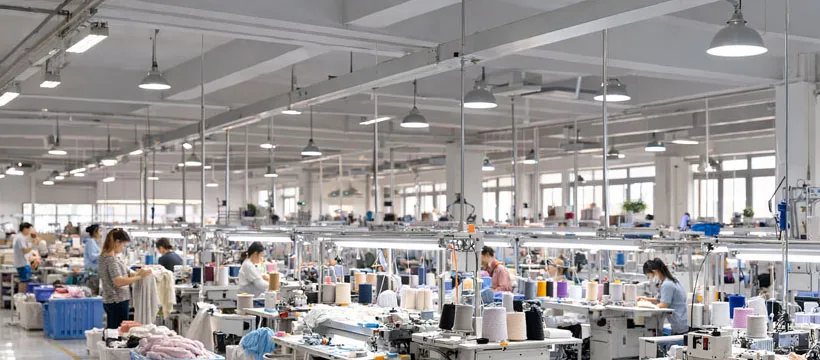
When inquiring with a knitwear factory for the first time, the three most frequently asked questions are: What is the MOQ? How long does production take? How is the sample fee calculated?
There is no single answer to these questions — different factories, different styles, and different seasons yield different answers. But understanding the logic behind them will help you make more reliable judgments when comparing prices and negotiating terms.
Part 1: Minimum Order Quantity (MOQ) — No Standard, But There Are Patterns
A knitwear factory's MOQ is not fixed like a standardized product. It depends on several factors:
Core Factors Affecting MOQ
| Factor | Logic |
|---|---|
| Gauge | Fine gauge (12G/14G) uses less yarn and is more efficient, allowing lower MOQ. Coarse gauge (3G/5G/7G) uses more yarn and requires longer setup time, typically higher MOQ |
| Process Complexity | Plain basic styles are easy to mass-produce; jacquard, intarsia, and special structures require more setup time |
| Yarn Type | Standard stock yarns have lower MOQ; custom-dyed yarns have higher MOQ due to minimum dye lot requirements |
| Factory Scale | Large factories prioritize "high volume, high efficiency" and may refuse or mark up small orders. Small-to-medium factories are more flexible and willing to take small orders |
Common MOQ Reference
| Style Type | Standard MOQ | Quick Turnaround (some factories accept) |
|---|---|---|
| Basic fine-gauge sweater (12G/14G) | 300–500 pcs/style | 100–200 pcs/style |
| Coarse gauge/cable sweater (3G/5G/7G) | 300–500 pcs/style | 100–300 pcs/style |
| Jacquard/intarsia sweater | 500–800 pcs/style | 300–500 pcs/style |
| Cashmere styles | 200–500 pcs/style | 100–200 pcs/style |
| Knitted accessories (scarves/hats) | 500–1,000 pcs/style | 200–500 pcs/style |
Want to lower the MOQ? Combine multiple styles (using the same yarn and gauge). The factory calculates the total MOQ based on yarn consumption, which is more flexible than per-style calculation.
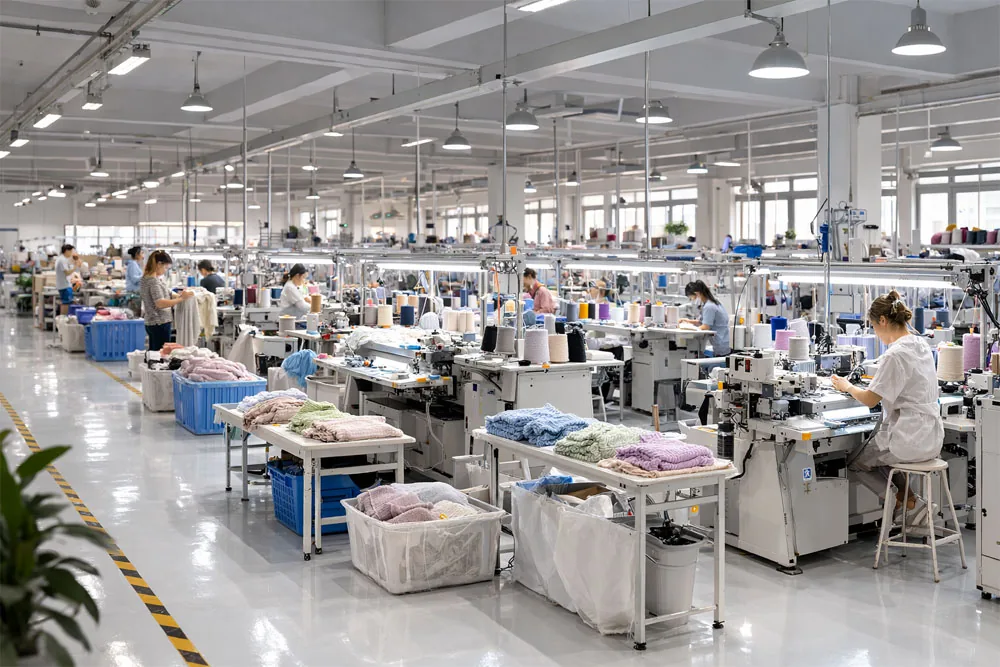
Part 2: Production Lead Time — From Sampling to Delivery
The production cycle for knitwear can be broken down into three phases:
Phase 1: Sampling (7–15 days)
| Step | Time | Description |
|---|---|---|
| Process analysis + quotation | 1–2 days | Factory evaluates style feasibility, provides quotation |
| Yarn preparation | 2–3 days | Stock yarn used directly, special yarn requires procurement |
| Pattern making + swatch | 2–4 days | Computer pattern making, knit swatch for hand feel confirmation |
| Garment sampling | 2–4 days | Knit the complete sample garment |
| Revision + confirmation | 1–3 days | Revise based on feedback, final sealed sample confirmation |
Phase 2: Bulk Production (20–40 days)
| Process | Time | Description |
|---|---|---|
| Yarn procurement/dyeing | 5–10 days | Special colors require custom dyeing; standard colors taken from stock |
| Flat knitting | 7–15 days | Depends on quantity and gauge; coarse gauge slower than fine gauge |
| Finishing (linking/washing/ironing) | 5–10 days | Linking is a labor-intensive process |
| Quality control inspection | 2–3 days | Piece-by-piece check of size, appearance, shrinkage |
| Packaging + shipment | 2–3 days | Hang tags, packaging, carton packing |
Phase 3: Logistics (varies by destination)
- Domestic China logistics: 2–5 days
- Sea freight to Europe/US: 25–40 days
- Air freight to Europe/US: 5–10 days
Practical Timeline
Order placement → Sample confirmation (Week 1–2) → Bulk production (Week 3–6) → Shipment (Week 7)
Peak season warning: July to October is the autumn/winter production peak. Factory lead times typically extend by 1–2 weeks. We recommend confirming peak season orders 8–10 weeks in advance.
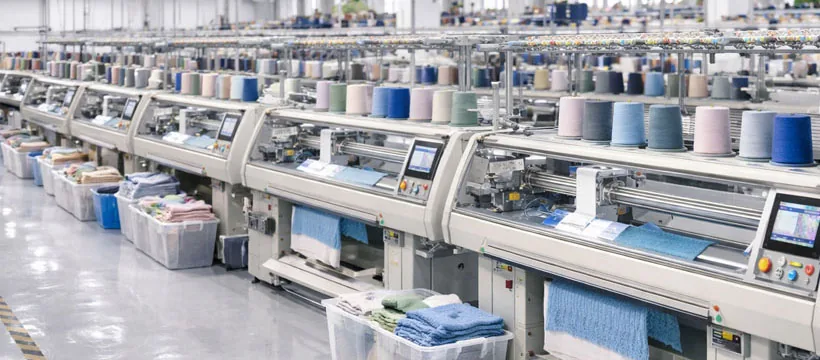
Part 3: Sample Fees — Charged or Not? How Much?
Industry Practice for Sample Fees
| Situation | Sample Fee |
|---|---|
| First-time cooperation | Usually charged, CNY 500–2,000 per style |
| Returning/repeat-order clients | Most factories waive or halve the fee |
| Simple styles (basic plain knit) | CNY 500–1,000 per style |
| Complex styles (jacquard/intarsia/special yarn) | CNY 1,000–2,000 per style |
| High-end cashmere styles | CNY 1,500–3,000 per style |
Sample Fee Refund Conditions
Most factories follow this convention: the sample fee is deducted from the bulk order payment. So the sample fee is essentially a "good faith deposit" — confirming you are serious about proceeding and not just ordering samples and disappearing.
Tip: When inquiring, ask directly, "Is the sample fee refundable upon placing a bulk order?" If the factory says yes, it shows willingness for a long-term partnership. If no, either the style is too complex or the factory has been burned by non-serious inquiries before.
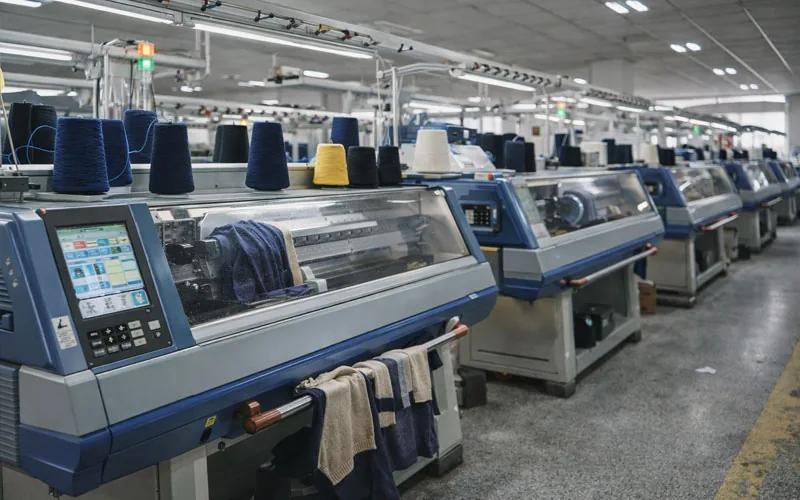
Part 4: Practical Advice for Buyers
FAQ
Is the MOQ negotiable?
Yes. If you can accept a slightly higher unit price, many factories will accept orders below the standard MOQ. Additionally, using standard stock yarns, choosing basic processes, or combining multiple styles can effectively reduce the MOQ.
What is the fastest turnaround time for rush orders?
Under rush conditions, sampling can be done in as fast as 5–7 days, and bulk production in as fast as 15–20 days. However, rush orders usually incur extra charges (overtime fees, line-jumping fees), and not all factories accept rush orders — especially during peak season.
When is the sample fee usually paid?
The sample fee is typically paid before sampling begins. Most factories accept WeChat/Alipay transfers or bank remittance. We recommend keeping the payment receipt for verification when deducting from the bulk order payment.
What quantity is appropriate for a first order?
We recommend starting with an MOQ-level order (300–500 pcs) to verify the factory's quality, delivery time, and communication. Once the first batch is completed smoothly, gradually increase the order volume. This keeps first-cooperation risk under control.
For a detailed comparison of different cooperation models (OEM/ODM/OBM), check out OEM Knitwear Processing vs ODM Sweater Customization Full Comparison. If you have specific requirements, feel free to contact us directly.