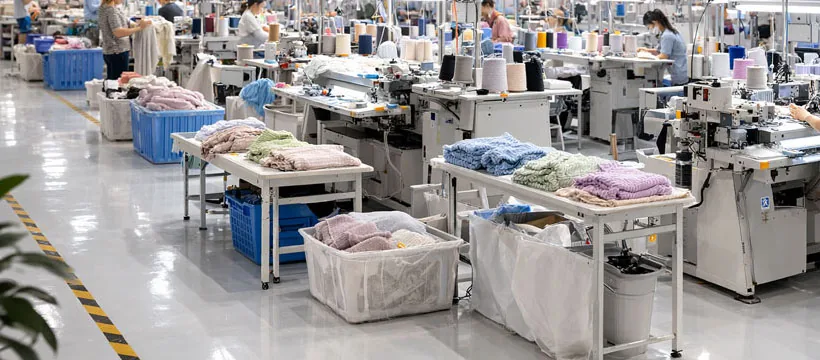
When brands ask a knitwear factory for a quote on a sweater, Factory A quotes ¥38 and Factory B quotes ¥55 — a 40% difference. Is the more expensive one ripping you off?
Not necessarily. The processing fee isn't a fixed number — it's the sum of unit prices from seven or eight independent processes. Each process has different craft requirements and labor hours, so the total naturally varies.
If you don't understand the cost structure, you can't judge whether a quotation is reasonable, and you can't effectively communicate with the factory — because when you say "can you make it cheaper," the factory doesn't know which process you're referring to.
This article opens up the black box of sweater processing fees, helping you understand where your money goes, what's negotiable, and what shouldn't be cut.
1. Basic Formula for Sweater Processing Fees
When quoting, factories typically calculate processing fees as follows:
Processing fee = Knitting fee + Linking fee + Hand-sewing fee + Washing fee + Pressing fee + QC fee + Packaging fee + Management & profit
Most factories quote an all-inclusive price rather than itemizing each cost. But if you know the baseline unit price for each item, you can work backward to determine if the quotation is reasonable.
Below is a breakdown of each item.
2. Breakdown: The 8 Components of Processing Fees
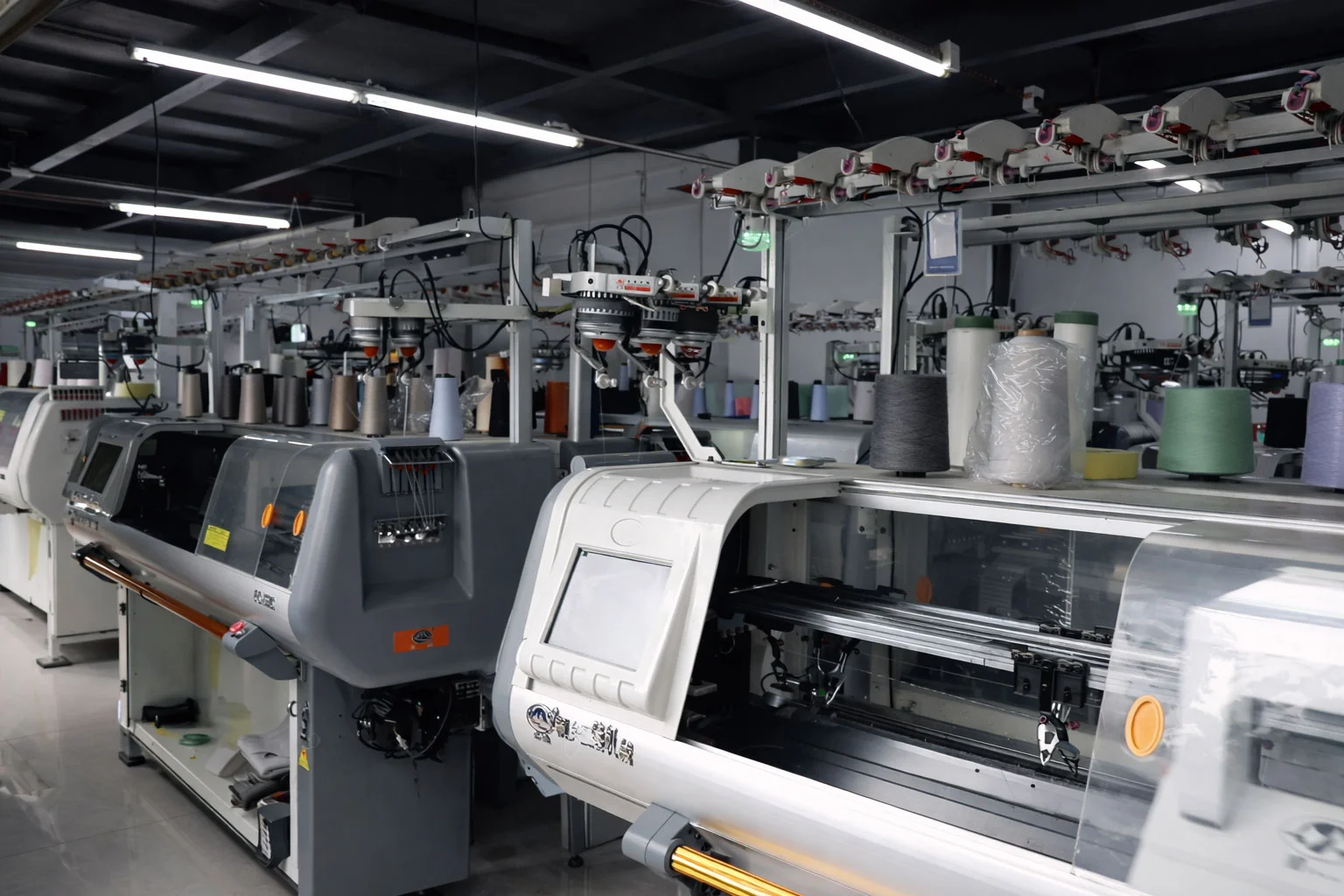
1. Knitting Fee (Flat Machine Knitting) — The Core Cost
Knitting is the largest component of processing fees, typically accounting for 35%–50%. It's determined by three variables:
① Gauge
Gauge directly determines knitting speed:
| Gauge | Knitting Speed | Style | Knitting Fee (Reference) |
|---|---|---|---|
| 3G | Slowest | Chunky, heavy | ¥12–25/pc |
| 5G | Slow | Moderate thickness | ¥10–18/pc |
| 7G | Medium | Standard thickness | ¥8–14/pc |
| 12G | Fast | Fine, lightweight | ¥6–10/pc |
| 14G+ | Fastest | Ultra-fine, refined | ¥5–8/pc |
Chunky (3G/5G) can only knit 3–5 pieces per hour; fine (12G/14G) can knit 15–20 pieces per hour — a 3–4x difference in labor time, naturally leading to different knitting fees.
② Pattern complexity
- Jersey/single jersey: Base price
- Rib/double jersey: +10–20%
- Jacquard: +30–60% (color changes increase knitting time)
- Intarsia: +40–80% (each color block runs independently)
- Cable/braid: +20–40% (requires additional transfer movements)
③ Waste rate
Chunky gauges and complex patterns have higher waste rates (3G jacquard ~3–5%, 14G jersey ~1–2%). The higher the waste rate, the more the factory needs to over-knit, and this cost is amortized into the quotation.
2. Linking Fee — Often Overlooked
Linking is the manual process of joining the front panel, back panel, sleeves, and collar. It uses a "linking machine," but the operator's skill and experience directly affect seam quality.
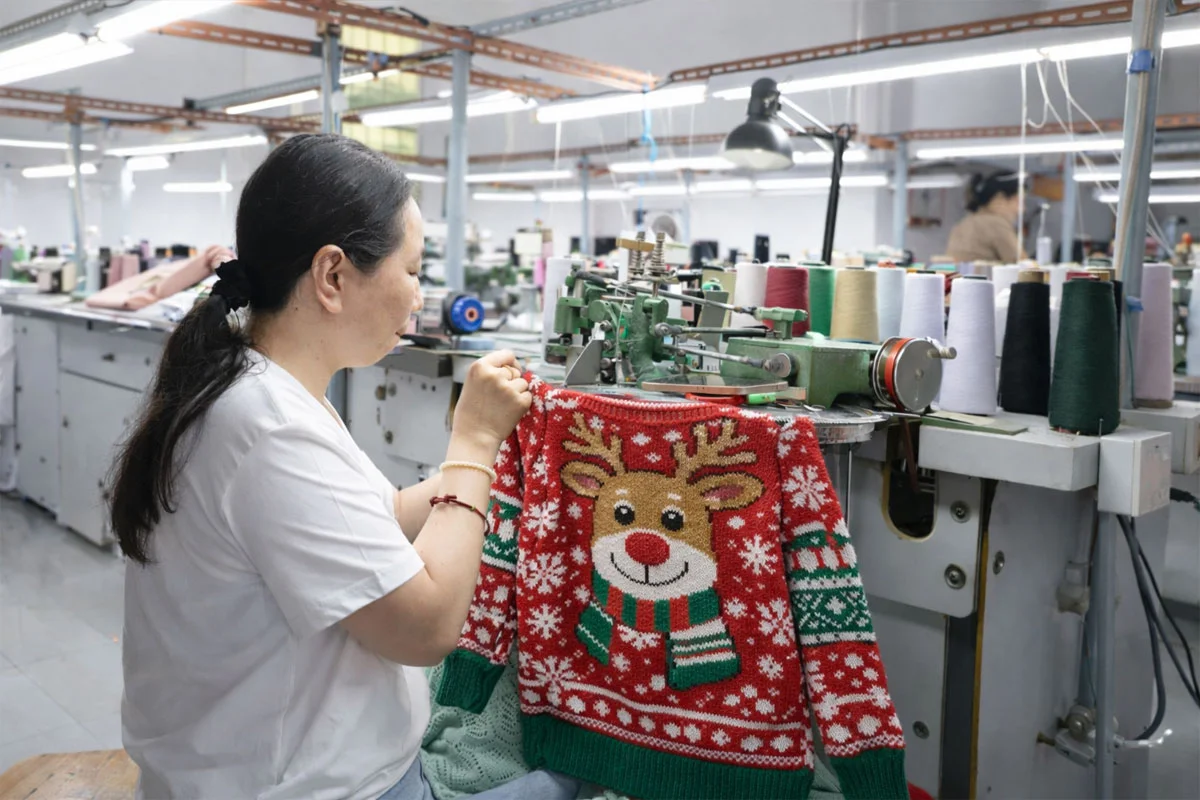
Linking fees are calculated per piece (reference):
- Simple style (crew neck pullover): ¥5–8/pc
- Mid-range style (V-neck + open placket): ¥6–10/pc
- Complex style (cardigan + pockets + multi-panel assembly): ¥8–15/pc
The linking time for one sweater is about 10–25 minutes. Linking is one of the most scarce trades in knitwear factories — skilled linkers often earn more than flat knitting machine operators. Many factories that quote low prices compromise quality at the linking stage.
3. Hand-Sewing Fee (Repair/Thread Trimming)
After machine linking, manual processing is needed for thread ends, closing openings, and repairing defects. Hand-sewing fees:
- Simple style: ¥2–4/pc
- Standard style (includes thread burying + closing): ¥3–5/pc
- Complex style (multi-color requires more thread handling): ¥4–7/pc
4. Washing Fee
After knitting, sweaters carry oil and setting agents and need washing (fulling or softening). Washing fees depend on process requirements:
- Standard wash (degrease + soften): ¥1.5–3/pc
- Fulling treatment (wool/cashmere fulling and raising): ¥2–4/pc
- Special wash (enzyme wash, stone wash, vintage effects): ¥3–6/pc
5. Pressing Fee
After washing, the sweater needs ironing to set the size and fit:
- Standard hanging press: ¥2–3/pc
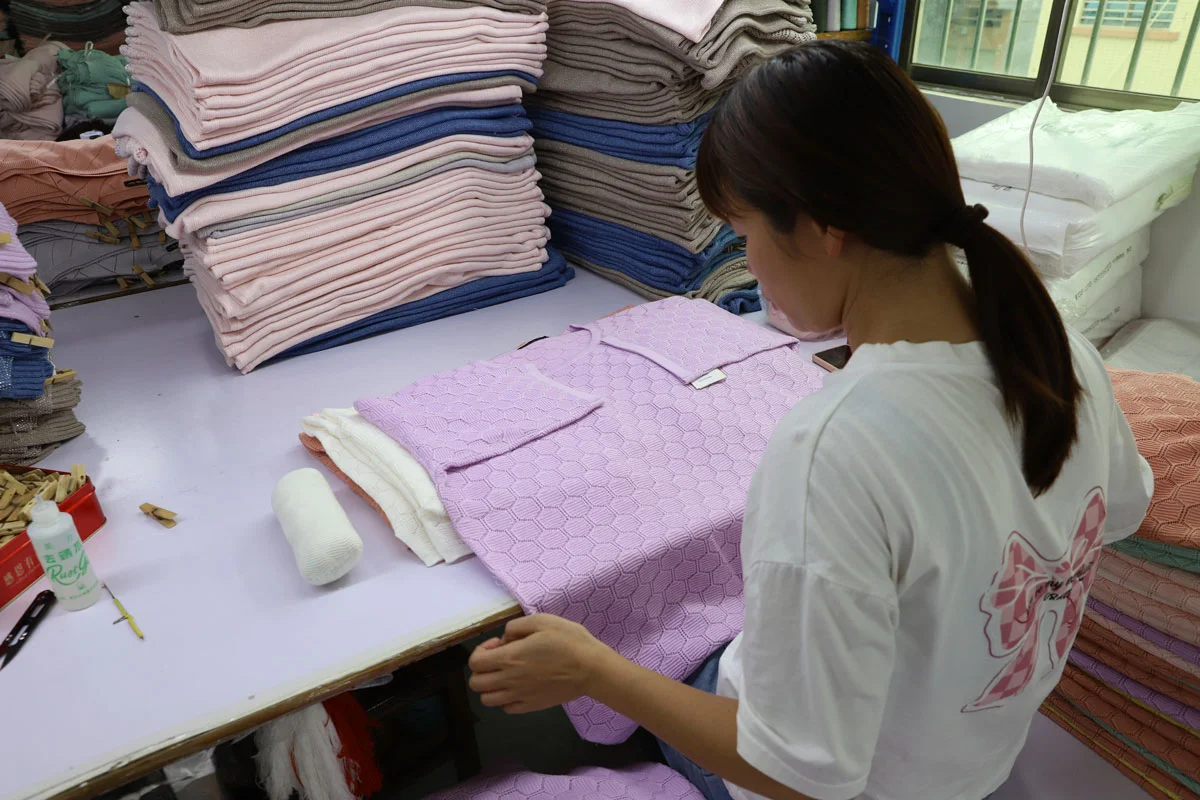
- Three-dimensional pressing (using molds): ¥3–5/pc
6. QC Fee
100% inspection is typically standard for factories. Brands with higher quality standards may require stricter QC:
- Standard full inspection: ¥2–3/pc (includes size measurement + weighing + light inspection)
- Enhanced inspection: ¥3–5/pc (includes fitting on mannequins)
7. Packaging Fee
- Standard (plastic bag + hang tag + main label): ¥1–2/pc
- Premium (box + branded packaging): ¥3–6/pc
8. Management Fee & Profit
Factories add a 10–20% markup on the direct costs above to cover office expenses, consumables, sample development amortization, and capital costs.
3. Real Case: Processing Fee Calculation for a Standard Crew Neck Sweater
Suppose you're developing a 7G pure cotton crew neck pullover, jersey, no jacquard, standard wash:
| Process | Unit Price | Notes |
|---|---|---|
| Knitting | ¥10 | 7G jersey |
| Linking | ¥6 | Crew neck pullover, simple style |
| Hand-sewing | ¥3 | Standard thread burying |
| Washing | ¥2 | Standard wash |
| Pressing | ¥2 | Standard hanging press |
| QC | ¥2 | Standard full inspection |
| Packaging | ¥1 | Standard packaging |
| Management & profit (15%) | ¥3.9 | Subtotal ¥26 × 15% |
| Total processing fee | ≈ ¥30 | All-inclusive |
This is a reasonable baseline. If you receive a quotation well below ¥28, be cautious about whether linking or QC quality has been compromised. If it's well above ¥45, check whether there are special process requirements.
4. Five External Factors Affecting Processing Fees
1. Order Quantity
The larger the quantity of the same style, the lower the per-piece processing fee. The machine changeover time (switching gauge/reprogramming/test waste) takes about 3–5 hours, and this cost is spread across each piece:
- 100 pcs: changeover cost ¥3–5/pc
- 300 pcs: changeover cost ¥1–2/pc
- 1,000 pcs: changeover cost ¥0.3–0.5/pc
This is also why higher MOQ results in lower per-piece prices.
2. Yarn Availability
Using the factory's stock yarn vs sourcing new yarn — stock yarn eliminates the procurement lead time, and the factory may offer better pricing due to bulk purchasing advantages.
3. Peak/Off Season
July–September is the off-season for knitwear factories (fall/winter stocking hasn't fully started, spring/summer lines are wrapping up). Some factories may offer 5–10% room for negotiation. October–December is peak season (rushing fall/winter bulk orders), when factories are at full capacity and quotations are typically non-negotiable.
4. Audit and Compliance Requirements
Orders requiring BSCI audits, OEKO-TEX certification, or on-site QC from the brand may incur an additional 3–8% management cost.
5. Delivery Timeline
Normal lead time: 25–35 days. Rush orders (delivery within 15 days) may require a 10–20% rush fee.
5. Three Effective Ways to Negotiate Processing Fees
✅ What You Can Negotiate
- Order volume tier pricing: "If we do 500 pieces of this style, what price can you offer?"
- Reduce packaging complexity: Use standard bags instead of branded boxes, saving ¥2–4/pc
- Material consolidation: Use the same yarn and accessories across multiple styles to reduce changeover waste
- Long-term cooperation: With a planned order pipeline, the factory may reduce the management profit margin by 2–3%
❌ What Not to Cut
- Linking fee: Cutting the linking fee → linking workers don't want to do your order → QC drops → you end up with problems
- QC fee: Full inspection is the last line of defense; eliminating it saves ¥2/pc but could result in receiving a batch of defective goods
💡 The Smartest Approach
Instead of asking "can you make it cheaper," ask:
"In your ¥28 quotation, which process accounts for the biggest cost? If I use stock yarn, skip the hang tag, and start with 300 pieces, what price can I get?"
When the factory hears this, they'll know you understand the business and will give you a much more realistic quotation.
6. Summary Table
| Process | Proportion | Unit Price (¥/pc) | Negotiable? |
|---|---|---|---|
| Knitting | 35–50% | ¥5–25 | Depends on complexity (fixed pattern/gauge are hard to negotiate) |
| Linking | 15–25% | ¥5–15 | 🚫 Not recommended |
| Hand-sewing | 5–10% | ¥2–7 | Minor adjustment with large volume |
| Washing | 5–8% | ¥1.5–6 | Fixed process is hard to negotiate |
| Pressing | 5–8% | ¥2–5 | Possible (simplify process) |
| QC | 5–8% | ¥2–5 | 🚫 Not recommended |
| Packaging | 3–5% | ¥1–6 | ✅ Simplest way to save money |
| Management & profit | 10–20% | Above × 10–20% | ✅ Possible with large volume |
One sentence summary: Processing fees depend on craftsmanship, not just price. For low quotations, ask what's been cut. For high quotations, check whether the premium process is worth it.