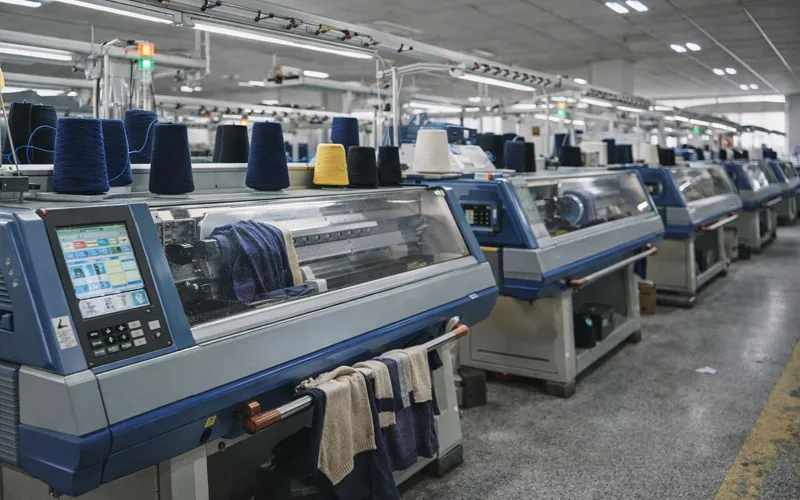
The sampling stage is the first test of alignment between a brand and a factory — and the most likely place for problems to arise.
Pattern doesn't match, hand feel is wrong, color is off, or you've gone through multiple rounds of revisions without satisfaction. These issues come up frequently during sampling, and most of the time it is not because the factory can't do the job — but because the information got distorted somewhere in the communication chain.
This article covers the six most common sampling-stage problems and how to avoid them in your next collaboration.
Part 1: Before Sampling — Know Who You Are Communicating With at the Factory
Many communication problems come down to this: you think you are talking to "the decision-maker," but you are actually talking to a sales representative.
| Role | What They Can Do | What They Cannot Do |
|---|---|---|
| Sales/Merchandiser | Quote, schedule, relay requirements | Cannot judge process feasibility, cannot decide pattern revision direction |
| Pattern Maker | Read tech packs, make patterns, adjust measurements | Does not make commercial decisions, does not quote directly to clients |
| Workshop Manager/Supervisor | Prioritize production schedules, coordinate resources | Does not participate in daily communication directly |
The most effective way to communicate during sampling: The salesperson relays the message; the pattern maker inspects the goods. If there is a problem with the sample, ask to have the pattern maker confirm the revision direction via video or photos — this reduces information loss from relay communication.
Part 2: Six Common Problems and Solutions
Problem 1: Sample Looks Different from the Reference Image
Root Cause: The reference image shows only the front view — the factory cannot see the back, sides, collar details, or hem finishing technique. The image may also have styling adjustments (a photographer may have cropped the length or narrowed the shoulder width).
Solution:
- When sending reference images, include multiple angles (front, back, side, collar detail, hem detail)
- Annotate key measurements (garment length, shoulder width, chest width, sleeve length)
- If you have a physical reference garment, send it directly to the factory (more accurate than any image)
Problem 2: Sample Hand Feel Is Wrong
Root Cause: A reference image only shows color and styling — it cannot convey yarn composition, twist, or softness. The same "wool sweater" can feel completely different depending on the yarn used.
Solution:
- If you have a specific hand feel requirement, send a piece of existing fabric or a similar old garment
- Put the hand feel requirement in writing, e.g., soft for next-to-skin wear / structured with good shape / brushed surface finish
- Ask the factory to send a video confirmation of the knitted swatch before proceeding
From experience: The success rate of sampling after touching the fabric is more than 50% higher than sampling from images alone. Spending 2 days on swatch confirmation saves 10 days of rework after the sample garment is made.
Problem 3: Sample Fee Is Non-Refundable
Root Cause: Some factories have a policy that "the sample fee is the sample fee — refundable or not regardless of bulk orders." This makes brands hesitate — if they are not satisfied, the hundreds or thousands of yuan spent on sampling is lost.
Solution:
- Ask directly when inquiring: Is the sample fee refundable upon placing a bulk order?
- If refundable — the factory shows cooperation sincerity and willingness to share some upfront risk
- If non-refundable — this is understandable (the factory did invest pattern maker time), but consider reducing the number of styles in the first sampling batch
Problem 4: Pattern Keeps Getting Revised Without Success
Root Cause: The problem is usually that there is no correspondence between the measurement chart and the reference image. You say "garment length 60cm," but the reference image looks like 55cm — the pattern maker doesn't know which one to follow.
Solution:
| Revision Round | What to Do |
|---|---|
| Round 1 | Size chart + reference image + yarn requirements → Factory produces the first sample |
| Round 2 | Try on the first sample, mark specific changes (where it's too long/too loose/not right) |
| Round 3 | Confirm the revised sample → Sealed sample → Bulk production |
If you haven't sorted it out after 3 rounds of sampling, the problem is not in the number of revisions but in the information transfer. At this point, we recommend: a video call to go over the sample item by item, or sending back the original sample with revision marks clearly labeled.
Problem 5: Sampling Takes Longer Than Promised
Root Cause: Peak season scheduling is full, yarn preparation is delayed, or the factory overstated its capacity to win the order.
Solution:
- During peak season (July–October), add 5–7 days of buffer to the promised sample lead time
- When placing the order, ask clearly: Does the sample lead time include revision time? Does each revision round require a new queue slot?
- For a first-time collaboration factory, allow 2 weeks of buffer time
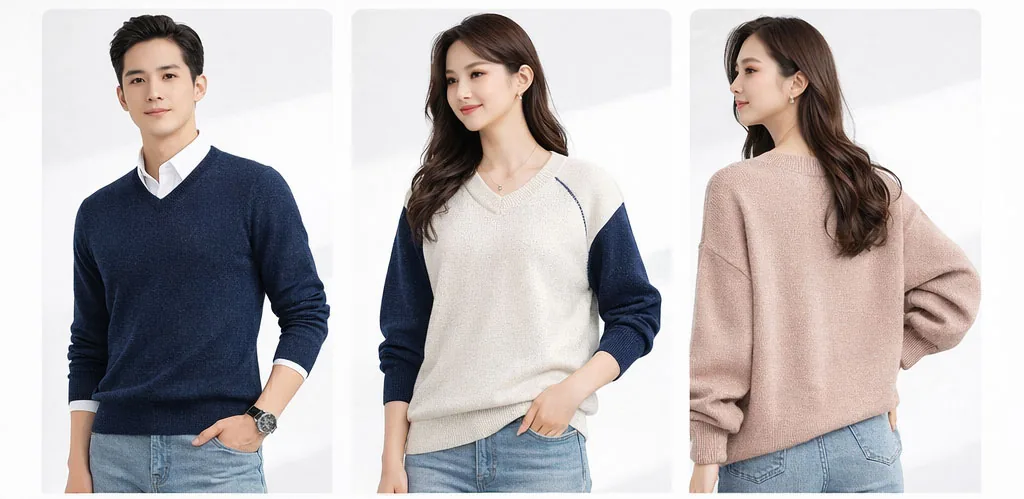
Problem 6: Bulk Goods Don't Match the Sample
Root Cause: This is the most serious sampling problem. It usually happens when: (1) The bulk production used a different yarn batch, (2) A different machine operator worked on the bulk order, (3) No physical reference sample was kept at the sealing stage.
Solution:
- After sample approval, keep one sealed sample — signed and labeled, used as the reference for bulk delivery
- Ask the factory to send a fabric swatch from the actual bulk production batch for reconfirmation
- For the first bulk order, require piece-by-piece inspection against the sealed sample standard
The sealed sample is the last line of defense for both parties. With a sealed sample, there is no argument if a customer complains; without one, any quality dispute is impossible to resolve.
Part 3: Full Sampling Timeline (Normal Conditions)
| Phase | Time | Your Role |
|---|---|---|
| Requirement communication + quotation | 1–2 days | Provide style images, measurement chart, quantity, target market |
| Yarn confirmation + swatch | 2–3 days | Confirm swatch hand feel + color |
| Pattern making + sampling | 3–5 days | Wait; can proactively ask for progress once |
| First sample confirmation | 1–2 days | Try on, photograph, mark revisions |
| Revisions | 2–3 days | Provide clear revision instructions |
| Sealed sample confirmation | 1 day | Sign off, keep physical sealed sample |
| Total | 10–16 days | Add 5–7 days during peak season |
Key milestone: Swatch confirmation is the step most easily skipped — but it is also the one worth spending the most time on. Once the swatch is confirmed, the sample garment has a solid foundation.
FAQ
Can I have samples made by several factories at the same time?
Yes, but we recommend no more than 2–3. Sampling with too many factories at once will: (1) Divide your attention — you will need to follow up on revisions from each, and (2) Each factory will know you are shopping around and won't offer their best terms. Select the 2 most suitable factories for sampling, compare quality and cooperation, then choose one for bulk production.
What if the factory keeps delaying sample delivery?
A first delay is understandable (no established cooperation history, scheduling estimates may be off). If it happens a second time, ask for the specific reason. If the same factory delays three times in a row — it indicates scheduling management issues, and you should consider switching. Common reasons for sample delays in the knitwear industry: peak season overload, yarn procurement delays, pattern maker absence (common in smaller factories).
How much is the sample fee typically? What factors affect it?
Basic styles: CNY 500–800 per style; mid-range styles: CNY 800–1,200 per style; complex styles (jacquard/intarsia/special yarn): CNY 1,200–2,000 per style. Influencing factors: process complexity (jacquard > plain), gauge (coarse 3G/5G > standard 7G > fine 14G), and whether yarn cost is included.
Before sampling, prepare well by reading What to Prepare Before Your First Knitwear Factory Inquiry. If you have specific sampling questions, feel free to contact us directly.