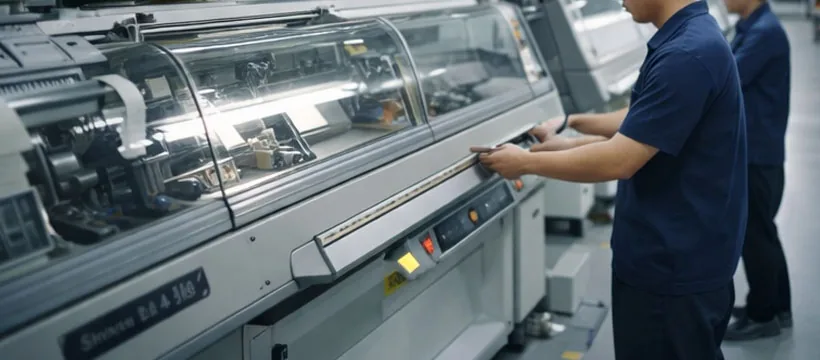
When brands look for a knitwear OEM/ODM factory, the biggest fear isn't a high price — it's choosing the wrong factory.
Delayed delivery dates, bulk goods that don't match the sample, pilling, shrinkage failures — these issues are usually not about bad luck but about inadequate factory selection at the very beginning.
You don't need to wait until bulk production to know if a factory is reliable. There are four dimensions you can assess upfront during inquiry, sampling, and factory audit stages.
1. Inquiry Response — The First Filter
The way a factory responds to your first inquiry is your first factory audit test.
| Checkpoint | ✅ Reliable Factory | ❌ Red Flags |
|---|---|---|
| Response time | Initial reply within 24 hours | Takes 3 days to reply, or doesn't reply at all |
| Response content | Offers craft advice, recommends gauge and yarn for the style | Just quotes a price without explaining why |
| Quotation clarity | Itemizes costs (yarn/processing/finishing/packaging) | Vague — "this is the price to make it" |
| Professional questions | Proactively asks about size, quantity, target market, sampling | Doesn't ask anything, accepts whatever you say |
If they're unprofessional at the inquiry stage, don't expect them to suddenly become professional during bulk production. Communication quality is a direct reflection of a factory's management level.
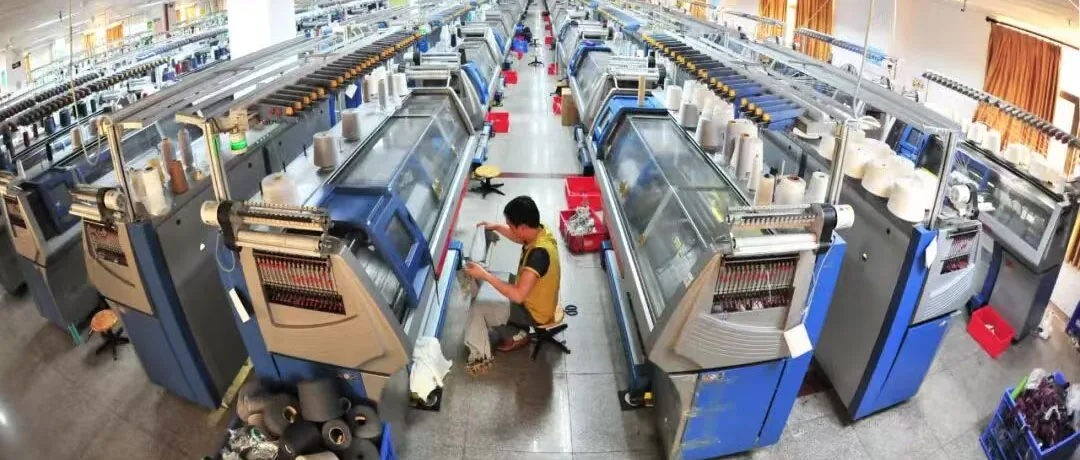
2. Capacity Matching — Small Orders Need Small Factories, Large Orders Need Large Factories
Many buyers think "bigger is better," but small orders from big factories are like putting the wrong gear — inefficient.
| Your Order Volume | Suitable Factory Size | Matching Notes |
|---|---|---|
| 100–500 pcs | Small to medium (10–30 machines) | Flexible, values small clients, low communication cost |
| 500–3,000 pcs | Medium (30–80 machines) | Stable capacity, best value range |
| 3,000–10,000 pcs | Medium-large | Has production scheduling ability, better unit price negotiable |
| 10,000+ pcs | Large (80+ machines) | Economy of scale for large volumes |
On-Site Visit Focus: Check the Equipment
If you can visit the factory in person, focus on three things:
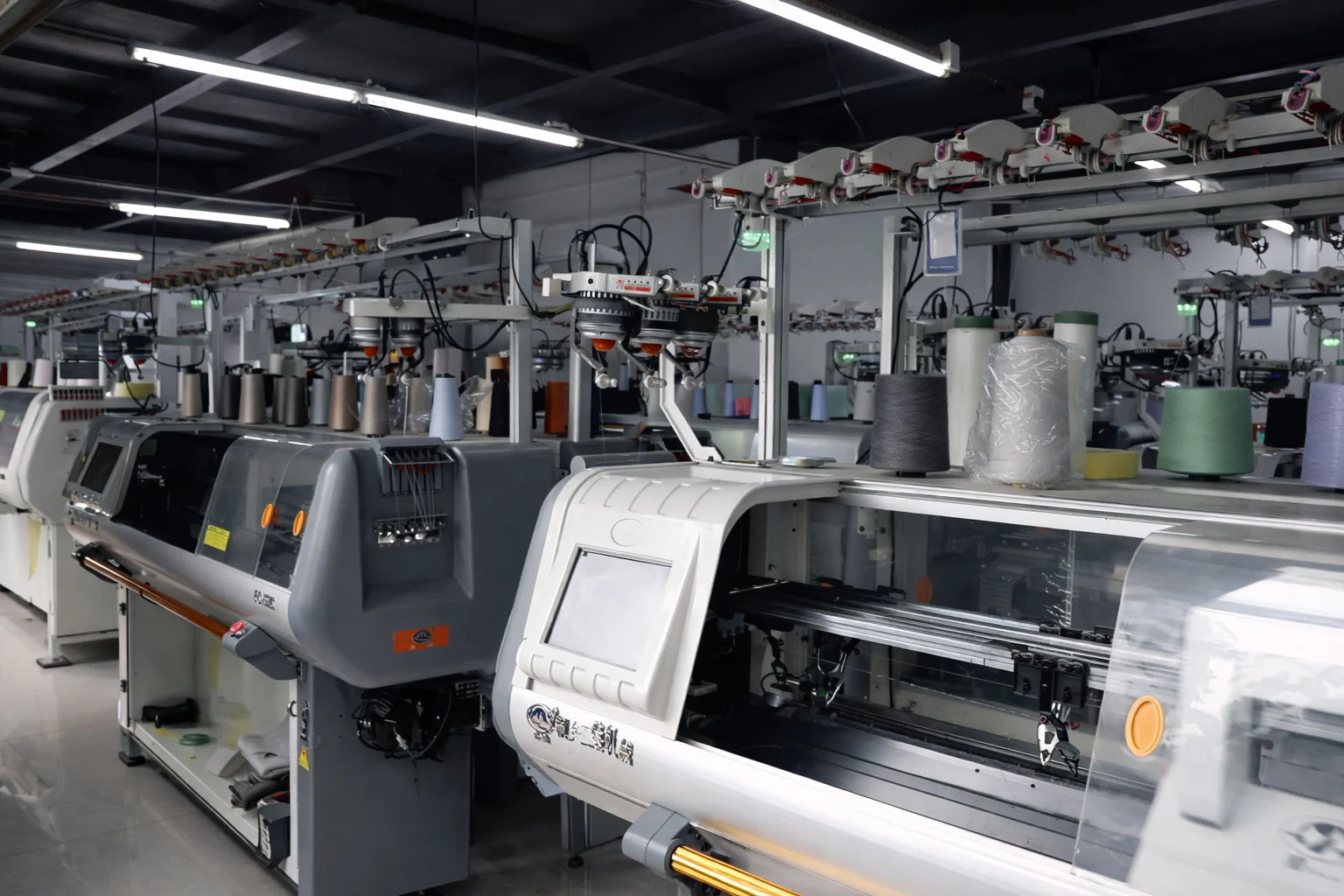
- Number and brand of flat knitting machines — Domestic or imported Shima Seiki/Stoll? Machine condition directly affects knitting precision and production speed
- Gauge coverage — How many different gauge machines do you see in the workshop? 3G to 14G coverage indicates full capability
- Finishing workshop — Number of linking workers and completeness of finishing equipment
Video audit approach: "Could you show me the workshop on a video call?" — If the factory makes excuses, there might be issues they don't want you to see.
3. Quality Control System — Ask the Right Three Questions
Most quality issues in knitwear (pilling, shrinkage, color difference, loose threads) originate in QC processes. Three questions will weed out half of factories:
Question 1: Do you do in-house shrinkage and colorfastness testing?
If they answer "no" or "by experience," they have no QC process. A reputable factory has dedicated QC staff who perform shrinkage and colorfastness tests on every batch with records available.
Question 2: Do you have a piece-by-piece inspection process in finishing?
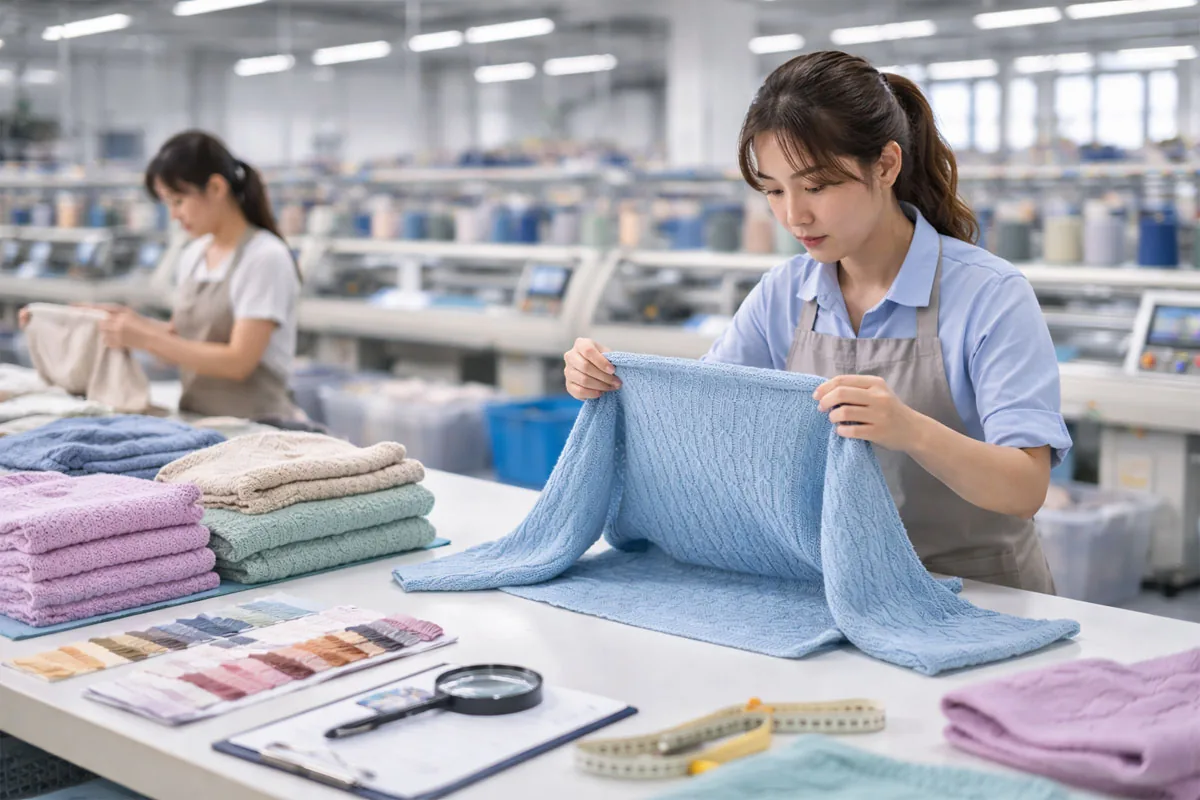
Spot-checking and piece-by-piece inspection are worlds apart. Between pressing and packaging, a proper factory should have a dedicated inspection station checking each piece for size, appearance, stitching, and loose threads.
Question 3: What is your defect rate?
The industry average for knitwear defect rates is 3%–5%. Below 2% is excellent. If the factory says "we have no defects" — they're either lying or not tracking at all.
Pro tip: Ask if they can arrange third-party inspection. Factories that are willing to cooperate have confidence in their QC; those that make excuses should give you pause.
4. Sample Verification — The Final Veto
If the first three steps pass, the last and most critical step is sampling.
| Checkpoint | Good | Average | Poor |
|---|---|---|---|
| Sampling turnaround | 7–10 days for sample | 10–15 days | Exceeds promised time |
| Fit accuracy | Close to expectation first time, minor adjustment needed | Requires 2–3 rounds of revision | Never gets it right |
| Craft quality | Seams flat, few loose threads, hand feel meets requirements | Generally acceptable, minor local issues | Clearly rough, crooked, excessive loose threads |
| Communication cooperation | Proactive progress updates, professional revision suggestions | Answers only when asked | Doesn't reply even when asked |
What to Watch for During Sampling
- Check the stitching: Are the linking joints flat? Any skipped stitches or loose sections?
- Hand feel: Does it match your expectation? If the sample's hand feel is wrong, bulk will only be worse
- Measurements: Measure against your size spec sheet; deviation within ±1cm is acceptable
- Post-wash appearance: If possible, wash the sample once to check shrinkage and pilling
Sampling is not just a procedural step — it's the factory's trial run. If a factory has poor cooperation during sampling, bulk production cooperation will likely be worse. Don't harbor illusions that "they'll be more careful with the bulk order."
5. Comprehensive Scorecard
Score the results across four dimensions for a clear picture:
| Evaluation Dimension | Max Score | Passing Score |
|---|---|---|
| Inquiry response | 25 points | ≥ 15 points |
| Capacity matching | 25 points | ≥ 15 points |
| Quality control system | 25 points | ≥ 15 points |
| Sample verification | 25 points | ≥ 18 points |
| Total | 100 points | ≥ 63 points |
Total score of 80+ — proceed with confidence. 60–79 — can cooperate but establish clear acceptance criteria and delivery penalties. Below 60 — switch factories; don't settle out of convenience.
FAQ
Can we cooperate without visiting the factory?
Yes, but with higher risk. Remote cooperation is an industry norm, provided: ① Sample first to verify quality ② Confirm sealed samples before bulk production ③ Arrange third-party inspection. If the factory won't even do a video audit, we recommend switching.
How many workshops should you visit at minimum?
At least three: the knitting workshop (check equipment quantity and condition), the finishing workshop (check linking/pressing organization), and the packing area (check if QC inspection has a fixed station). Walking through all three will give you a clear picture of the factory's management level.
What if bulk quality turns out poor?
Go back to the contracting stage — agree on acceptance criteria and penalty clauses before cooperation: the defect rate threshold for rework or deduction, compensation ratio for delivery delays, and handling of discrepancies between bulk and sealed samples. We recommend starting with a small trial order rather than jumping into tens of thousands of pieces.
Want to better understand how knitwear factory quotations are structured? Read How to Read a Knitwear Factory Quotation: Price Breakdown & Comparison Guide. If you're unsure about a specific factory, feel free to contact us for a discussion.