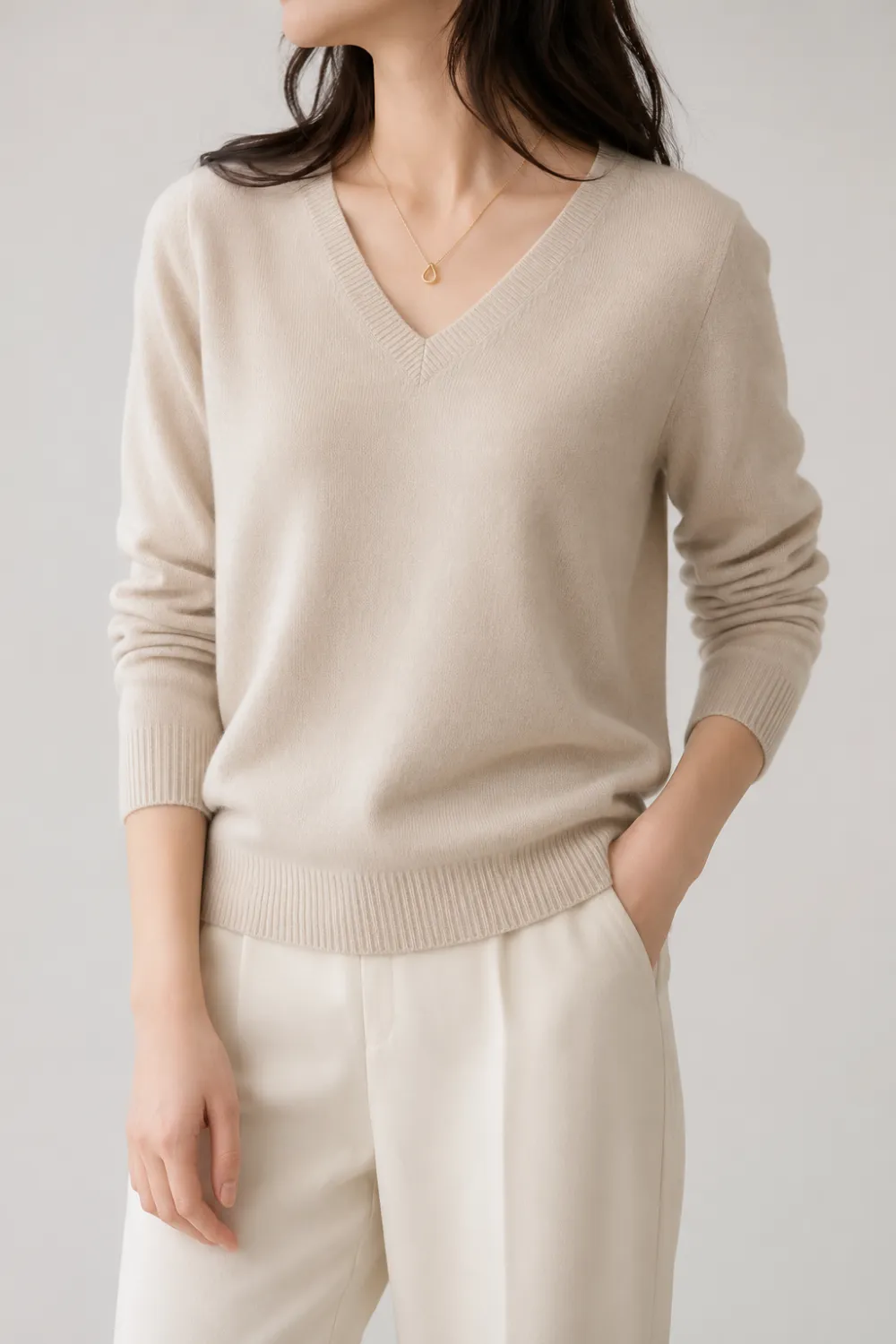
Cashmere sweaters are the highest-margin knitwear category — but also the easiest to get wrong.
Cashmere raw material costs 8–15 times more than wool, which means any quality issues — inferior materials substituted for premium, excessive shrinkage, severe pilling — represent losses an order of magnitude higher than wool sweaters. For brands making their first cashmere sweater, the biggest risk isn't finding a factory, but being unable to distinguish the real difference between price and quality.
This article builds a complete cashmere sweater sourcing evaluation system covering raw material grading, yarn count, craftsmanship essentials, and factory selection criteria.
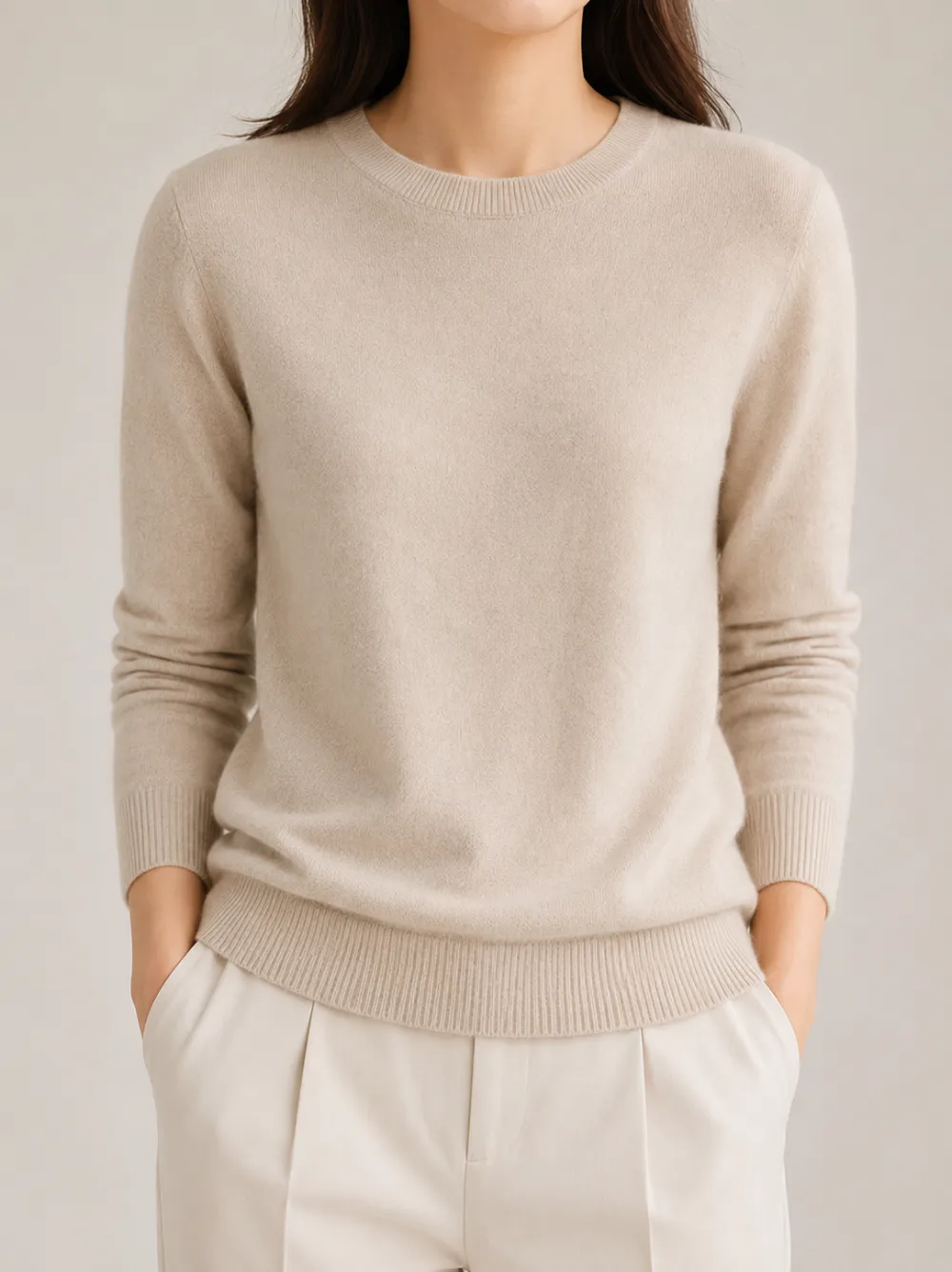
1. Cashmere Raw Material Grading: What Are You Actually Paying For?
There is no such thing as "standard pricing" for cashmere. For the same cashmere sweater, different raw material grades can result in a 3x cost difference.
| Grade | Fiber Diameter | Raw Material Price (RMB/kg) | Common Uses | Features |
|---|---|---|---|---|
| Premium white (Baby Cashmere) | ≤14.5μm | 1500–2000 | Luxury brands, high-end custom | Extremely soft, very low yield |
| Grade A white | 14.5–15.5μm | 1000–1500 | Mid-to-high-end brand staples | Noticeably soft, great value |
| Standard white / grey cashmere | 15.5–16.5μm | 600–1000 | Mass-market brands, e-commerce | Decent softness, reasonable price |
| Purple / mixed grade | 16.5–18μm | 400–600 | Low-priced cashmere, blends | Firmer feel, more prone to pilling |
Brand material selection strategy:
- High-end positioning → Premium white cashmere within 15μm, finished cost $40–70 per piece
- Volume mass-market → Standard white or grey cashmere, finished cost $20–35 per piece
- Cost-conscious brands → Cashmere/wool blend (30%–50% cashmere), finished cost $12–22 per piece
For a detailed understanding of cashmere versus wool quality differences, we've previously written Cashmere vs Merino Wool Comparison Guide and Cashmere vs Wool Comprehensive Comparison, which can help you understand different fiber characteristics and applications.
2. Matching Yarn Count and Knitting Gauge
The feel and durability of a cashmere sweater largely depend on the yarn count and gauge match.
| Gauge | Suitable Yarn Count | Effect | Season |
|---|---|---|---|
| 12G–16G fine | 2/48nm–2/60nm 2-ply | Lightweight, next-to-skin, fine texture | Spring/fall / layering |
| 9G–12G medium | 2/26nm–2/36nm 2-ply | Medium weight, balances texture and stretch | Spring/fall to early winter |
| 5G–7G chunky | 2/12nm–2/18nm 2-ply | Thick, warm, strong three-dimensional texture | Winter |
A frequent brand question: "Why does my cashmere sweater feel completely different from another sweater with the same yarn count?"
The answer is usually two things: cashmere raw material grade (covered above) and finishing process (covered below). Cashmere of the same grade can feel very different after different washing, softening, and finishing treatments.
3. The Craft Threshold for Cashmere — Not Every Knit Factory Can Do It Well
Cashmere sweaters differ from regular sweaters in several core production aspects. This is why not every knitwear factory can produce good cashmere sweaters.
3.1 Anti-Shrinkage Treatment
Cashmere naturally shrinks easily. Good cashmere factories apply anti-felting / Superwash treatment, using chlorination or bio-enzyme processes to modify the fiber surface scale structure, allowing machine washing without shrinkage.
Anti-shrinkage treatment costs approximately RMB 15–25 per piece. Without it, a cashmere sweater may shrink 5%–10% after one wash.
3.2 Fulling Process
Cashmere sweaters require a specialized fulling step to create their signature brushed surface. The degree of fulling directly determines whether the sweater is "richly brushed" or "smooth like wool."
- Light fulling: Short, even pile — suitable for fine-gauge close-fitting styles
- Medium fulling: Standard brushed surface — classic cashmere feel
- Heavy fulling: Long, dense pile — suitable for chunky thick styles
For a complete overview of our factory's production process, see Sweater Factory Full Production Process Guide, which covers special process nodes for cashmere.
3.3 Low-Twist Yarn Technique
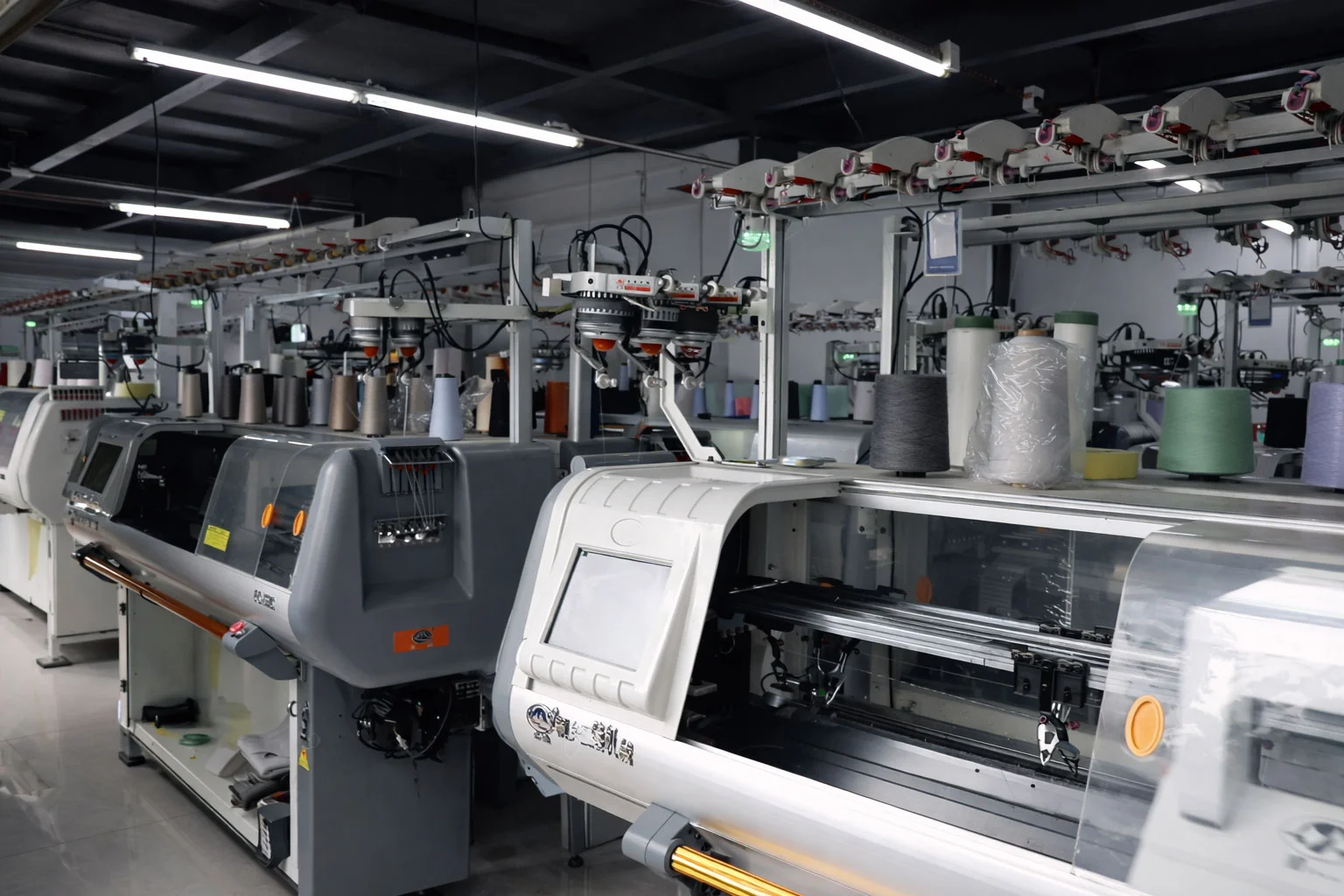
High-quality cashmere sweaters often use low-twist yarn, which keeps the yarn loose to preserve cashmere's fluffy softness. However, low-twist yarn requires more precise flat knitting machine calibration — lower-twist yarn is weaker, prone to breakage, and tests the factory's equipment and management level.
4. Cashmere Sweater Quality Inspection Standards
Cashmere sweaters cannot be inspected using standard knitwear QC criteria. The following metrics are unique to cashmere:
4.1 Pilling Rating
Pilling is the biggest consumer pain point for cashmere. Per GB/T 22848 standard, qualified cashmere sweaters should achieve Grade 3 or above (Grade 5 is best). Factors affecting pilling:
- Cashmere fiber length — longer fibers (≥36mm) pill less
- Yarn twist — moderately higher twist reduces pilling but makes the feel firmer
- Knitting tightness — looser structures pill more easily
4.2 Shrinkage Rate
After standard washing, qualified cashmere sweaters should show ≤5% lengthwise shrinkage. Those with anti-shrinkage treatment should show ≤3%. For more on this, see our Knitwear Shrinkage Control Guide.
4.3 Colorfastness
Cashmere dyeing colorfastness should be ≥ Grade 3–4 (varies by area). Below this standard, issues like color transfer and fading may occur.
For the complete quality control system, see Knitwear Quality Inspection Guide.
5. 6 Key Questions to Ask a Cashmere Sweater Factory
When evaluating a factory, just asking "can you make cashmere?" is not enough. Ask these specific questions — the answers will tell you their level of expertise:
1. Which region is your cashmere from? White or purple cashmere?
Inner Mongolia and Mongolia produce the best-quality cashmere. Good factories can clearly tell you the source and the grade (white/grey/purple). If they can't state the source, they are most likely using mixed-grade cashmere.
2. What is the fiber diameter and length of your cashmere?
Good cashmere should be within 15.5μm with fiber length of 36mm or more. If the factory only tells you "it's cashmere" without providing specific data, be cautious.
3. Do you apply anti-shrinkage treatment? What process do you use?
Chlorination anti-shrinkage is effective but faces increasing environmental restrictions; bio-enzyme treatment is more eco-friendly but costs more. For EU exports, bio-enzyme or ZDHC-compliant processes are recommended.
4. Can the degree of fulling be adjusted on demand?
A good cashmere factory can adjust the fulling level to your design requirements — whether you want a smooth finish or a brushed surface. A factory that only offers one fixed fulling level has limited process capability.
5. What pilling grade can you guarantee?
The passing line is Grade 3. Factories that can commit to Grade 3.5 or above demonstrate stronger control over raw material selection and process.
6. What is the MOQ for cashmere? How are sampling fees handled?
Cashmere raw materials are expensive, so the MOQ is typically higher than for regular sweaters. Linknit's cashmere MOQ is 200 pieces per style, with sampling in 6–10 days. For a full explanation of MOQs, see Sweater Bulk Order MOQ and Production Lead Time Guide.
6. Recommended Cashmere Sweater Sourcing Process
- Define your target market and positioning — determine the acceptable price point for your target customers, then work backward to select raw material grade and process plan
- Provide design drawings or reference styles — including a Tech Pack, see Tech Pack Preparation Guide for details
- Factory recommends material options — a good factory will offer 2–3 raw material solutions at different price points
- Development sample approval — 6–10 days for samples; focus on brushed surface effect, hand feel, and shrinkage rate
- PP sample approval — confirm bulk production process, care label language (100% cashmere vs. blend labeling differs)
- Bulk production + third-party inspection — we recommend an in-process fabric inspection for cashmere to minimize waste
- Packaging and export — cashmere requires moisture-proof packaging; add moth repellent if needed
Summary: The biggest risk in cashmere sweater sourcing isn't the high price — it's paying cashmere prices but not getting true cashmere quality. Raw material grade, yarn count, anti-shrinkage treatment, and fulling degree — these four factors determine real cashmere quality.
Looking for a professional factory for your cashmere product line? Contact us for a free consultation and quote. Also check out our Men's Knitwear Sourcing Guide and Women's Knitwear Sourcing Guide for factory selection tips across different categories.