
Women's sweaters are the most frequently developed category for brands building their knitwear product line — more SKUs, faster style changes, and higher demands on fit.
But many brands developing women's sweaters for the first time run into common pitfalls: the factory says "if we can do men's, we can do women's," but the samples come back with the wrong shoulder width and chest measurements. Or the sample looks great, but the bulk production is handled by different workers, and the hand feel is a level below.
This article starts with the category characteristics of women's sweaters to help you identify what kind of factory is truly suited for women's knitwear.
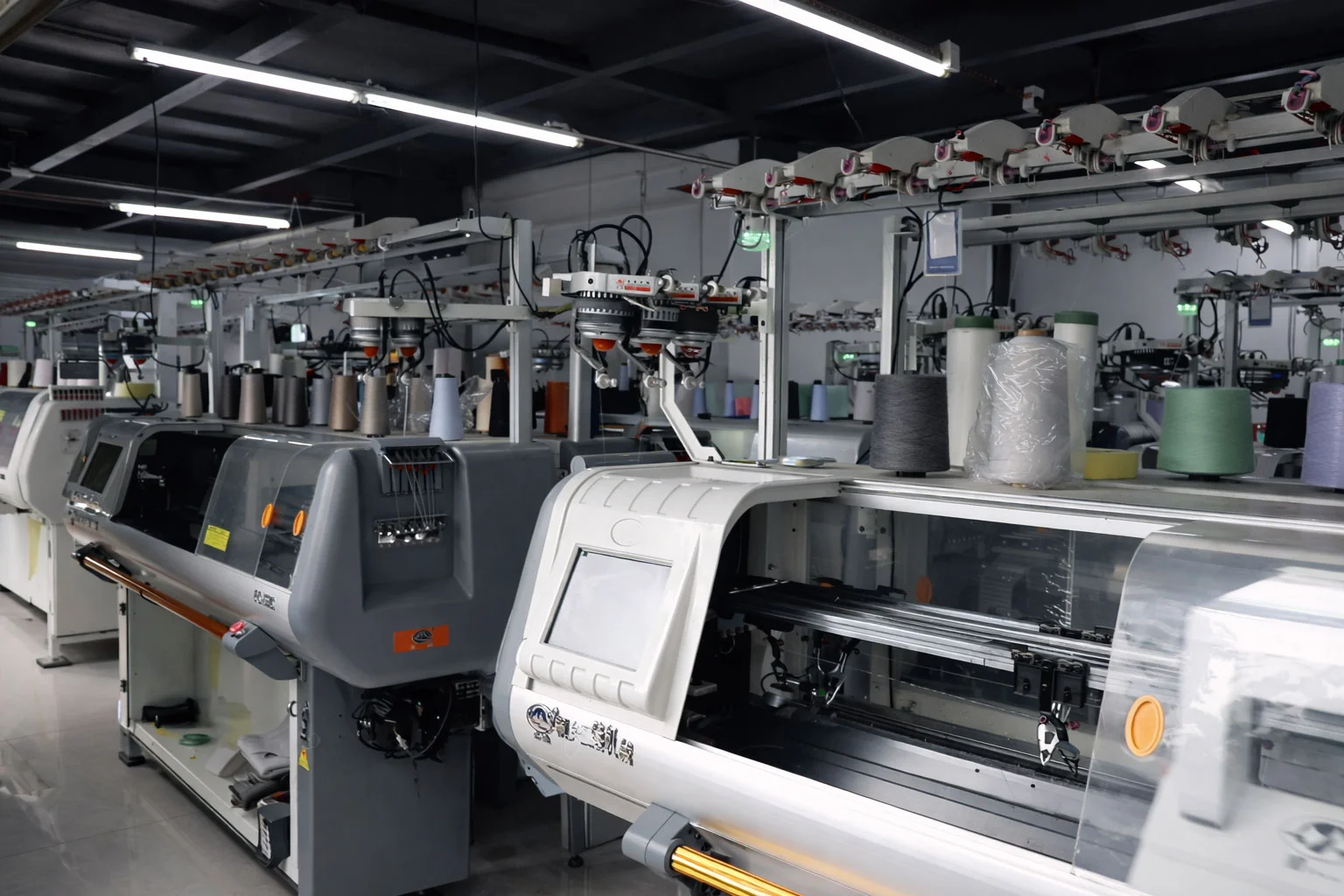
1. How Are Women's Sweaters Different from Men's Sweaters in Factory Production?
Many factories primarily produce men's wear and have limited women's experience. They'll say "we can do everything," but women's sweaters place different demands on a factory:
| Comparison | Women's Sweaters | Men's Sweaters |
|---|---|---|
| Pattern complexity | High — waist shaping, drop shoulder, 3D cutting common | Relatively standard — straight, loose fit predominant |
| Number of styles | High — 20-50 SKUs per season common | Fewer — 10-20 SKUs |
| Style change frequency | High — fast turnaround 7-15 days per style | Lower — regular bulk production |
| Gauge range | Wide — from 3G chunky to 14G fine gauge | Relatively narrow — mainly 7G/12G |
| Yarn variety | High — novelty yarns, blends, specialty yarns | Relatively low — mainly standard wool yarns |
| Decorative processes | Common — embroidery, beading, rhinestone setting, lace splicing | Rare — basically none |
| QC sensitivities | Hand feel, drape, color uniformity | Dimensions, strength, durability |
| MOQ adaptability | Needs low MOQ (50-100 pcs/color) multi-style combinations | Can accept higher MOQ per single style |
Conclusion: Not all knitwear factories are suitable for women's wear. If a factory primarily handles men's private label orders, their machine setup pace, worker experience, and QC priorities are all different. Feeding women's orders into such a factory is likely to cause problems.
2. Common Women's Sweater Categories and Process Requirements
1. Knit Pullovers — The Most Basic Style
Crew neck, V-neck, mock neck, slouchy neck — they look simple, but a 1cm difference in neckline opening makes a huge difference in how it wears. Women's sweater necklines are very sensitive; the factory needs women's wear experience to get them right.
2. Knit Cardigans — The Placket Is Key
Cardigan plackets are prone to "curling" or "not lying flat," which is related to yarn elasticity, linking process, and pressing method. Factories with extensive cardigan experience handle plackets noticeably better.
3. Knit Dresses — The Highest Demands on Yarn and Pattern
Knit dresses are one of the most challenging women's sweater categories:
- Poor yarn choice → the garment sags and deforms after a few wears (gravity stress)
- Incorrect pattern calculation → waistline position is off, hem doesn't lie flat
- Improper washing control → inconsistent shrinkage, the whole dress twists
If you plan to produce knit dresses, prioritize factories with mass production experience in dresses.
4. Chunky Knit Cardigans/Jackets
3G/5G chunky knit women's jackets have been very popular in recent years. Chunky knits may look "rough and simple," but they demand high precision in linking and finishing — with wide stitch spacing, even slight linking deviations are very noticeable.
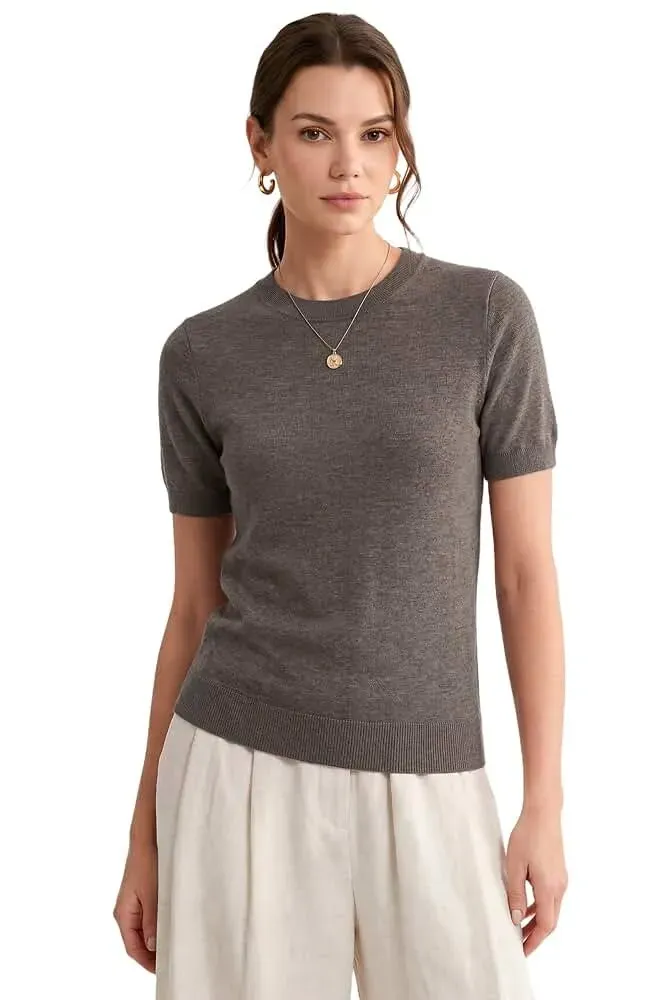
3. Five Key Criteria for Selecting a Women's Sweater Factory
1. Look at Samples — Don't Look at Just One; Look at a Batch
When reviewing a factory's women's samples, don't just look at the best one. Check: Is the hand feel consistent across the batch? Are the sizes uniform? Are loose threads cleanly trimmed? Women's consumers are far more sensitive to hand feel and details than men's consumers.
2. Look at Gauge and Equipment Coverage
Women's sweaters range from chunky to fine gauge. If a factory only has 7G and 12G machines, many women's styles cannot be produced. You need at least 3G, 5G, 7G, and 12G coverage to have the equipment foundation for women's wear.
3. Look at Yarn Library and Development Capability
The biggest issues with women's sweaters are "wrong color" and "wrong hand feel." A factory with a well-stocked yarn library that can quickly test colors and hand feel during sampling will be much more efficient in development. Linknit's yarn room maintains 200+ color codes in stock, providing test swatches within 2-3 days during sampling.
4. Look at MOQ Flexibility
Women's brands typically run more styles with lower quantities — 200-300 pieces per style across 3-5 colors. A factory that only accepts 500+ pieces per style will be difficult for women's brands to work with. An ideal women's factory should accept 200-300 pcs per style and 50-100 pcs per color as flexible MOQ.
5. Look at Decorative Process Outsourcing Management
Decorative processes like embroidery, beading, rhinestone setting, and lace splicing are not done in-house by most factories. That's fine — the key is whether the factory has long-term, stable outsourcing partners. Quality of outsourced process management directly affects the finished product.
4. Four Common Problems in Women's Sweater Development
Problem 1: Sample Looks Great, Bulk Production Doesn't
Cause: Different workers handled the sample and bulk production, or the yarn batch was changed during bulk production.
Solution: Require the factory to document sample process parameters (yarn lot number, gauge, washing parameters) in the Tech Pack and strictly follow them during bulk production. PP samples (pre-production samples) must be approved before bulk production — don't skip this step.
Problem 2: The Garment Gets Looser Over Time
Cause: Improper yarn selection — insufficient elastane content, or the knitting density is too loose.
Solution: If the design targets a slim or fitted style, consider adding 3-5% elastic fiber (spandex/elastic covered yarn) to the yarn blend, or increase the knitting density appropriately.
Problem 3: Neckline/Cuff Deformation
Cause: Rib knitting parameters (density/needle transfer/rotations) are not properly adjusted.
Solution: During PP sample confirmation, specifically check the elastic recovery rate of the neckline and cuffs. Stretch them 3-5 times by hand and see if they return to original shape.
Problem 4: Color Deviation Between Batches
Cause: Different yarn dye lots, or fluctuations in washing parameters.
Solution:
- Order enough yarn from the same dye lot for the entire bulk run
- Require the factory to perform AQL color fastness inspection (per 4-level gray scale standard)
- For split-batch production, keep a sealed reference sample for each batch
5. Recommended Women's Sweater Development Process
| Stage | Time | Key Actions |
|---|---|---|
| Requirements gathering | 1-2 days | Finalize styles, size specs, reference images |
| Sampling development | 5-10 days | Produce development sample → confirm hand feel/fit/color |
| PP sample confirmation | 7-10 days | Pre-production sample → confirm dimensions/process/washed appearance |
| Bulk production | 18-25 days | QC follow-up → first-piece sealing per batch |
| Inspection and shipment | 2-3 days | AQL spot check → needle detection → packaging and boxing |
Total cycle: approximately 35-50 days (including sampling). For urgent orders or reorders, this can be compressed to 25-30 days.
What is the typical MOQ for women's sweaters?
Typically around 200-300 pcs per style. If the same style is split into multiple colors, each color starts at 50-100 pcs. At Linknit, we accept multi-style combined orders — for example, 5 styles at 200 pcs each for a total of 1,000 pieces — which gives the factory more flexible scheduling and better pricing.
What testing is required for women's sweaters?
Testing requirements vary by export destination. Basic items include: fiber composition testing (FTC/EU label compliance), color fastness testing (rubbing/washing/perspiration), shrinkage testing (typically ≤3-5%), and pilling testing (Martindale/Pilling Box method). For infant or children's styles, additional safety requirements apply.
When developing women's sweaters, choosing the right factory is more important than choosing the right price. A factory experienced in women's wear can save you many rounds of revisions and associated costs through pattern advice, yarn recommendations, and process optimization.
To learn more about specific women's sweater styles and factory case studies, contact us → or visit our product center →.