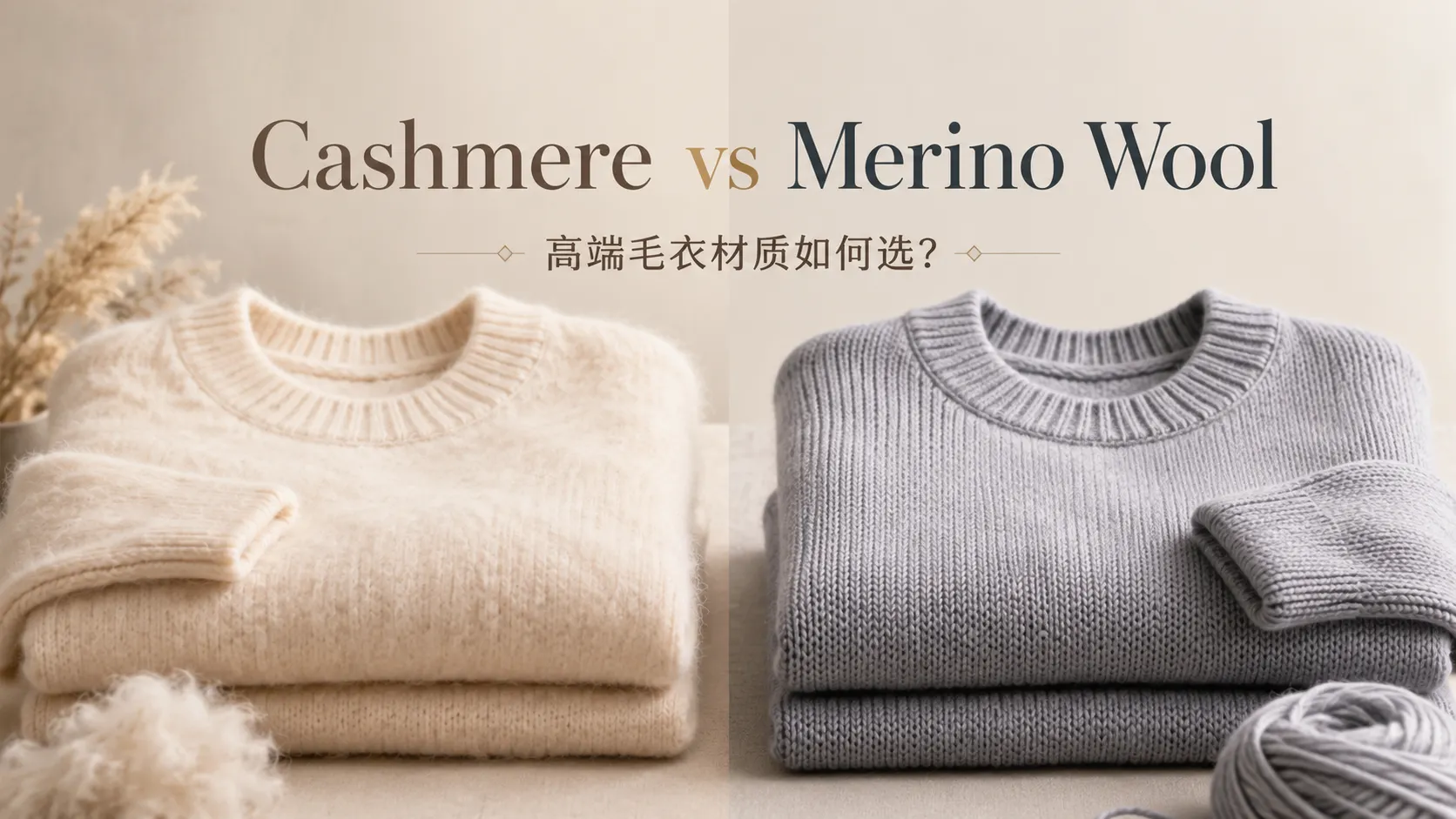
Cashmere and merino wool are the two names most frequently compared in the sweater market.
One represents极致 softness and understated luxury; the other represents the sweet spot where quality meets value. When developing mid-to-high-end knitwear products, the choice between these two materials directly impacts pricing, market positioning, and customer experience.
This article provides an in-depth comparison across four dimensions: fiber characteristics, thermal performance, cost structure, and care requirements.
1. Source Differences: Two Fibers, Entirely Different Origins
Although consumers often categorize "cashmere" as "a type of wool," they are biologically and technically completely different.
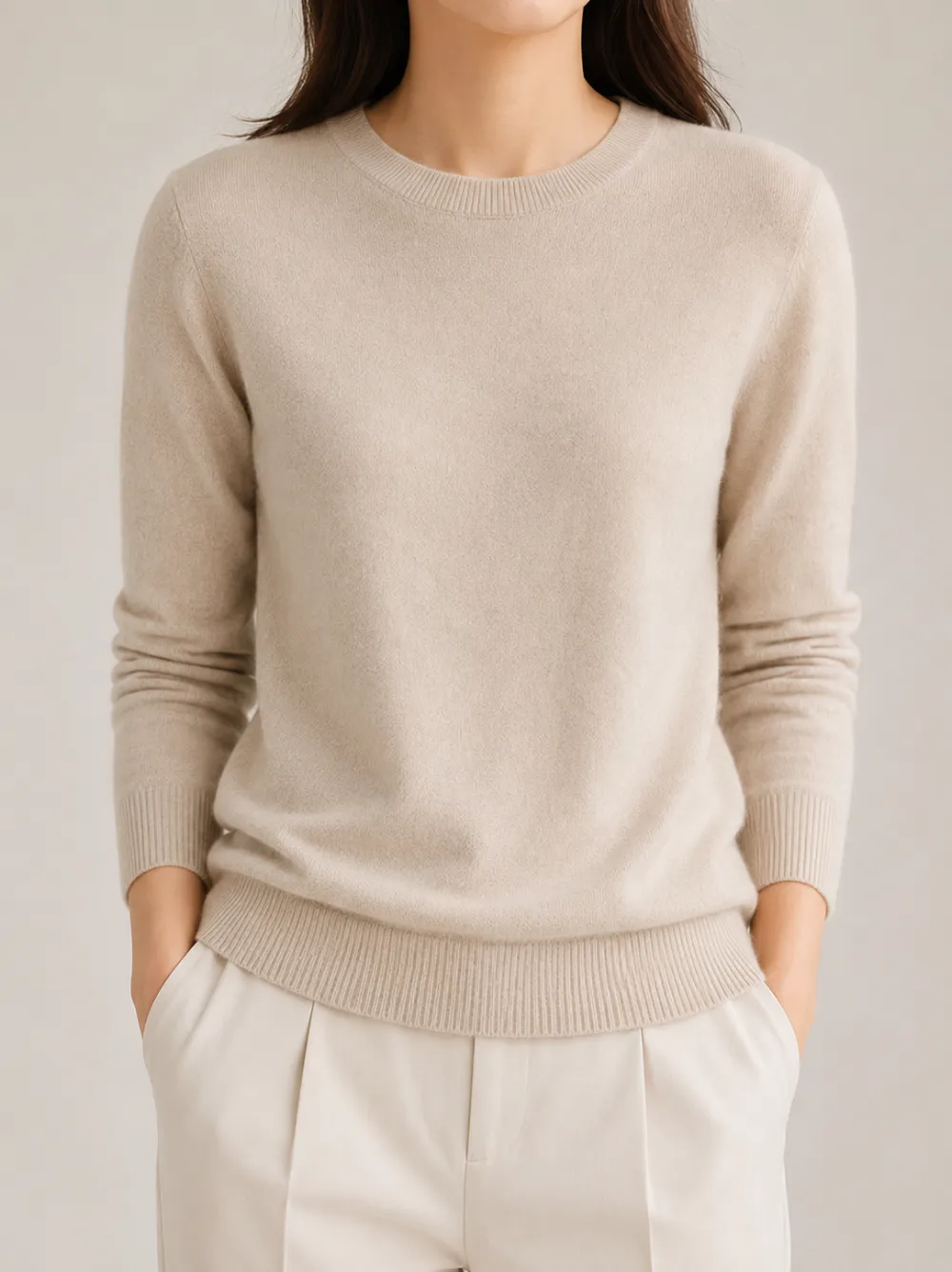
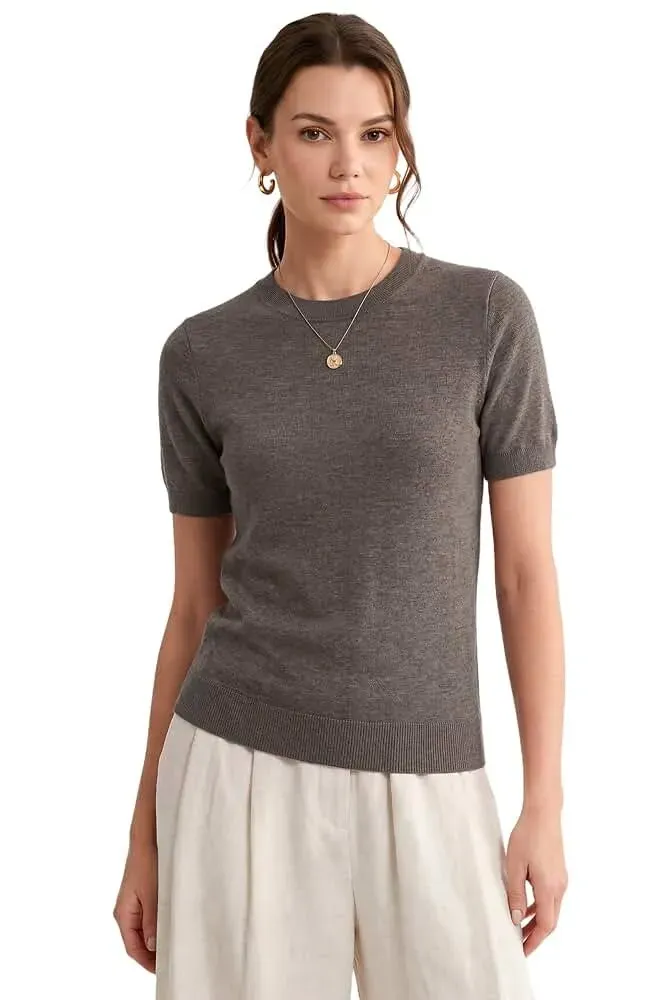
| Dimension | Cashmere | Merino Wool |
|---|---|---|
| Source | Inner down of the Cashmere goat | Merino sheep |
| Fiber diameter | 14–16μm | 15–19μm (superfine merino can reach 15.5μm) |
| Fiber length | 26–32mm (shorter) | 60–100mm (longer) |
| Annual production | ~25,000–30,000 tons globally | ~250,000–300,000 tons globally (merino only) |
| China production regions | Inner Mongolia, Xinjiang, Hebei | Xinjiang, Inner Mongolia, imports (mainly Australia) |
| Scarcity | ⭐⭐⭐⭐⭐ extremely scarce | ⭐⭐ relatively abundant |
Key insight: The finest merino wool (15.5μm) approaches cashmere in fineness but far exceeds cashmere in fiber length — this means merino fabrics are stronger and less prone to pilling.
2. Performance Showdown: Warmth, Feel, and Durability
Thermal Insulation
Cashmere is approximately 1.5–2 times warmer than merino wool. At the same warmth level, a cashmere sweater can be 30%–40% lighter.
By the numbers:
- One 200g pure cashmere sweater ≈ warmth equivalent to a 350g merino wool sweater
- Cashmere's hollow fiber structure creates a natural insulating air layer
- Merino wool's crimped structure also provides good insulation but requires greater weight to match cashmere
Hand Feel
| Material | Feel Description | Next-to-Skin Experience |
|---|---|---|
| Cashmere | Baby-skin smoothness, no itchiness at all | ✅ Perfect |
| Superfine merino (15–16μm) | Soft, close to cashmere, slight nap feel | ✅ Good |
| Standard merino (17–19μm) | Soft with elasticity, slightly itchy for some | ⚠️ Sensitive skin建議 layered wear |
| Regular wool (24μm+) | Itchy, not recommended for next-to-skin | ❌ |
While the finest merino approaches cashmere in fineness, cashmere's "soft bounce" — that smooth yet supple touch — cannot be replicated by merino. This is due to the smoother scale structure on cashmere fibers.
Durability
| Metric | Cashmere | Merino |
|---|---|---|
| Pilling resistance | ⚠️ Short fibers, naturally prone to pilling | ✅ Long fibers, tight structure, better pilling resistance |
| Elastic recovery | ✅ Good | ✅ Very good |
| Washing durability | ⚠️ Must hand wash / dry clean | ⚠️ Standard merino needs hand wash; Superwash can machine wash |
| Service life (with proper care) | 3–5 years | 5–8 years |
3. Cost and Pricing: Two Different Profit Models
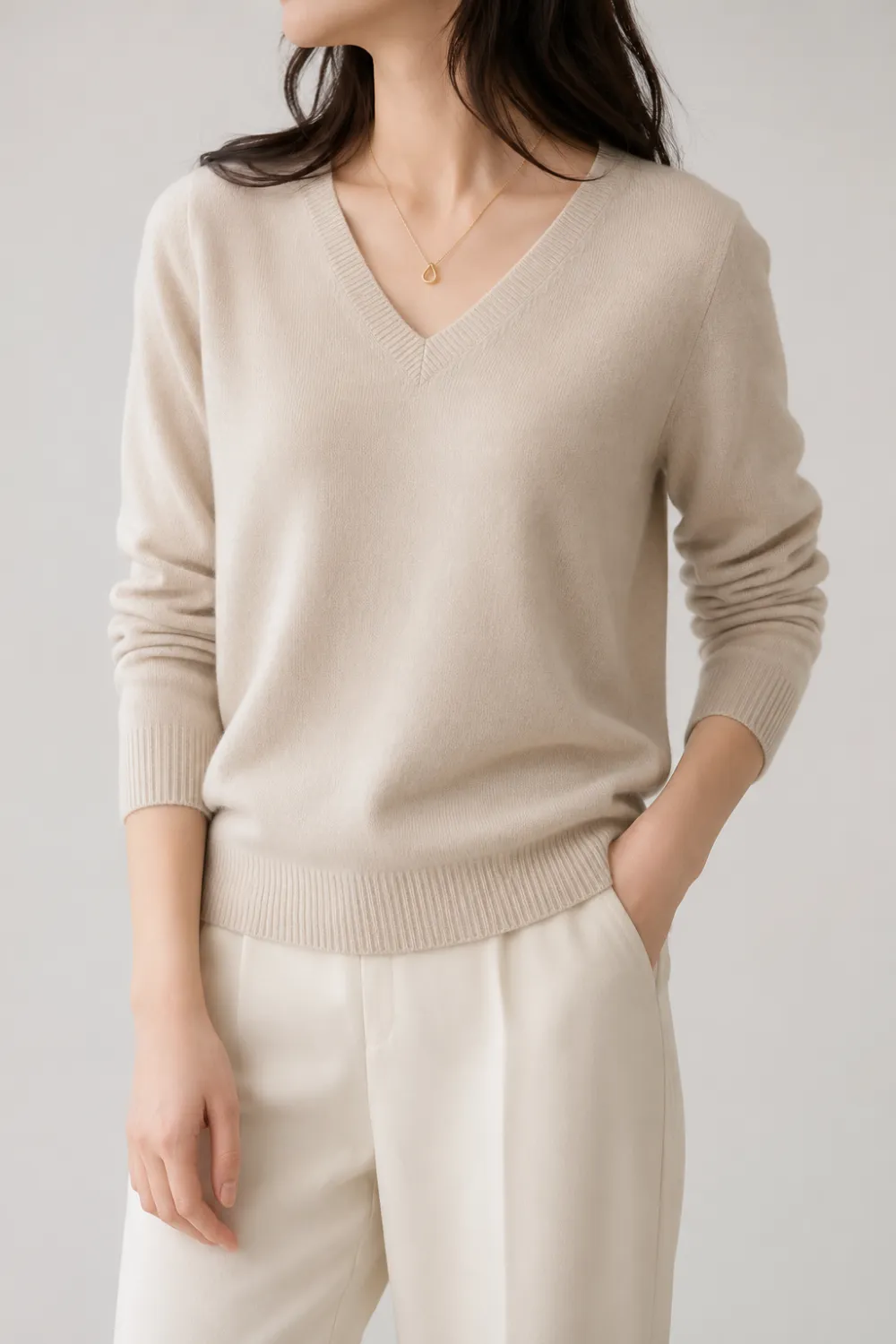
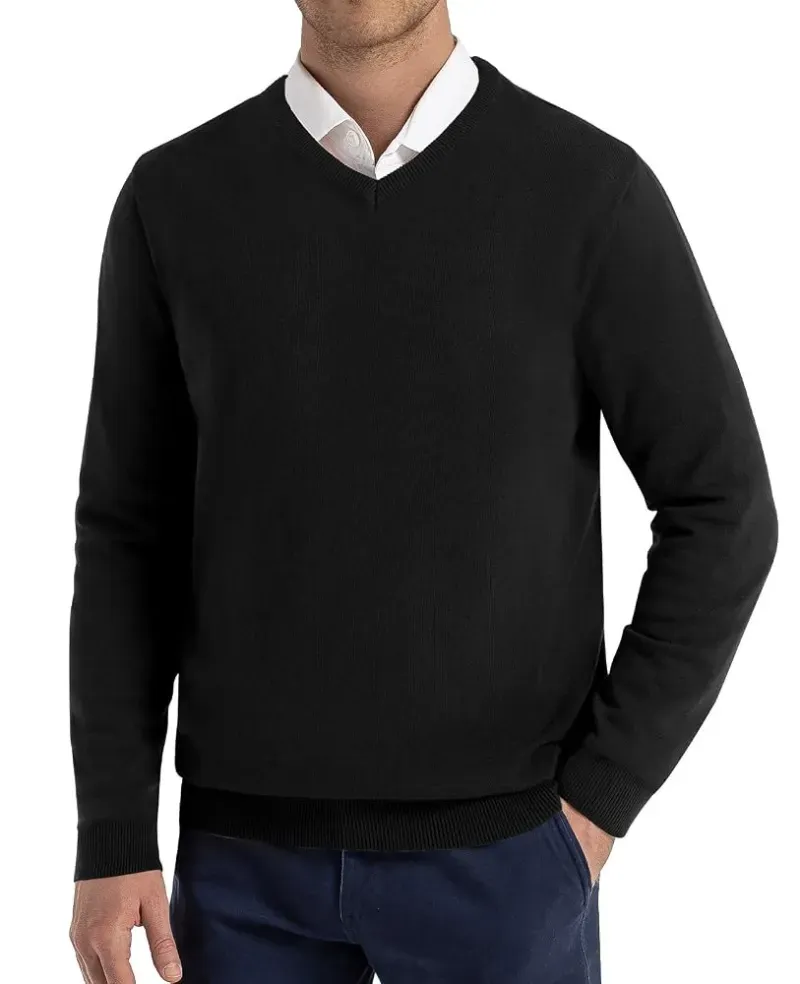
Raw Material Cost Comparison
| Material | Raw Material Price (RMB/kg) | Raw Material Cost for a 200g Sweater | Reference FOB Price |
|---|---|---|---|
| Cashmere (standard) | 600–800 | 120–160 RMB | 180–280 RMB/piece |
| Cashmere (premium) | 800–1,200 | 160–240 RMB | 250–400 RMB/piece |
| Merino wool (standard) | 100–150 | 20–30 RMB | 50–90 RMB/piece |
| Merino wool (superfine) | 150–250 | 30–50 RMB | 70–120 RMB/piece |
| Cashmere + merino blend (30:70) | 300–500 | 60–100 RMB | 120–180 RMB/piece |
Cashmere's raw material cost is 4–6 times that of merino, but at the retail level, cashmere products command higher brand premium (higher profit margins).
Reference Retail Price Points
| Material / Positioning | Recommended Retail Price Range | Suitable Channels |
|---|---|---|
| Pure cashmere (high-end) | $150–$300+ | Department stores, boutiques, DTC brand luxury lines |
| Pure cashmere (affordable luxury) | $100–$200 | Brand fall/winter mainline, private custom |
| Superfine merino (quality) | $60–$120 | Brand basics, business knitwear |
| Merino (volume) | $40–$80 | Mass-market brands, cross-border e-commerce |
| Cashmere + merino blend | $80–$150 | Mid-to-high-end "affordable premium" |
4. Care and Maintenance: The Hidden Factor Affecting Customer Repurchase
Cashmere Care
- ❌ Do not machine wash — must be hand washed in cold water or dry cleaned
- ✅ Use专用 cashmere detergent (neutral, enzyme-free)
- ✅ Do not wring — press water out with a towel, then dry flat
- ✅ Store folded (do not hang — will stretch)
- ✅ Use moisture absorbers (desiccant) and moth repellent
Merino Care
- ✅ Superwash-treated merino can be machine washed (cold water, gentle cycle)
- ⚠️ Untreated merino needs hand washing
- ✅ Also dry flat, do not tumble dry
- ✅ Same moth prevention as cashmere
Customer decision impact: Merino's (especially Superwash-treated) easy-care特性 is a major selling point for cross-border e-commerce and fast-paced consumers. Cashmere requires higher customer education costs.
5. Brand Material Strategy: Recommendations for Three Scenarios
FAQ
Why do cashmere sweaters pill more easily than wool sweaters?
Cashmere fibers are short (26–32mm), while merino wool fibers are long (60–100mm). Short fibers更容易 slide out of the yarn surface and tangle into pills under friction. This is an inherent characteristic of cashmere and does not indicate poor quality. Pilling degree is related to cashmere grade, yarn twist, and knitting method.
How can you tell pure cashmere from wool?
The most reliable method is the fiber content label and hang tag — China's national recommendation standard GB/T 18132-2016 requires cashmere products to state the cashmere content. By hand feel, cashmere is lighter, smoother, and warmer than wool. Burn test: cashmere smells like burnt hair and the ash is easily crushed; wool同样 but with a milder smell. We recommend brands request third-party test reports from their factory.
What is Superwash treatment for merino wool?
Superwash (anti-shrinkage treatment) uses a chlorine-resin coating process to remove the scale structure on the wool fiber surface, then coats the fiber with resin so it no longer felts and shrinks. Treated merino can be machine washed without significant shrinkage. The downside is a slight reduction in hand feel, but modern processes have achieved results very close to untreated wool feel.
Are cashmere and wool blend sweaters good?
A cashmere + merino blend (e.g., 30% cashmere + 70% merino) is a very聪明的 mid-to-high-end strategy. Cashmere provides the feel (smooth and soft), while merino provides the structure (shape retention and durability). Cost is 50%–60% lower than pure cashmere, but the feel achieves about 80% of pure cashmere. Retail price $80–$150, making it an excellent choice for brand value-for-money bestsellers.
Should I choose a cashmere-specialized factory or a general knit factory for pure cashmere?
We recommend a factory with a cashmere-specific line or cashmere production experience. Cashmere has special requirements for yarn storage (temperature and humidity control), knitting tension (cashmere fibers are weaker and require more precise tension), and finishing processes (fulling, raising). Dalang has quite a few specialized cashmere factories or comprehensive knit factories with dedicated cashmere production lines. We recommend sampling first to verify the factory's cashmere capabilities.
Want to learn more about choosing the right material solution based on your brand positioning? See our Knitwear Sample Customization Guide, or contact us to discuss your product needs.
Also check out Pure Wool vs Cashmere vs Blends: Cost and Application Scenarios for a more comprehensive material selection framework.