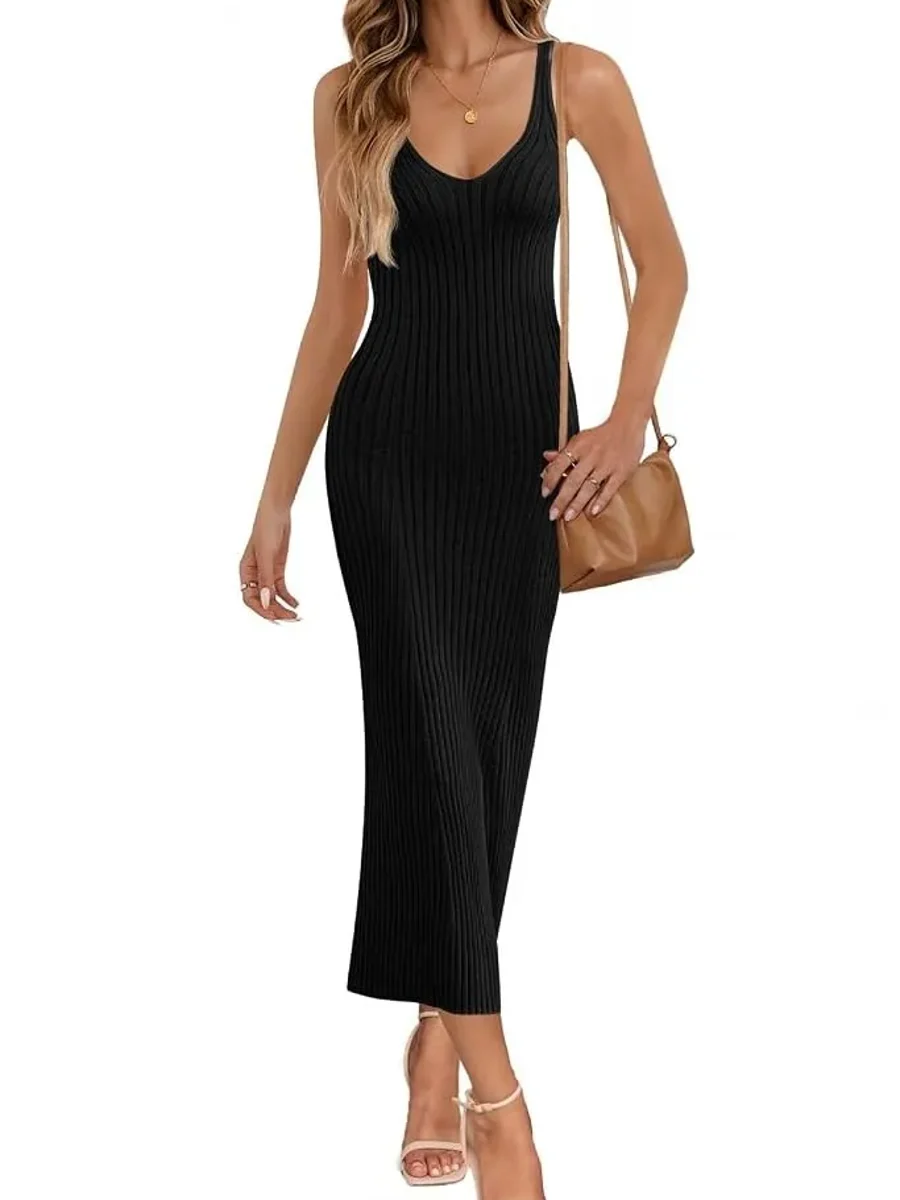
Knit dresses are widely regarded as one of the hardest knitwear categories to get right.
Unlike sweaters, where S/M/L grading covers most body types, knit dress pattern making must simultaneously address bust, waist, hip, and dress length — while ensuring the drape doesn't sag, the stretch isn't constricting, and the garment retains its shape after washing. One flawed pattern can ruin an entire production run.
Because the bar is high, truly capable knit dress factories are relatively rare, and those with consistent quality tend to have less room for price negotiation. For brands, finding the right factory is the single biggest advantage in the highly competitive dress segment.
This guide covers category classification, pattern design, gauge and yarn matching, technical challenges, and factory selection criteria to help brands build a complete knit dress sourcing evaluation framework.
1. Knit Dress Category Classification
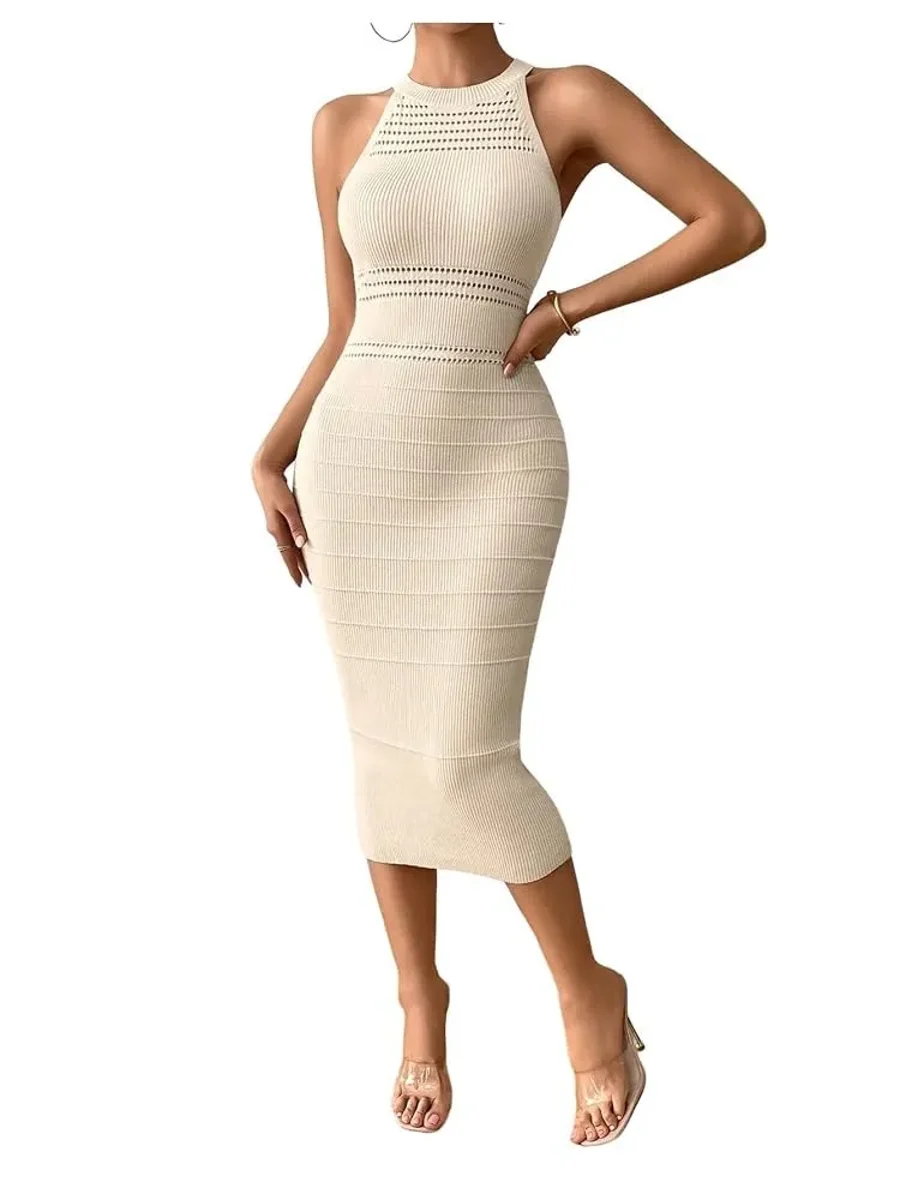
"Knit dress" is a broad term that can be divided into six subcategories. Each has very different technical requirements, target price points, and ideal factory profiles.
| Category | Characteristics | Recommended Technique | Target Customer | Primary Season |
|---|---|---|---|---|
| Fitted bodycon dress | Next-to-skin, high stretch, snug fit | 12G-16G fine jersey/rib | Professional women, commuters | Fall/winter layering |
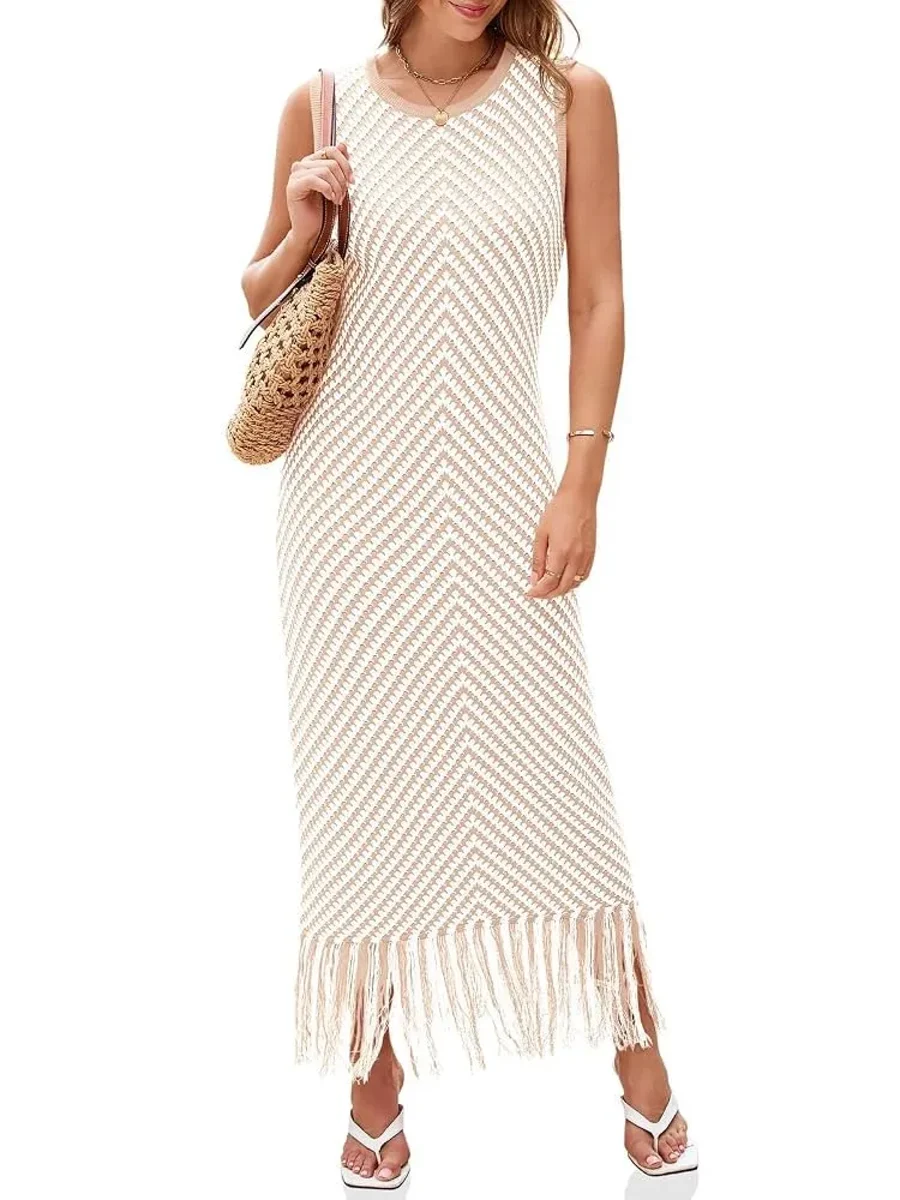
| A-line loose dress | Fitted top, flared skirt | 7G-12G mid-gauge jersey | Young women, everyday casual | Spring/fall |
| Straight/pencil dress | Clean lines, professional | 12G-14G fine jersey | Professional women | All seasons |
| Camisole/slip dress | Lightweight summer piece | 14G-16G fine, high-count cotton/silk | Young women | Summer |
| Knit suit dress | Two-piece (top + skirt) | 9G-12G mid-gauge | Fashion brands, resort wear | Spring/fall/resort |
| Knit skirt | Standalone half-skirt | 7G-14G multi-gauge | All ages | All seasons |
Brands should define their category positioning early in the planning stage — fitted vs. loose — as this drives all subsequent technical parameters.
2. Pattern Design — The Biggest Challenge in Knit Dresses
Pattern design is the single biggest difference between knit dresses and regular sweaters. Sweaters mainly need shoulder width, chest, and length, but dresses add:
2.1 Bust-Waist-Hip Differential
The elasticity and extensibility of knitted fabric determine how well a dress accommodates the bust-to-waist-to-hip differential.
- Fitted styles: When the bust-waist-hip differential exceeds 15cm, waist and hip narrowing (increasing vertical knitting density at the waist) is required; otherwise, the waist will be loose while the hip is too tight
- Loose styles: Differential impact is smaller, but shoulder width and chest matching still need attention to avoid shoulder seam slippage
- Straight styles: Fabric elasticity naturally accommodates some differential, but too narrow a hem restricts walking
2.2 Dress Length and Drape
When dress length is ≥85cm (knee-length or longer), drape becomes the most important technical indicator:
- Fulling/milling treatment: The degree of fulling directly affects garment weight and drape — heavier fulling creates a thicker surface, adds weight, and improves drape
- Material selection: Wool, cashmere, and viscose long dresses naturally have good drape; cotton and linen long dresses tend to sag and deform
- Rib hem: A wide rib hem (3-5cm) adds weight at the hemline, improving drape
2.3 Anti-Deformation Design
This is what brands most often overlook — whether the dress deforms after repeated washing.
- Jersey/plain knit structure: Prone to stretching; consider adding elastic thread at side seams
- Rib structure: Good shape retention, but excessive stretch during dressing may cause deformation
- Jacquard structure: Dense, low deformation risk, but more costly
3. Gauge and Yarn Matching — The Golden Combination for Dress Quality
The "hand feel - fit - drape" triangle for knit dresses depends heavily on correct gauge and yarn matching.
| Dress Type | Recommended Gauge | Recommended Yarn | Effect |
|---|---|---|---|
| Fitted bodycon dress | 12G-16G | Worsted wool (2/48nm-2/60nm), cashmere blend | Soft next-to-skin, stretchy fit, good drape |
| A-line loose dress | 7G-12G | Woollen wool, cotton blend (2/30nm-2/48nm) | Structured, spacious silhouette |
| Camisole/slip dress | 14G-16G | Mercerized cotton, silk blend, linen/cotton | Light, breathable, crisp hand feel |
| Straight pencil dress | 12G-14G | Wool/viscose blend, cashmere | Good drape, clean lines |
| Knit skirt | 7G-14G | Wool, acrylic blend, cotton | Depends on design; wool skirts are classic |
A common misconception: Fine gauge (14G-16G) always produces better dresses. In reality, mid-gauge (9G-12G) uses thicker yarns and creates a denser fabric, often delivering better drape and shape retention than fine-gauge lightweight options. It comes down to your target style.
For a detailed yarn comparison, see our Yarn Material Comparison Guide: Wool vs Cashmere vs Blends.
4. Three Major Technical Challenges in Knit Dresses
4.1 Waist Shaping
Fitted dresses require narrowing at the waist (transitioning from bust to waist to hip), which demands high flat knitting programming skill:
- Curve transition: The number and position of stitches narrowed per row must be precisely calculated, or "stepping" or "rippling" effects occur
- Transition length: Narrowing 1 stitch every 6-8 rows is the standard for a smooth transition; narrowing too fast creates an abrupt waistline
- Elastic tape/stitching: Adding elastic thread or sewing in elastic tape at the waist improves shape retention
4.2 Neckline and Armhole Treatment
Necklines and armholes on dresses require more careful handling than on sweaters, as they directly determine the garment's appearance on the body:
- Neckline sagging: Fine-gauge dress crew necks tend to sag after washing; add elastic thread at the neckline or use seamless joining
- Armhole deformation: Sleeveless/camisole armholes are the most stretch-prone area; use double-layer knitting or reinforced hemming
- Neckline shape: V-necks require more precise pattern work than crew necks (neck depth and V-angle must be carefully designed)
4.3 Hem Curling
Hem curling is the most common batch complaint for knit dresses.
- Cause: Uneven stress release at the fabric edge due to stitch structure
- Solutions: Use a 3-5cm wide rib hem, I-Cord hem, or increase knitting density at the hem area
- Post-wash testing: At least 3 full garment wash tests must be done before bulk production to check for hem and neckline curling
5. Fabric and Trim Pairing Suggestions
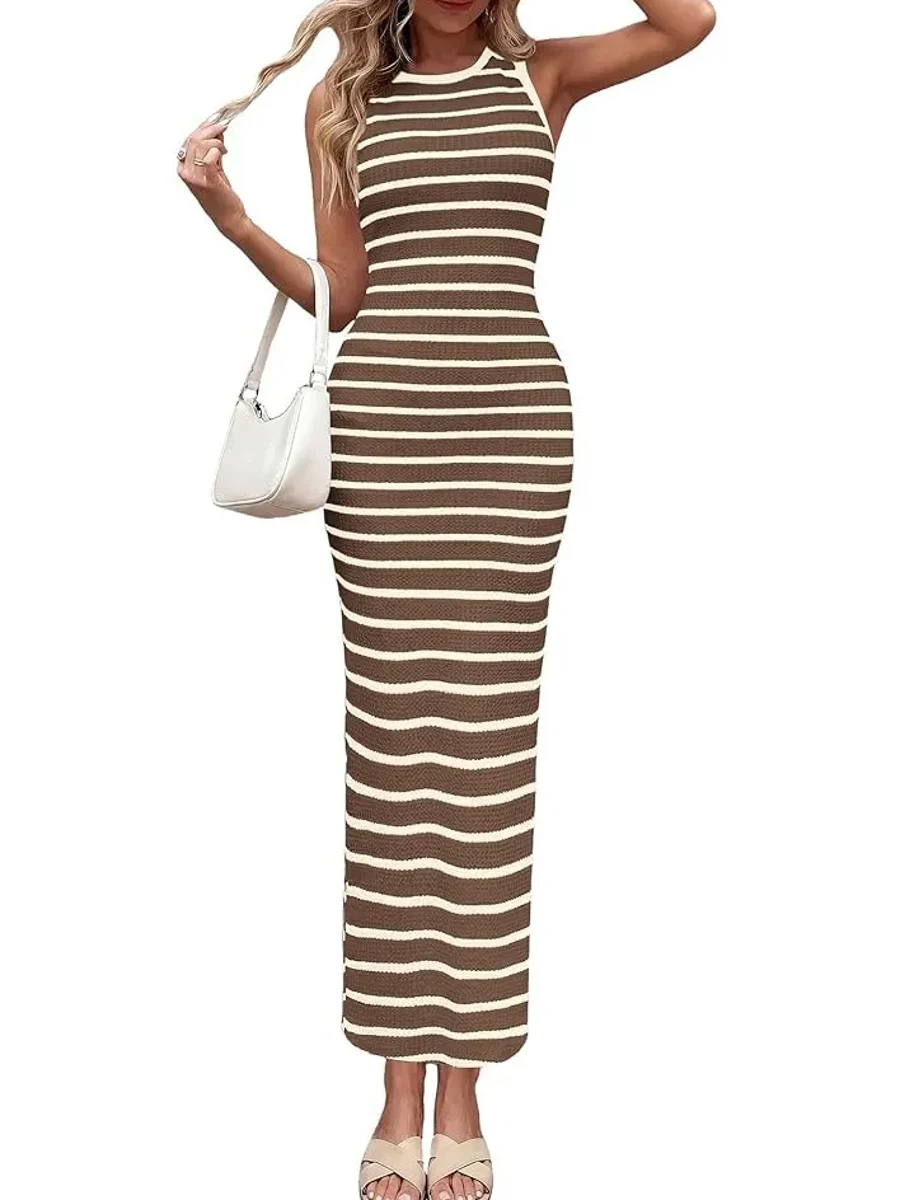
Knit dresses offer more trim and pairing options than standard sweaters. Brands can leverage these to enhance perceived quality:
| Trim Element | Suitable Dress Type | Notes |
|---|---|---|
| Genuine leather belt | Loose fit, straight | Belt buckle must not be too heavy to avoid stretching the knit fabric |
| Lining (silk/viscose) | Deep V, openwork, sheer yarn styles | Lining ease must match knit fabric — too tight pulls the fabric |
| Lace trim | Camisole dress, A-line hem | Lace elasticity differs from knit; reinforce the seam |
| Zipper | Fitted pencil skirt, back zipper designs | Zipper installation on knit fabric is harder than woven; requires backing |
| Buttons/frog buttons | Cardigan-style dress | Buttonholes on knit cardigan dresses tend to stretch; use elastic thread for edge stitching |
6. Five Key Questions to Ask Your Knit Dress Factory
Factory selection criteria for knit dresses are higher than for standard sweaters. These are the questions you must ask during factory evaluation:
1. What is your experience with waist shaping? Can you show samples of waist-to-hip transitions?
Waist shaping is the core skill for knit dresses. A good factory can immediately show you 3-5 samples with varying degrees of waist shaping. For your design, they should be able to propose a specific narrowing plan and estimated curve effect.
2. How do you handle curling on the hem and neckline?
Anti-curling is a basic skill. A good factory will proactively explain their approach — rib hem, I-Cord hem, or specialized density adjustment. A factory that cannot articulate this will likely produce dresses with unacceptable curling.
3. Do you run wash tests on dress samples before bulk production?
Wash testing is essential for dresses — check length shrinkage, hem curling, and bust/waist/hip dimension changes. Do not proceed to bulk production for any new style without at least 3 rounds of wash test data. For a complete quality inspection framework, see Complete Guide to Knitwear Quality Inspection.
4. What is your yarn wastage rate for dresses?
Dresses use more yarn than standard sweaters (0.4-0.8kg per piece depending on style), so yarn wastage directly affects unit cost. The industry standard wastage rate is ≤5%; a rate above 8% suggests process control issues.
5. How do you ensure dimensional stability for camisole/sleeveless dresses?
Camisole and sleeveless dresses demand the highest dimensional stability of any knitwear category. Good factories use double-layer knitting or add elastic thread at the neckline, armholes, and straps for shape retention. If a factory claims "pure cotton camisole dresses won't deform after washing," it's safe to say they are not experienced.
7. Recommended Knit Dress Sourcing Process
- Define category positioning — Determine which dress type (fitted/A-line/camisole, etc.), target market, and price range
- Design drawing + size specification — Provide design drawings (line art or renderings) along with a detailed size spec (bust/waist/hip/length). See our Tech Pack Preparation Guide for help putting together complete design documentation
- Match with the right factory — Dresses demand more from factories than standard sweaters; start with 1-2 sample styles to test the factory's pattern and workmanship
- Sample approval (6-10 days) — Key checks: smooth waist transition, satisfactory hem drape, clean neckline and armhole
- Wash testing (5-7 days) — At least 3 wash cycles; check shrinkage, curling, and deformation
- PP sample approval — Confirm bulk consistency and process stability
- Bulk production + in-line/final inspection — For dresses containing wool/cashmere, recommend in-line piece inspection
- Packing and shipment — Dresses should be shipped hanging (to reduce creasing); if folded packing is used, confirm fabric wrinkle resistance
Summary: Knit dress sourcing is one of the most challenging knitwear categories — it is far more than "making a sweater longer." The bust-waist-hip transition, drape and shape retention, and neckline/armhole detailing all demand higher flat knitting programming, pattern-making, and quality control capability from the factory.
Choosing the right knit dress factory gets your dress line halfway to success.
Planning to develop a knit dress collection? Feel free to contact us for a free consultation and quote. Also read our Women's Knitwear Sourcing Guide and Men's Knitwear Sourcing Guide for factory selection insights across different product categories.