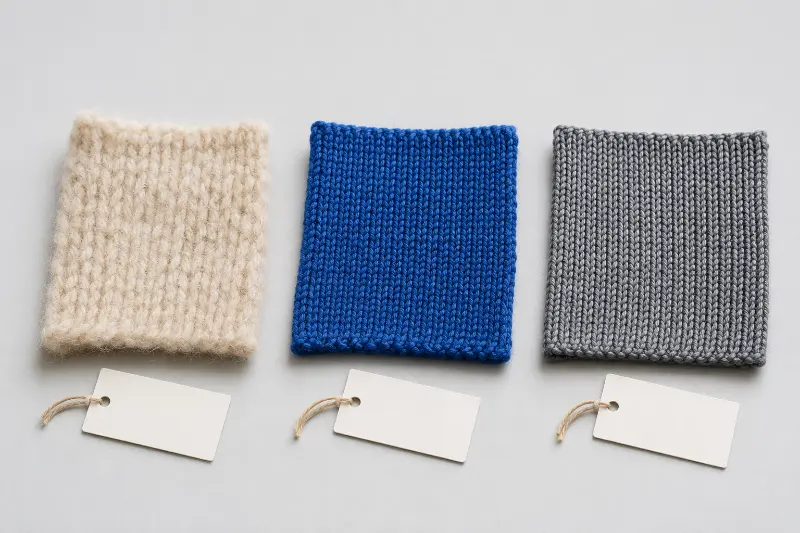
When developing custom sweaters or sourcing knitwear, many brands ask: "Is wool-acrylic-polyester blended yarn any good?" "Will it pill?" "How does it compare to pure wool?"
Wool-acrylic-polyester blends are one of the most common yarn combinations for autumn and winter knitwear. They preserve some of wool's natural warmth and texture while leveraging acrylic and polyester for better shape retention, durability, and cost-effectiveness. At Linknit (Dongguan Tuosheng Garment Co., Ltd.), a knitwear manufacturer founded in 2000, we have extensive experience working with a wide range of blended yarns. This article provides a factory-level analysis of this blend's pros, cons, and ideal applications.
What Is a Wool-Acrylic-Polyester Blend?
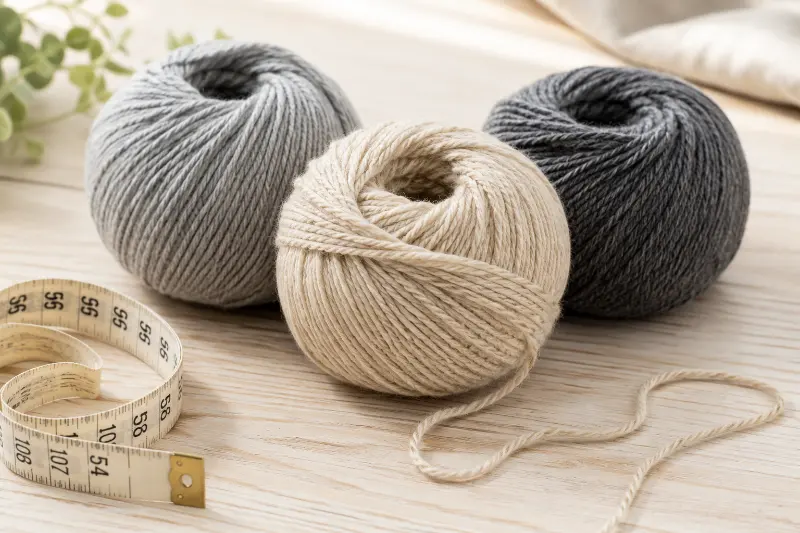
Wool is a natural animal fiber known for warmth, loft, and elasticity. Acrylic resembles wool in appearance and hand feel and is commonly used to enhance the wool-like texture while lowering cost. Polyester contributes strength, abrasion resistance, wrinkle resistance, and dimensional stability.
By blending these three fibers in specific ratios, manufacturers can combine the strengths of each. Common ratios include 30% wool / 50% acrylic / 20% polyester, or 20% wool / 60% acrylic / 20% polyester. The ideal ratio depends on the product's positioning, target price point, garment thickness, and customer requirements.
Advantages of Wool-Acrylic-Polyester Blended Sweaters
Retained Wool-like Texture
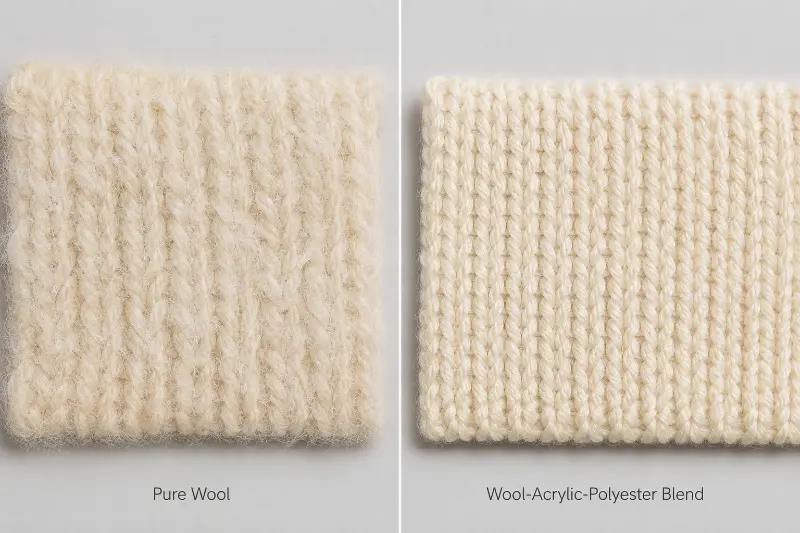
The wool content gives the sweater surface a natural loft and softness, with warmth that typically exceeds pure synthetic knits. This makes the blend suitable for autumn/winter sweaters, pullovers, and knit outerwear.
Better Shape Retention
Polyester improves yarn strength and dimensional stability, helping sweaters hold their shape through wear, washing, and shipping. For brands that prioritize consistent fit and silhouette, this is a significant advantage.
Wrinkle Resistance and Durability
Compared to pure wool, adding acrylic and polyester makes sweaters more abrasion-resistant and easier to care for — ideal for bulk orders, e-commerce lines, and mass-market retail. For quality control best practices, refer to our knitwear quality control guide.
Cost-Effective
Reducing the wool percentage while maintaining a wool-like appearance and warmth makes the final product more accessible for mass-market pricing. This is a well-established approach for balancing quality and budget.
If you are considering developing blended knitwear, explore our OEM/ODM custom development services for yarn selection and sampling guidance.
Disadvantages of Wool-Acrylic-Polyester Blended Sweaters
Skin feel and moisture absorption are typically not as good as high-wool-percentage or pure wool products. Some consumers with sensitive skin may experience slight itching, so next-to-skin garments require careful attention to yarn fineness and finishing treatments.
When acrylic and polyester content is high, breathability decreases, and static buildup may occur in dry conditions. If low-quality short-staple yarns are used, or the knit structure is too loose, pilling can also be a concern.
It is important to note that pilling depends on more than just fiber content — fiber length, yarn twist, knitting density, wash processing, and anti-pilling treatments all play a role. Working with an experienced knitwear manufacturer helps control these variables effectively.
Wool-Acrylic-Polyester Blend vs. Other Fabrics
| Factor | Wool/Acrylic/Polyester Blend | Pure Wool | Pure Acrylic |
|---|---|---|---|
| Warmth | ⭐⭐⭐⭐ Good | ⭐⭐⭐⭐⭐ Excellent | ⭐⭐⭐ Moderate |
| Shape Retention | ⭐⭐⭐⭐⭐ Excellent | ⭐⭐⭐ Moderate | ⭐⭐⭐⭐ Good |
| Skin Feel | ⭐⭐⭐ Moderate | ⭐⭐⭐⭐⭐ Soft | ⭐⭐⭐ Moderate |
| Breathability | ⭐⭐⭐ Moderate | ⭐⭐⭐⭐⭐ Excellent | ⭐⭐ Low |
| Pilling Resistance | ⭐⭐⭐⭐ Good (quality yarn) | ⭐⭐⭐ Moderate | ⭐⭐⭐ Depends on quality |
| Cost | ⭐⭐⭐⭐ Mid-low | ⭐⭐ High | ⭐⭐⭐⭐⭐ Low |
Best Applications for Wool-Acrylic-Polyester Blended Sweaters
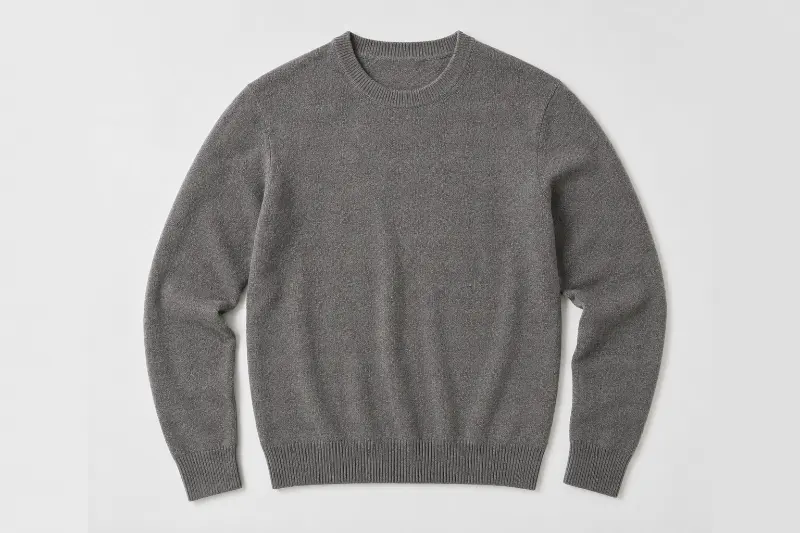
This blend is ideal for mass-market autumn/winter sweaters, knit cardigans, school uniforms, corporate uniforms, men's pullovers, women's knit jackets, and e-commerce brand basics. It is especially well-suited for bulk orders that require cost control, fit consistency, and durability.
For higher-end positioning, increase the wool ratio and choose fine-count or merino wool options. For price-sensitive and durability-focused products, a higher acrylic and polyester ratio is more appropriate.
Key Considerations for Custom Blended Sweaters
Before finalizing the yarn composition, brands should clarify the target season, price point, end-user profile, and care requirements. At Linknit, sampling typically takes 7–10 days, bulk production 20–26 days, with an MOQ of approximately 300 pieces. After sample completion, we recommend testing:
- Hand feel evaluation — confirm it meets the brand's comfort standards
- Shrinkage test — different blend ratios have different shrinkage rates
- Color fastness test — especially for dark colors, ensure wash and rub fastness
- Pilling resistance test — set target grades based on market requirements
- Post-wash dimensional change — garment length and chest measurements must stay within acceptable range
For more on the custom development process, contact us to discuss your project or request samples and pricing.
Frequently Asked Questions
Do wool-acrylic-polyester blended sweaters pill?
Pilling depends on fiber length, yarn twist, knitting density, and finishing treatments — not just fiber content. High-quality blended yarns with appropriate knitting density and anti-pilling finishing can achieve good pilling resistance. We recommend verifying through pre-production pilling testing.
Will this blend shrink?
Acrylic and polyester have low shrinkage rates, so blended yarns typically shrink less than pure wool. However, shrinkage varies by blend ratio and knitting density. Pre-production wash testing is recommended to confirm the specific shrinkage rate and adjust garment dimensions accordingly.
Is wool-acrylic-polyester blend suitable for next-to-skin wear?
If the wool content is high or the yarn is coarse, slight irritation is possible during direct skin contact. For close-fitting garments, we recommend fine-count wool blends or additional softening treatments. Adding linings or binding at collar and cuffs can also improve comfort.
Which is better — this blend or pure wool?
There is no absolute "better" — it depends on product positioning. Pure wool offers superior softness and warmth but at a higher cost and with more care requirements. Blends retain some wool feel while offering better shape retention, lower price points, and easier care. For mass-market and value-conscious brands, blends are a practical and proven choice.
Linknit (Dongguan Tuosheng Garment Co., Ltd.) — Founded in 2000 with a 2,000 sqm production facility, specializing in knitwear OEM and ODM services. If you are sourcing blended sweaters or developing a new knitwear collection, we welcome your inquiry. Send us your design references or specifications, and we will guide you from yarn selection through finished garment delivery.