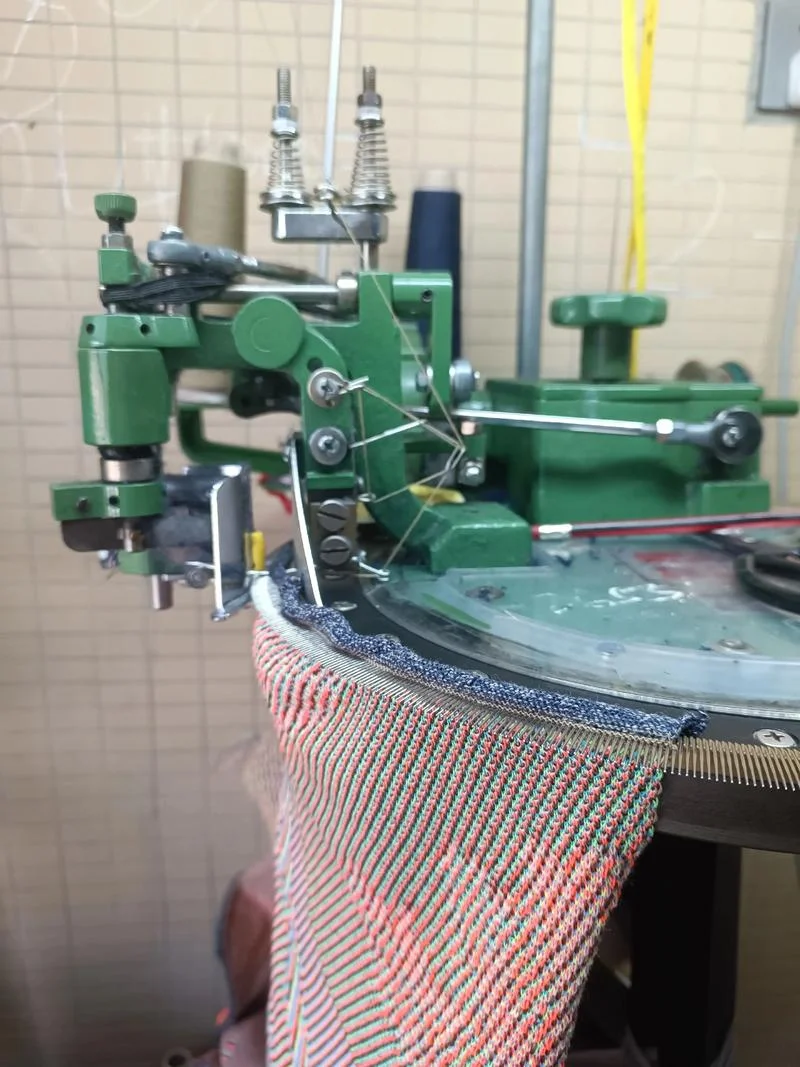
In the knitwear industry, there is one process that relies almost entirely on the artisan's "hand feel" to determine quality — this is linking.
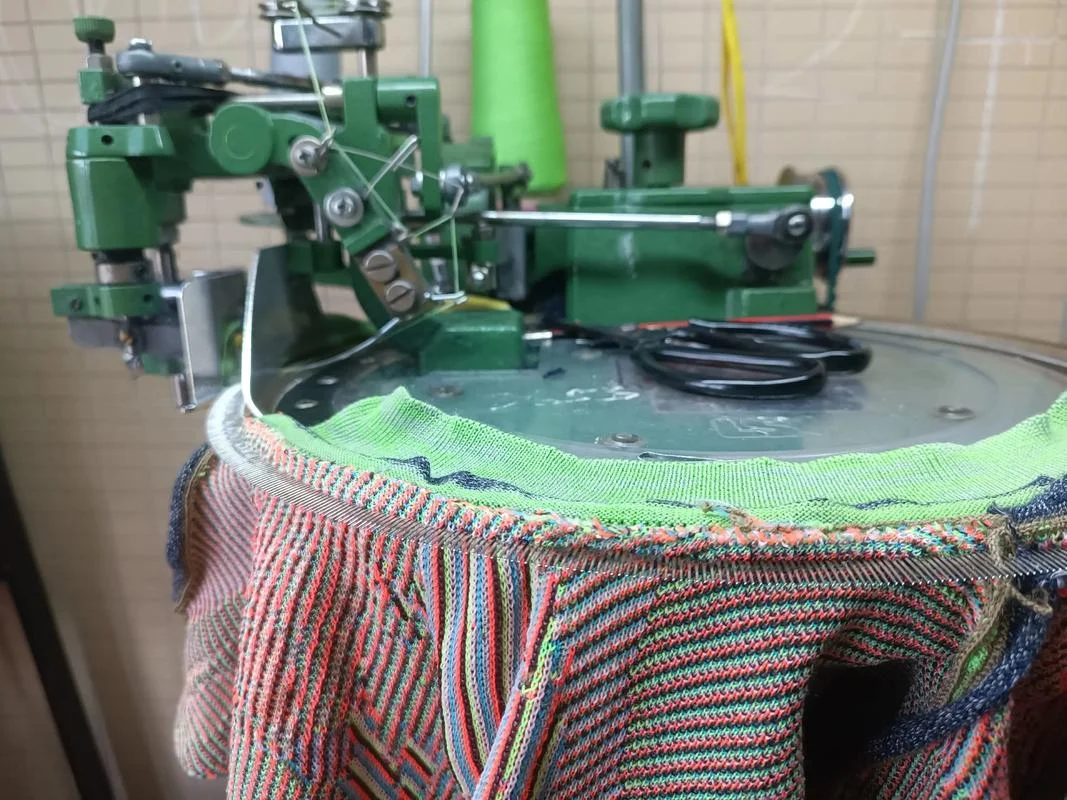
Linking, also called looping, is the process of joining sweater panels — front, back, sleeves, and other parts — stitch by stitch using a linking machine. Unlike regular sewing, linking requires aligning each individual "loop" of the fabric, creating seams that are flat, secure, and consistent in elasticity — nearly invisible to the naked eye.
Whether a sweater fits well when worn, whether the shoulder line is straight, whether the armhole has any pulling sensation — these experiential differences often trace back to the linking process.
And skilled linking workers are becoming increasingly rare in the knitwear industry.
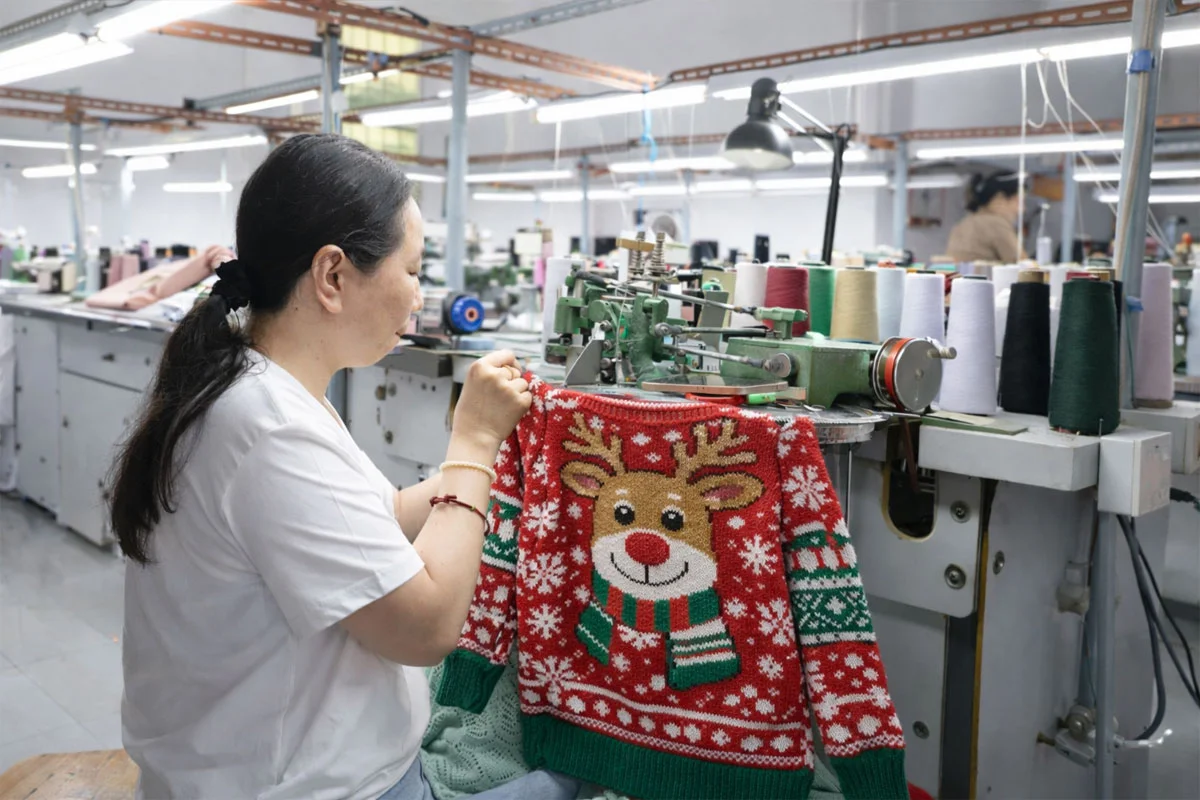
1. Why Are Linking Workers Considered a "Special Trade"?
Linking workers are special because they require three abilities simultaneously — eyesight, hand feel, and experience — all indispensable.
1.1 Eyesight — Perception of the Loops
Unlike regular sewing machines that can be foot-pedal fed automatically, linking requires the worker to manually place each loop onto the linking machine's needles before pressing the pedal to complete the stitch.
For chunky knit sweaters (3G–7G), the loops are large and sparse, seemingly easier to handle, but because the yarn is thick and requires more force, the worker needs greater arm strength to control the fabric. Fine gauge sweaters (12G–16G) have tiny, dense loops — processing thousands of loops per hour is a tremendous test of eyesight and patience.
1.2 Hand Feel — Subtle Control of Tension
The tightness of the linking seam directly affects finished quality:
- Too tight: The seam puckers, creating a pulling sensation when worn; prone to deformation after washing
- Too loose: The seam tends to open up, producing "visible seam lines"
- Uneven tension: A single garment has seams with inconsistent tightness, creating an uneven hand feel
An experienced linking worker can judge yarn elasticity from the feel of pulling the fabric, automatically adjusting the joining tension — this skill takes at least 3–5 years to develop.
1.3 Experience — Understanding Craftsmanship
The hardest part of linking isn't just joining the panels — it's understanding "how to join them correctly":
- The sleeve cap curve requires specific stitch reduction at certain points for a natural transition during linking
- Shoulder seams need to be angled — straight seams won't sit properly when worn
- Ribbed hems require more stretch allowance than jersey sections
A good linking worker is not just an operator but, to some extent, a craft technician — they can read tech sheets, judge how stitch shaping affects seams, and even offer revision suggestions when the sample program is off.
2. Where Linking Fits in the Sweater Production Process
From yarn to finished garment, linking sits in the middle of the production flow, serving as a bridge:
| Process | Description | Key Control Points |
|---|---|---|
| ① Yarn preparation | Incoming inspection, winding, color matching | Color difference, yarn twist |
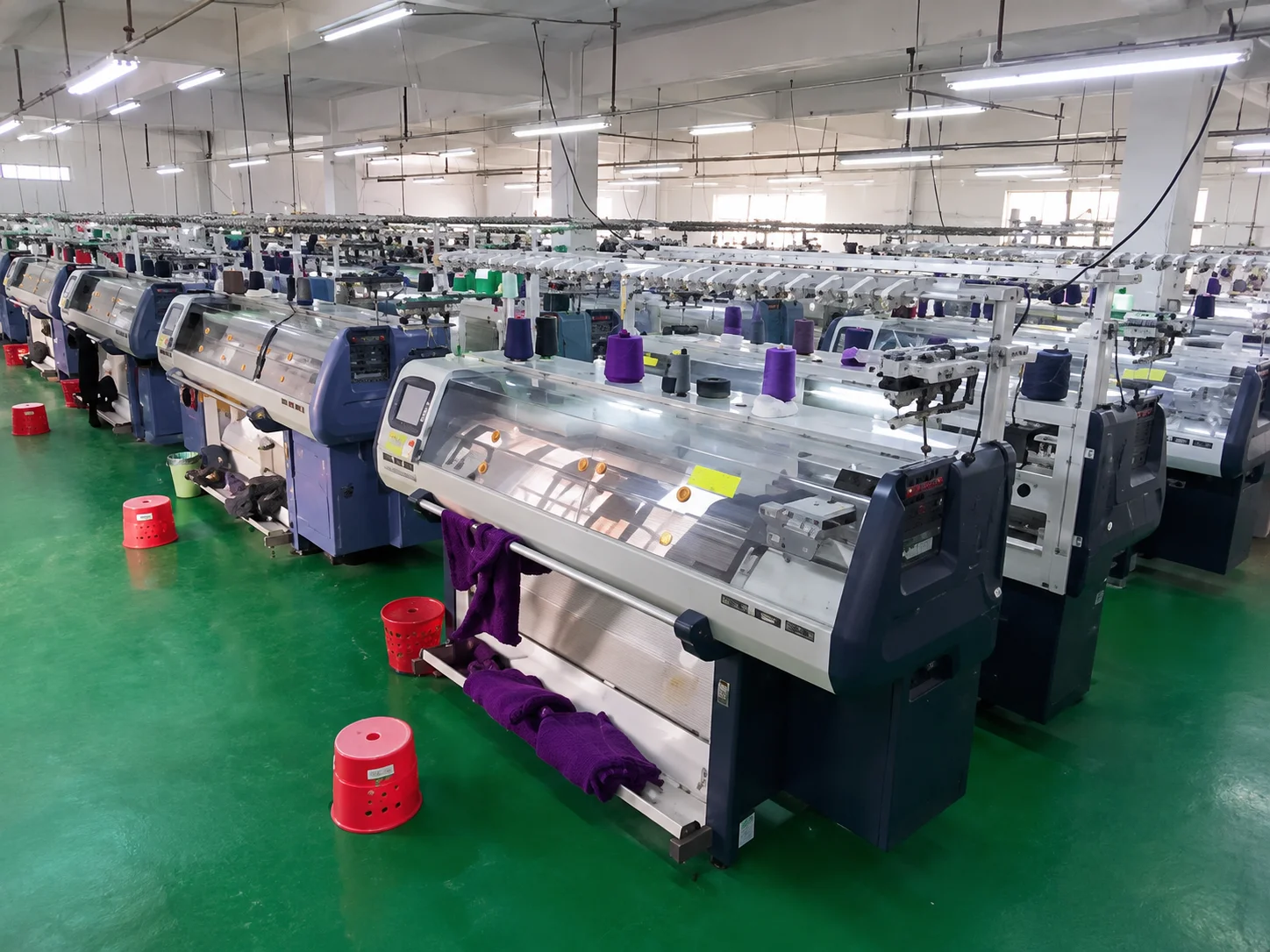
| ② Flat knitting | Knit all panels (front/back/sleeves/collar, etc.) | Density, stitch shaping precision |
| ③ Linking | Join all panels into a completed sweater | Seam flatness, elastic consistency |
| ④ Hand sewing/repair | Handle seam ends, repair defects | Thread length, repair firmness |
| ⑤ Washing/fulling | Fulling and softening per requirements | Shrinkage control, hand feel |
| ⑥ Pressing/shaping | Steam setting for stable dimensions | Dimensional accuracy |
| ⑦ QC & packing | Full inspection of appearance, dimensions, craftsmanship; pack for shipment | AQL standard sampling |
Good linking makes the subsequent repair work easier; poor linking compromises the finished quality no matter how much the later processes try to compensate.
For the complete sweater production process, refer to Complete Guide to Sweater Factory Production Process.
3. Common Types of Linking
Linking isn't just about "sewing panels together" — different seam positions have different requirements:
3.1 Shoulder Seams
Requires the highest strength — the shoulder bears the weight of the entire garment. The standard method is four-thread overlock with shoulder tape reinforcement. Premium custom styles use hand stitching at the shoulders for both strength and aesthetics.
3.2 Side Seams
The vertical seam from underarm to hem. Side seams require good elasticity and flatness without puckering. If the side seam of a chunky knit sweater isn't done well, it will "pop up" when worn.
3.3 Sleeve Cap Joining
The curved seam connecting the sleeve to the body — this is the most challenging area for linking. How smoothly the curve transitions directly determines whether there's a binding sensation when raising the arm.
3.4 Neckline and Placket
Crew neck, V-neck, fold-over collar, polo collar — different collar types have different precision requirements for linking. The V-neck point is the most error-prone position — if the angle is slightly off, the V-neck becomes a "crooked neck."
For different collar and placket techniques, refer to our Knit Cardigan Procurement Guide and Knit Polo Procurement Guide.
4. Why Linking Workers Are Becoming Increasingly Scarce
| Reason | Explanation |
|---|---|
| Long training period | From apprentice to independent operation takes 1–2 years; skilled proficiency requires at least 3–5 years |
| High work intensity | Prolonged sitting, intense concentration, high demands on hands and eyes |
| Few young entrants | Younger workers prefer more automated, assembly-line industries; fewer are willing to learn linking |
| Limited machine substitution | Although automatic linking machines exist, fine styles and high-elasticity fabrics still require manual adjustment |
Because of the scarcity of linking workers, factories with stable, experienced linking teams have a natural quality advantage.
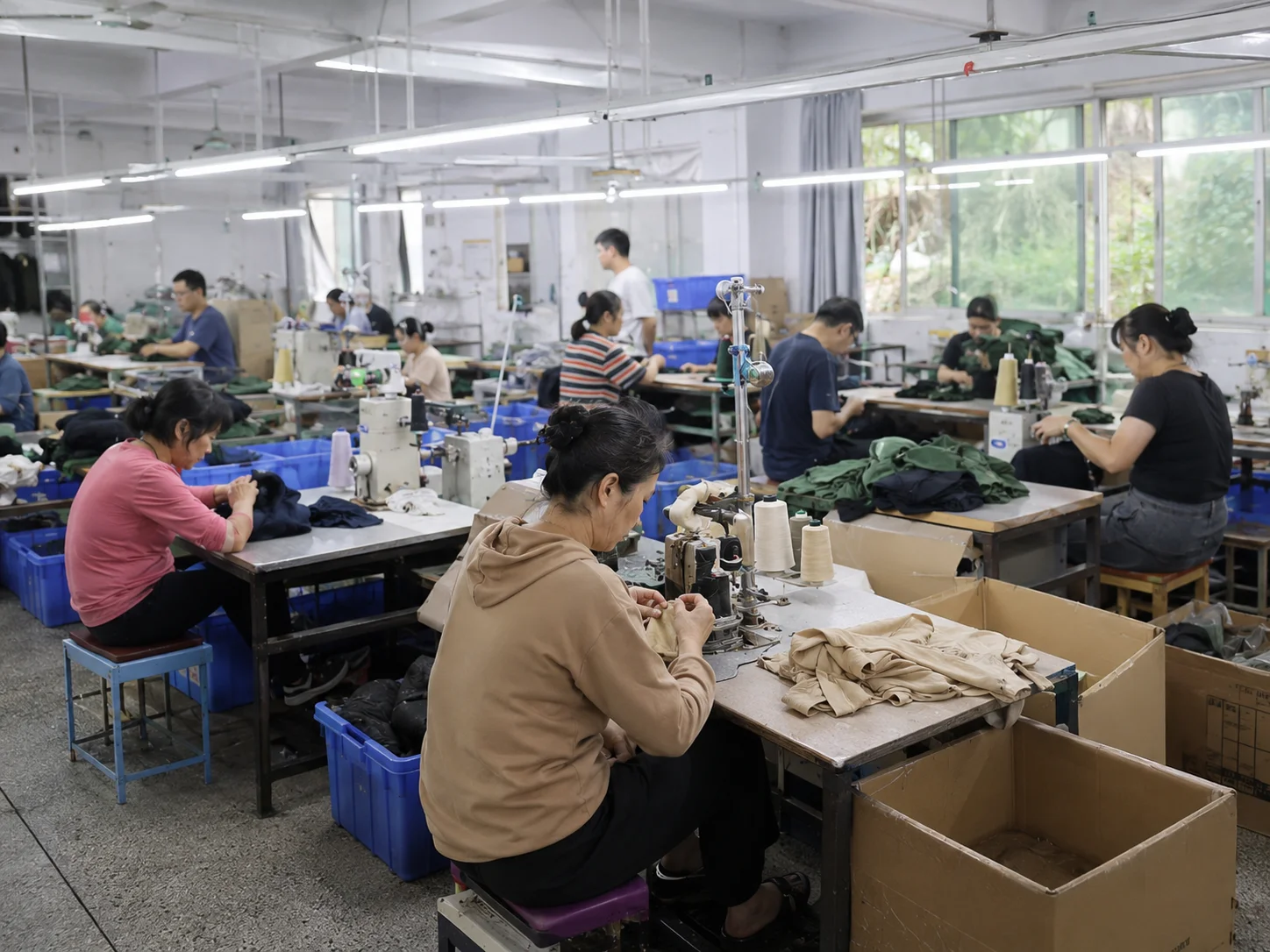
Linknit's linking team has an average experience of over 8 years, with the longest-serving member having 15 years on the job. They can handle not only standard joining work but also adjust techniques for different yarns and knit structures — something machines cannot do.
5. Linking and Quality Control
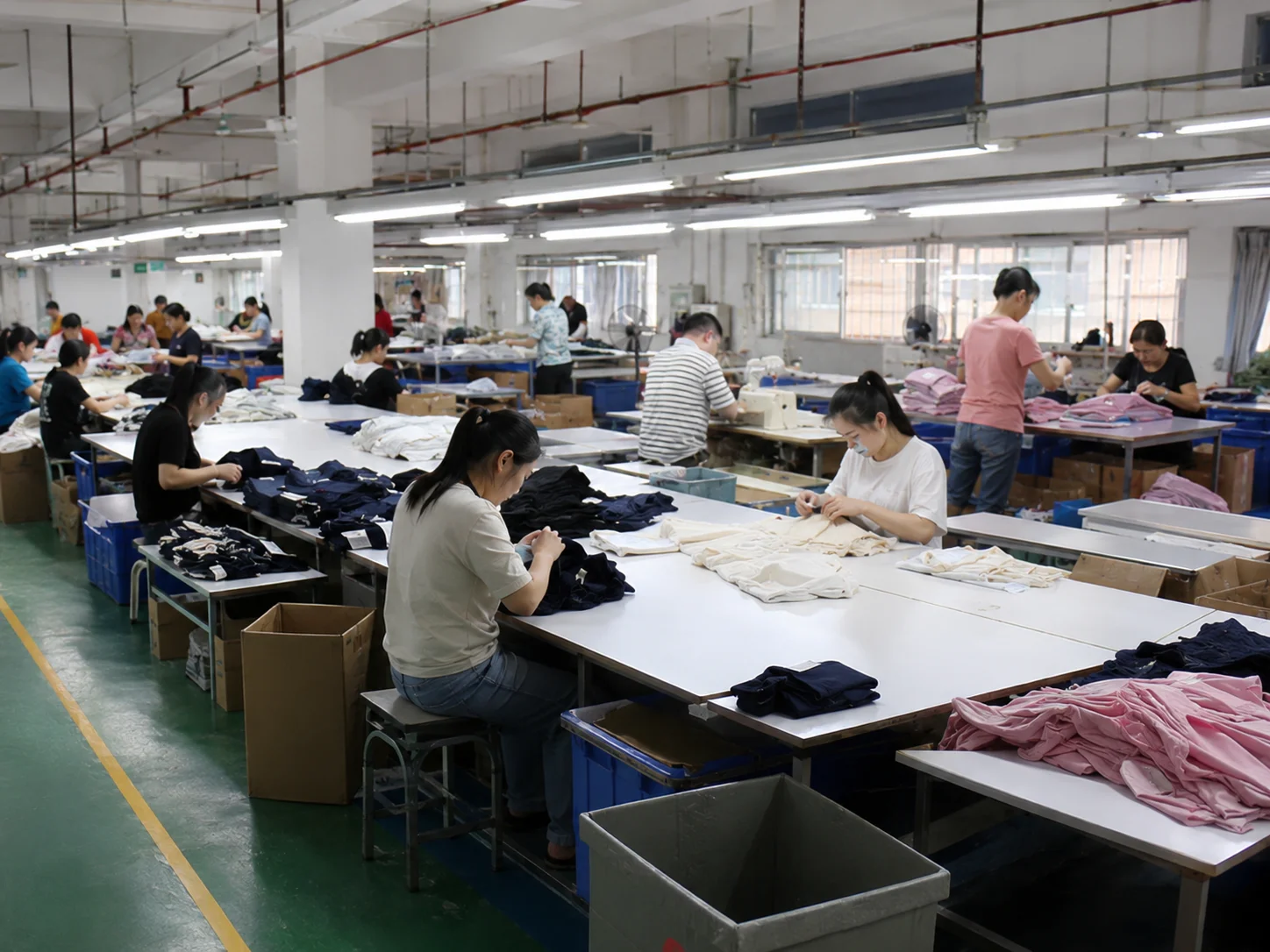
The quality of the linking process directly determines the garment's AQL pass rate. Linknit has two QC checkpoints in the linking stage:
- First-piece linking approval — Before a style goes into production linking, one piece is linked first and jointly reviewed by the QC team lead and linking team lead for joining method, tightness, and seam appearance
- In-process inspection — After linking and before washing, an intermediate inspection checks seam flatness, skipped stitches or missed seams, and thread handling
Our QC system runs throughout the entire production process — from yarn receiving to finished packaging, with rigorous checkpoints at every stage. For complete QC standards, refer to Complete Guide to Knitwear Quality Inspection Standards.
6. What Machines Can't Replace
In recent years, automatic linking machines have been gradually adopted. Currently, machine linking is mainly suitable for:
- Large-volume, single-style orders (e.g., 5,000 pieces of the same crew neck sweater)
- Standard gauges (works best in the 9G–12G range)
- Standard elasticity, conventional yarns (performance is unstable with special elastic or fancy yarns)
However, in the following scenarios, manual linking remains irreplaceable:
- Chunky knit sweaters (3G–7G) — large loops require manual adjustment of loop spacing during joining
- Complex designs — cardigan placket assembly, pocket attachment, jacquard pattern alignment
- High-end materials like cashmere — extremely high seam flatness requirements; machine linking tends to be too tight
- Small fast-fashion batches (a few hundred pieces) — machine changeover time is too long; manual is more flexible
Linknit's linking workshop is equipped with both traditional linking machines and automatic linking machines, flexibly deploying based on order characteristics — not every process is worth automating, and not every process should be done by hand — the key is choosing the right method.
Summary: Linking is a trade in the knitwear industry that "looks simple but is extremely difficult to master." It requires not brute force but patience, eyesight, and experience working together.
A sweater's ultimate quality and lifespan often come down to the linking process.
For over two decades since its founding, Linknit has consistently trained and retained its own linking team. Because we firmly believe — machines can improve efficiency, but skilled linking workers are the true guardians of knitwear quality.
Want to learn about Linknit's linking capabilities or factory overall strength? Welcome to contact us to schedule a factory visit or video audit. You can also view our Full Factory Profile to learn more about our equipment, QC, and capacity.