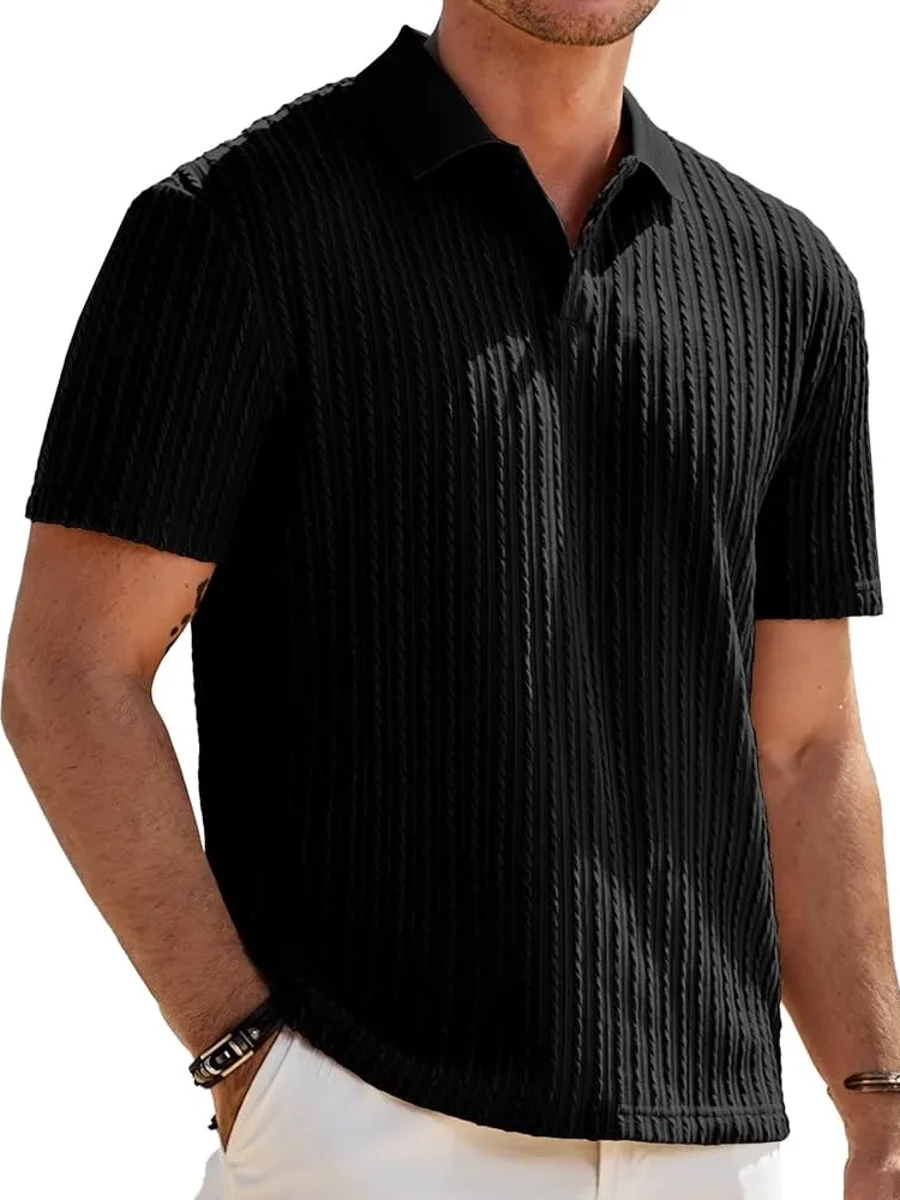
The knit polo is a "cross-over player" in the sweater category — it has the business appeal of a polo shirt with the comfort and stretch of knits.
In recent years, knit polos have grown significantly faster than conventional sweaters and woven polos in Western markets, because they meet three needs at once: business professionals want a top more comfortable than a dress shirt yet more formal than a T-shirt; brands want a versatile basic that can be worn year-round with low return rates; cross-border sellers want a lightweight product with higher unit price and lower logistics costs.
1. Knit Polo vs Woven Polo — Key Differences
| Dimension | Knit Polo | Woven Polo |
|---|---|---|
| Fabric | Knit construction, stretchy | Woven construction, no stretch |
| Comfort | High (stretch conforms to body movement) | Medium (no stretch, less convenient to put on/take off) |
| Breathability | Good (knit structure is naturally breathable) | Depends on fabric |
| Formality | Business casual | Formal business |
| Care | Some machine washable (confirm first) | Generally machine washable |
| Production Cost | Medium | Medium-low (woven efficient at scale) |
| Season | Spring, summer, fall | Mainly spring and fall |
| Price Range | $30–$80 (FOB mid-high) | $20–$50 (FOB mid-low) |
The biggest selling point of a knit polo is "comfortable to wear, presentable to look at." Consumers are willing to pay a premium for this combination of comfort and style.
2. Gauge Selection for Knit Polos
The gauge of a knit polo directly determines the finished fabric's texture and market positioning:
| Gauge | Effect | Positioning | Recommendation |
|---|---|---|---|
| 12G | Refined and dense, close to woven fineness | ⭐⭐⭐⭐⭐ Best choice | Most commonly used gauge for knit polos |
| 14G | Ultra-fine, lightweight and breathable | ⭐⭐⭐⭐ | Summer thin styles, high-end business styles |
| 7G | Chunky and textured, casual feel | ⭐⭐⭐ | Rarely used for fashion casual styles |
| 9G | Between 7G and 12G | ⭐⭐⭐ | A middle-ground alternative |
12G is the sweet spot for knit polos. Too coarse (7G) looks insufficiently refined; too fine (14G) lacks structure at the placket and collar. 12G strikes the best balance between refinement and structure.
3. Three Key Craftsmanship Points for Knit Polos
3.1 Collar and Placket
The collar is where craft quality is most visible:
- Ribbed collar vs Folded collar: Ribbed collars are softer and more casual; folded collars (with interfacing) are crisper and more formal
- Placket reinforcement: Button holes should use matching ribbing or reinforced jersey to prevent stretching from repeated use
- Top button: The first button sits at the collar closure — reinforcement stitching here is critical
3.2 Cuffs and Hem
| Area | Common Technique | Notes |
|---|---|---|
| Cuffs | 2×2 or 1×1 ribbing | Cuff tightness directly affects wearing comfort |
| Hem | Ribbed hem, with or without side slits | Side slits are more business-like, no slits more casual |
| Placket base | Triangle reinforcement | Reduces deformation and tearing at the placket base |
3.3 Logo/Embellishment
Knit polos are ideal for logo placement:
| Logo Method | Effect | Best For |
|---|---|---|
| Jacquard knit-in | Premium, durable | Brand logos, lettering |
| Embroidery | Three-dimensional | Small chest logos, brand initials |
| Low cost | Volume styles, promotional styles | |
| Exposed label | Accent effect | Minimalist brands |
4. Market Positioning Recommendations for Knit Polos
| Tier | Yarn | Gauge | FOB Reference | Suggested Retail |
|---|---|---|---|---|
| Volume | Cotton-acrylic blend | 12G | ¥50–70 | $20–$35 |
| Quality | Combed cotton/Merino | 12G | ¥70–100 | $35–$60 |
| Premium | Fine Merino/Cashmere blend | 12G–14G | ¥100–180 | $60–$120 |
Have a specific knit polo development need? Feel free to contact us to discuss styles and pricing.