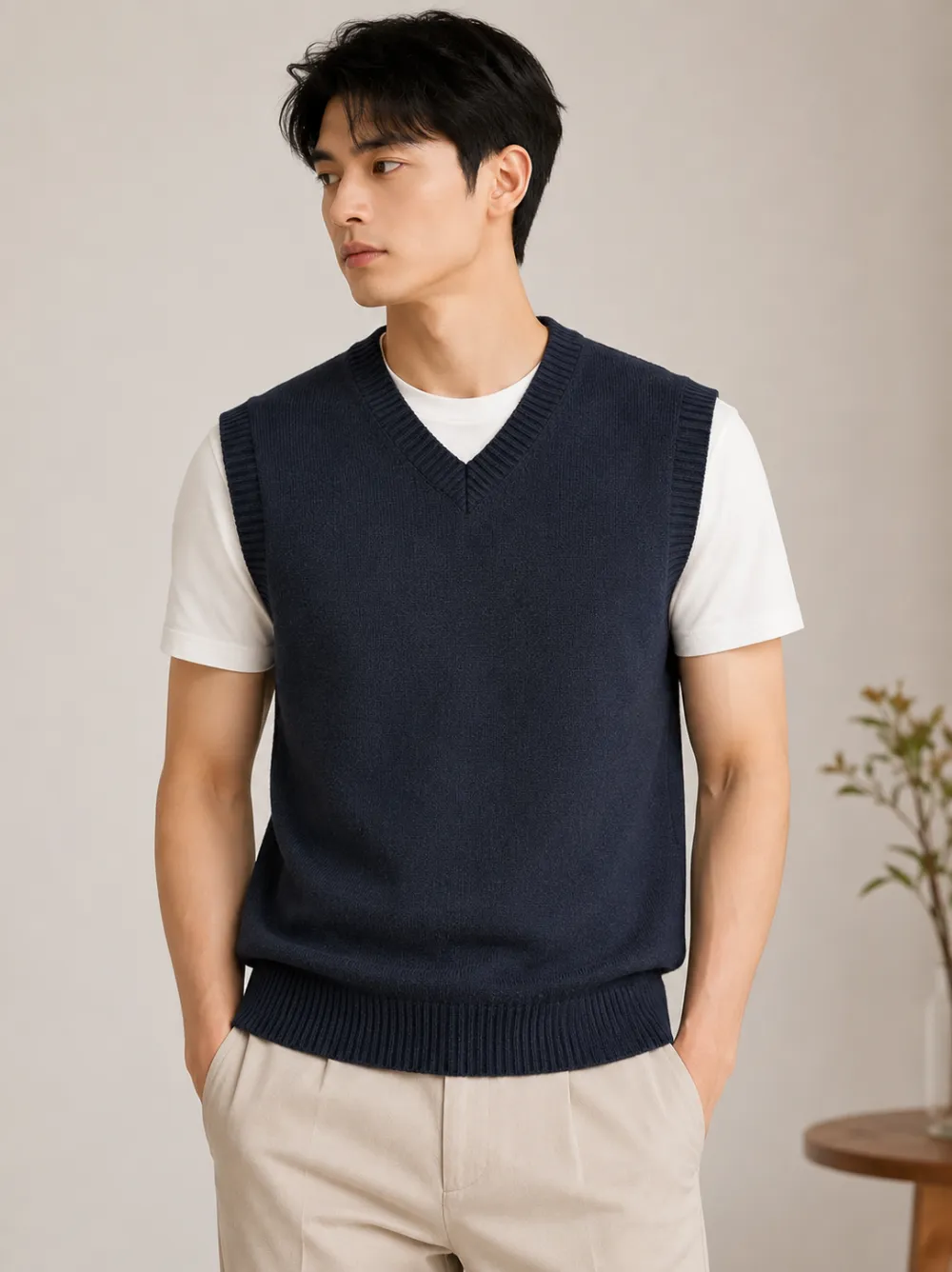
A knit vest looks simpler in structure than a sweater — no sleeves, no complex plackets — but this very "simplicity" makes quality differences especially pronounced.
Whether the armhole curve is smooth, whether the neckline collapses after washing, whether the hem rolls up — the craftsmanship precision at these three areas is the hard benchmark for judging a knit vest factory's level.
This article covers four dimensions — yarn, gauge, fit, and quality control — to help brands find the right sweater vest customization factory.
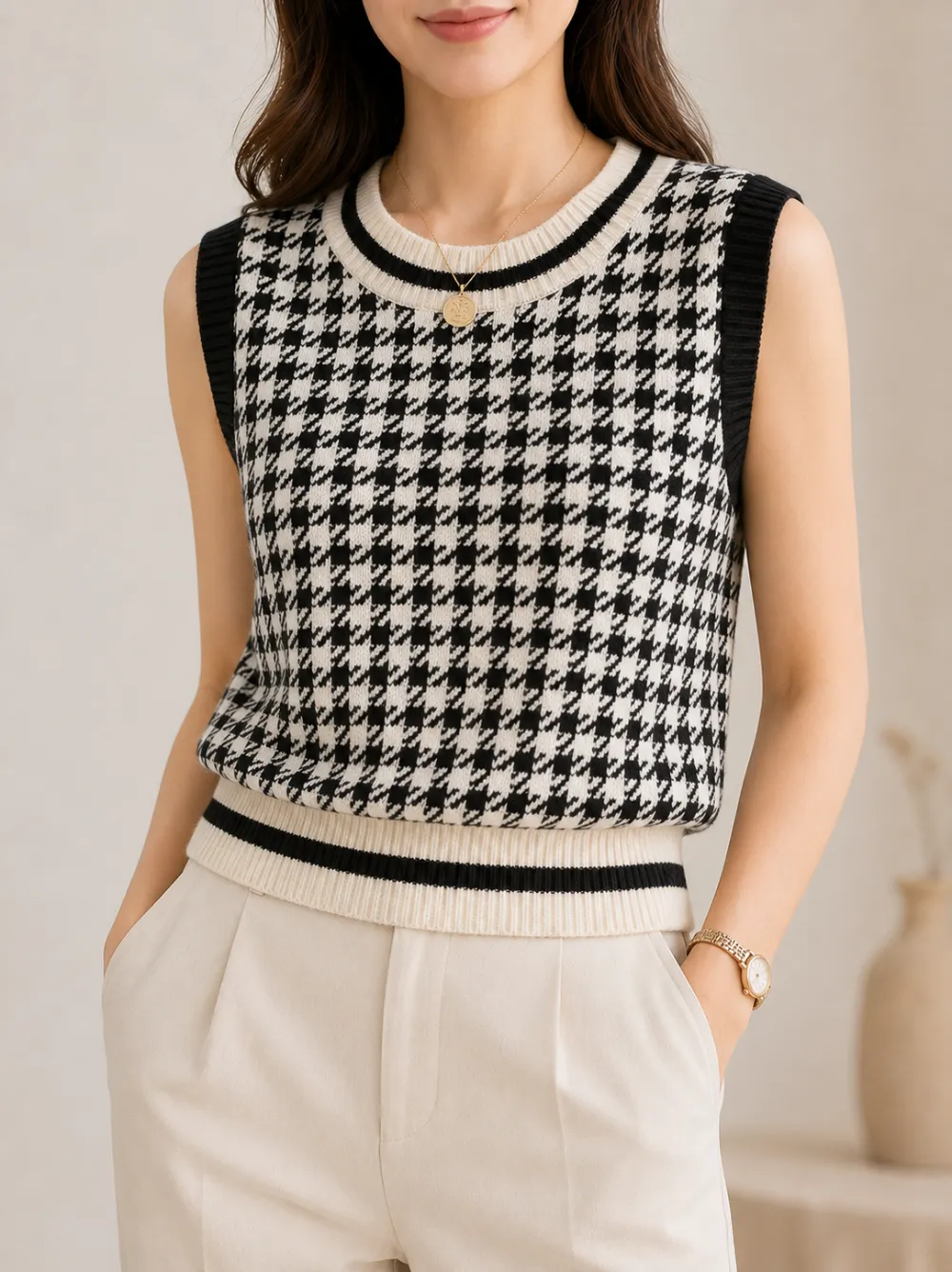
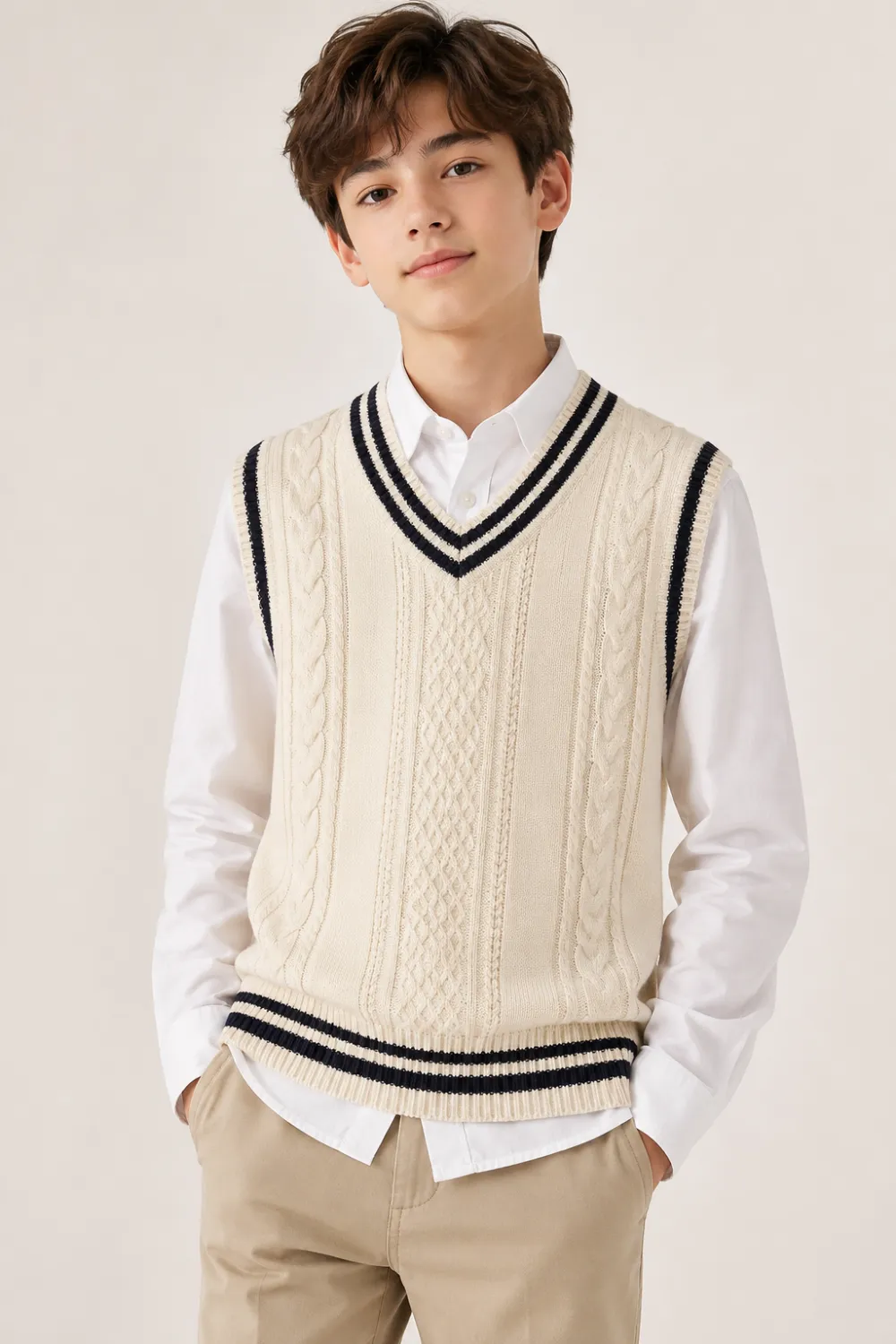
QA Checklist 1: Yarn Selection for Vest-Specific Requirements
Because knit vests expose the arms and part of the torso, fabric requirements differ from sweaters:
| Yarn Type | Suitable Vest Type | Features |
|---|---|---|
| Worsted wool | Business/formal vest | Fine hand feel, crisp fit |
| Pure cotton | Casual vest | Breathable and comfortable, wearable in spring/summer |
| Cotton/linen blend | Relaxed/vacation style | Natural crease effect, suitable for loose fits |
| Acrylic blend | Budget basic | Economical, best for large volume |
Key point: Vests worn against the skin (especially women's tank tops) must use soft, non-itchy yarn. If wool touches the skin directly, consider adding a lining or choosing soft-finished combed cotton.
For detailed comparison of various yarn materials, refer to Acrylic, Cotton-Wool Blends, and Fancy Yarns: Cost-Effective Sweater Fabric Choices.
2. Gauge — Chunky vs Fine Knit
| Gauge | Effect | Suitable Vest Type |
|---|---|---|
| 7G–9G | Pronounced texture, thick and structured | Fall/winter waistcoats, preppy argyle vests |
| 12G | Moderate, all-season | Business vests, basics |
| 14G–16G | Lightweight and delicate, refined | Next-to-skin wear, summer styles |
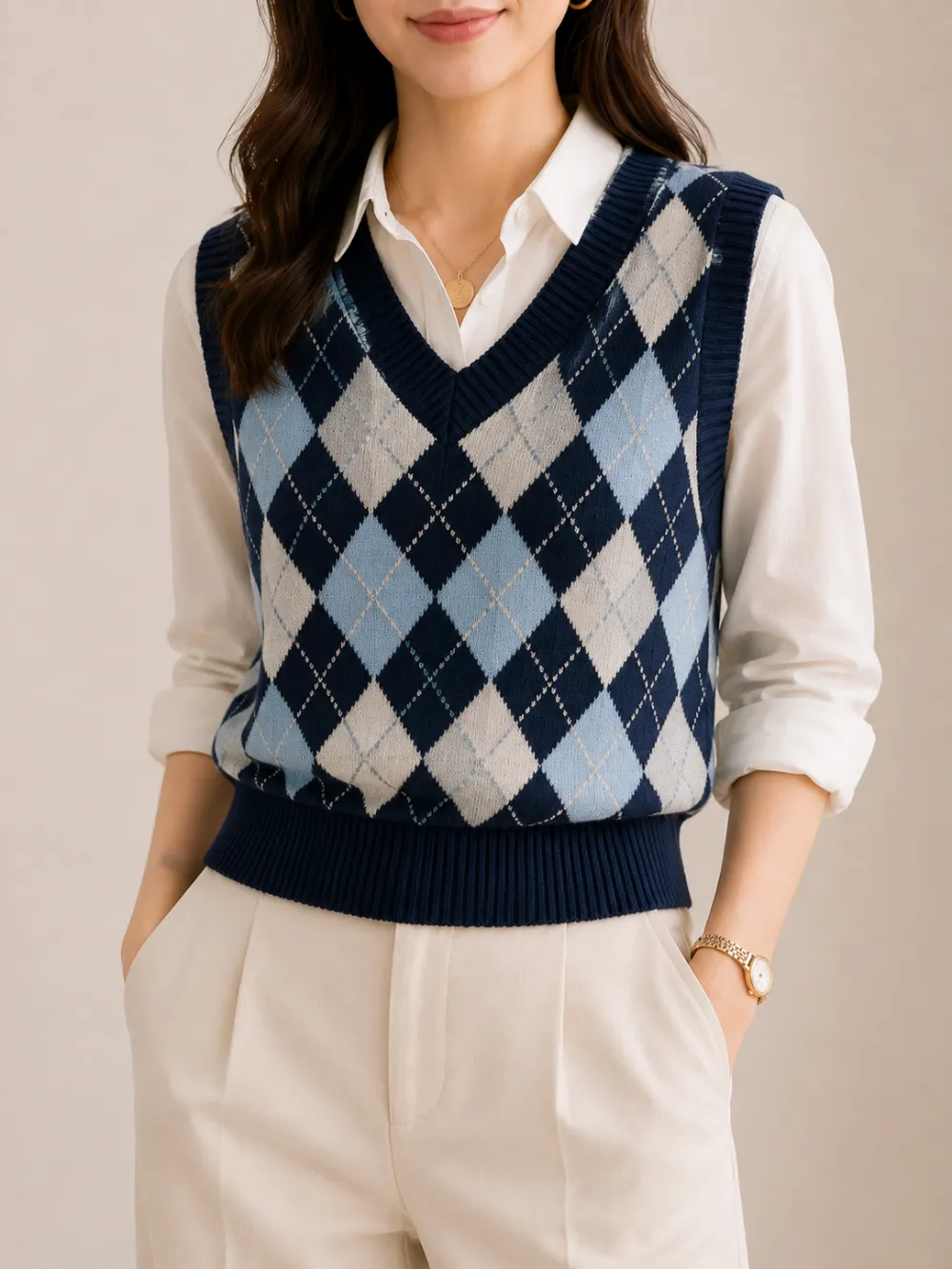
3. Fit — Three "Life-or-Death" Areas of a Vest
3.1 Neckline
This is where knit vest factories most commonly have issues. If the V-neck point is slightly off, the entire vest looks "crooked."
Acceptable standards:
- V-neck: Left-right symmetrical, V-point clean and burr-free
- Crew neck: Even curve, centered and straight
- Neckline does not sag or loosen after washing
3.2 Armhole
Since vests have no sleeves, the armhole curve is fully exposed. Poor armhole finishing creates a "pulling" feel.
Acceptable standards:
- Smooth curve with no wrinkles
- Does not bind when arms hang naturally
- Does not slip when arms are raised
3.3 Hem
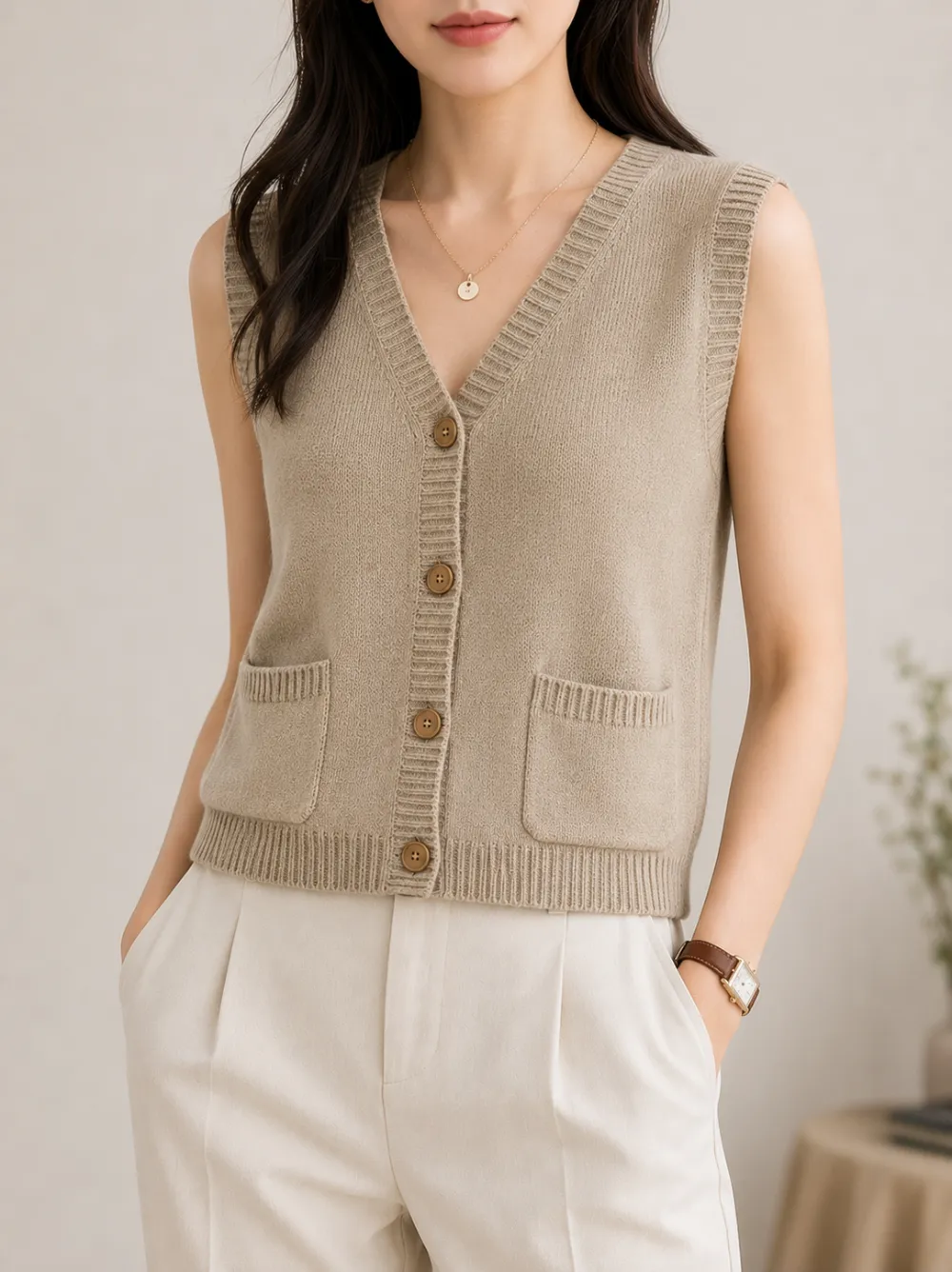
Hem curling is the most common quality issue in knit vests.
Solutions:
- Use 3–5cm wide ribbing for hem finishing (most effective and simplest)
- Increase knitting density in the hem area
- Perform wash tests before bulk production to check curling
4. Three Questions to Ask a Knit Vest Factory
- How many vest styles have you produced? — Vest fit requirements are unique; experienced factories know how to control armhole curves
- How do you finish the armhole and neckline? — The answer should be: add elastic thread or double-layer knitting to prevent deformation after washing
- How do you design the vest's stitch shaping? — A good factory will suggest specific stitch shaping points and density plans based on your fit
For quality inspection standards, refer to Complete Guide to Knitwear Quality Inspection Standards.
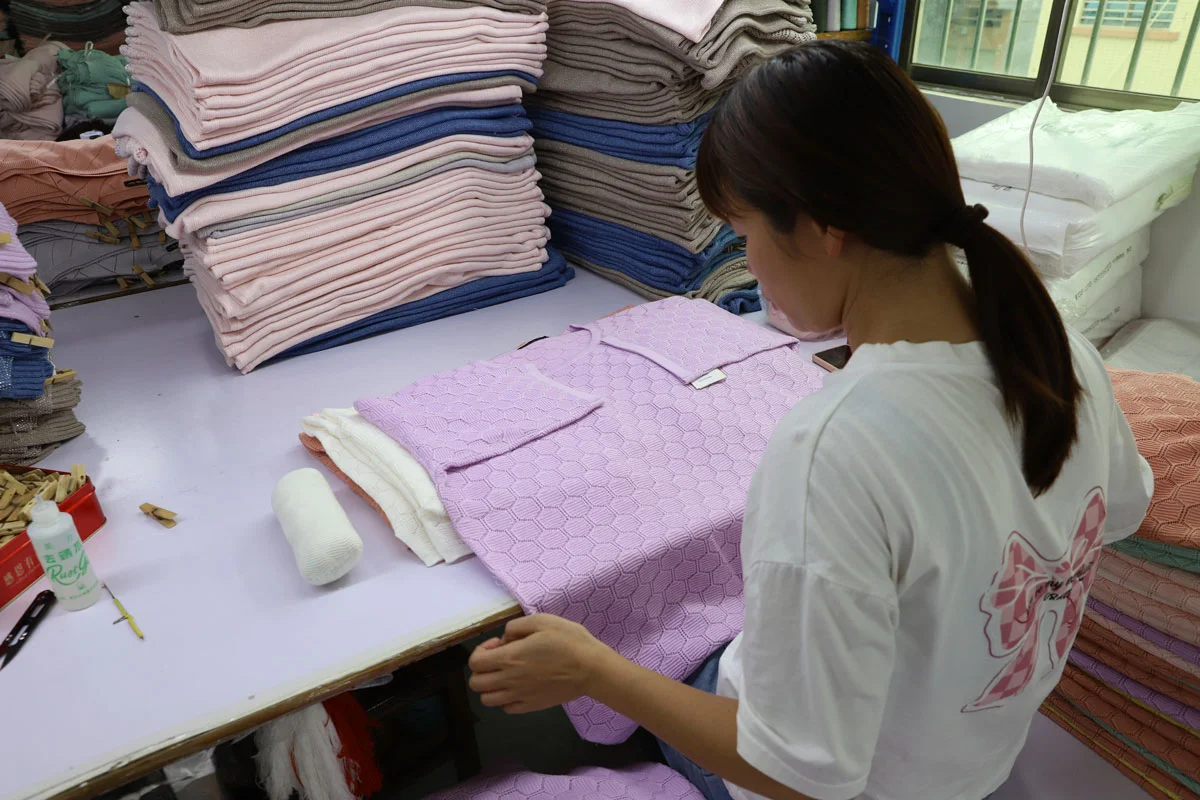
For a complete vest category sourcing guide, refer to Knit Vest Sourcing Guide and Comprehensive Knitwear Factory Evaluation Guide.
Summary: When choosing a knit vest factory, focus on three areas — neckline, armhole, and hem. If these three are done well, the factory has real expertise in the vest category.
Linknit has extensive experience in the knit vest category. V-neck point stitch shaping and armhole curve control are our craft strengths. Feel free to contact us for pricing or to evaluate your designs.