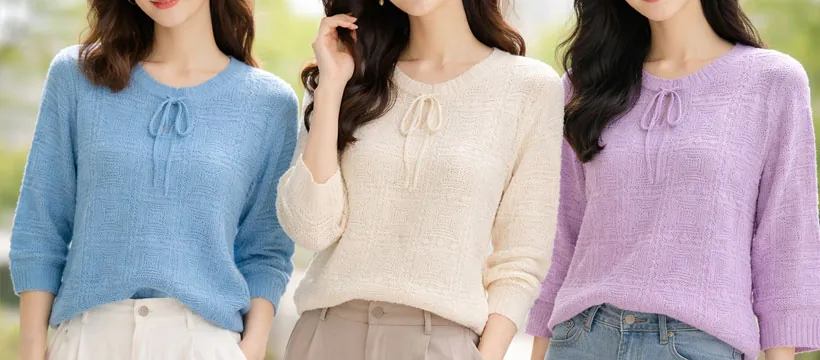
70% of a sweater's cost and quality is determined by its yarn.
When developing knitwear products, brands and cross-border sellers face one recurring question: "What yarn should we use?" Should you go with acrylic for volume or wool for quality? What exactly goes into a blend? Is fancy yarn worth the investment?
This article breaks down the characteristics, costs, and applications of three mainstream sweater materials.
Three Materials, Three Positions
| Material Type | Core Positioning | Typical Raw Material Price | Best For |
|---|---|---|---|
| Acrylic | Affordable, vibrant colors | 30–60 RMB/kg | Fast fashion, mass-market e-commerce, promotional items |
| Cotton-Wool Blend | Comfort-balanced, great value | 60–120 RMB/kg | Brand basics, mid-range positioning |
| Fancy Yarn | Design-driven, differentiation | 80–200+ RMB/kg | Designer pieces, boutiques, high-margin products |
1. Acrylic: The Most Economical Sweater Material
Acrylic is the most commonly used synthetic fiber, often called "synthetic wool" — it looks and feels similar to wool but costs only one-third to one-fifth the price.
Advantages
- Low cost — at the same weight, acrylic is about 20%–30% of wool's cost
- Excellent color performance — vibrant dyeing, high colorfastness, great for bright colors
- Durable and easy-care — non-shrinking, resists pilling (quality acrylic), wrinkle-resistant
- Lightweight — about 20% lighter than wool at the same thickness
Disadvantages
- Average thermal insulation — not as warm as wool or cashmere
- Poor breathability — can feel stuffy with prolonged wear
- Inferior hand feel versus natural fibers — though improving, still lags behind premium wool
Best Applications
| Product | Notes |
|---|---|
| Fast fashion sweaters | Styles prioritizing low cost and quick turnover |
| Children's sweaters | Washable, non-shrinking — parents appreciate the ease |
| Colorful cardigans/jackets | Designs requiring high color vibrancy |
| Promotional / traffic-driving items | Targeting the $9.99–$19.99 price range |
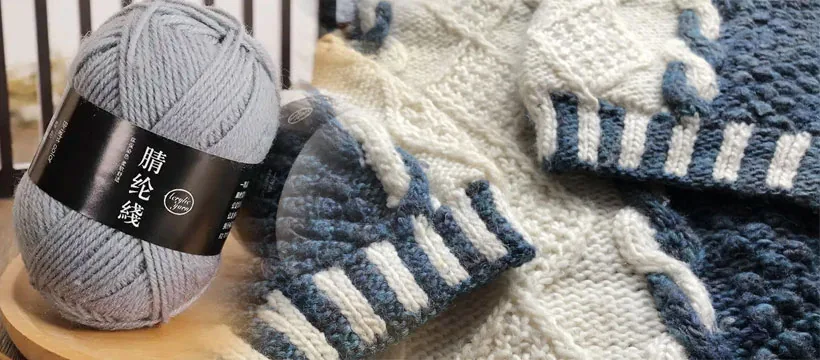
2. Cotton-Wool Blend: The Sweet Spot for Mid-Range Markets
Cotton-wool blends offer the best value proposition — natural fiber comfort with controlled costs. Common blend ratios and their characteristics:
| Blend Ratio | Hand Feel | Cost | Common Uses |
|---|---|---|---|
| 60% cotton + 40% acrylic | Soft, skin-friendly, good structure | Medium | Spring/summer lightweight styles, polo shirts |
| 50% cotton + 50% wool | Warm + breathable, balanced feel | Mid-high | Fall/winter basic sweaters |
| 70% wool + 30% acrylic | Close to wool feel, cost-controlled | Mid-high | Volume wool alternative |
| Viscose + nylon blend | Good drape, slight stretch | Medium | Dresses, fitted styles |
The core value of cotton-wool blends: deliver a hand feel that says "worth the price" at a reasonable cost. This is the most common strategy for mid-range brands.
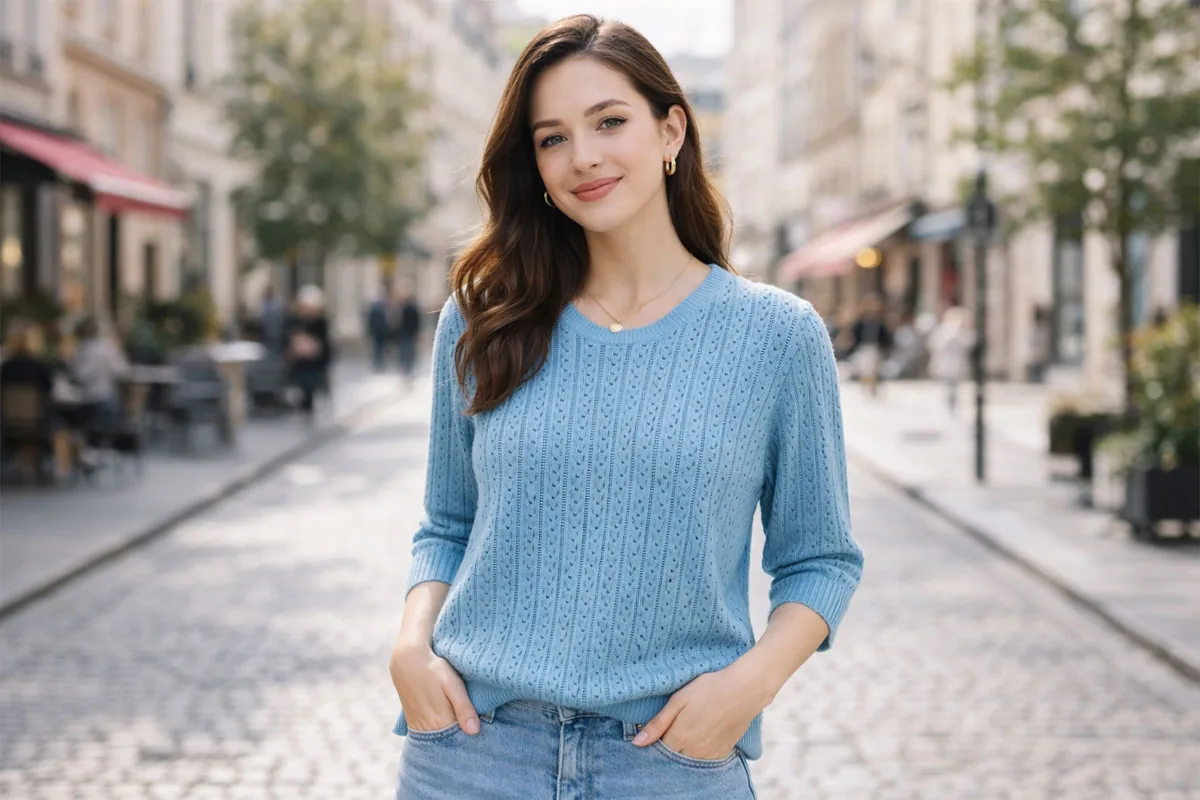
3. Fancy Yarn: Creating Premium with Craftsmanship
Fancy yarn isn't a single fiber content — it's a category of yarns with special spinning techniques that create visual effects. The same style made with fancy yarn can retail for 30%–50% more.
Common Fancy Yarn Types
| Type | Features | Suitable Styles | Premium Potential |
|---|---|---|---|
| Loop Yarn | Surface loops, fluffy and soft | Jackets, cardigans | +20%–30% |
| Slub Yarn | Irregular thickness, natural look | Casual styles, artsy looks | +15%–25% |
| Nep Yarn | Colored flecks in the yarn | Fashion styles,个性款 | +20%–35% |
| Metallic Yarn | Embedded metallic threads, shiny | Party wear, formal pieces | +30%–50% |
| Space-Dyed Yarn | Segmented color dyeing on single yarn | Scarves, wraps,特色款 | +25%–40% |
Fancy yarns naturally convey "high value" through their visual design, making them ideal for differentiated products and brand positioning.
How to Choose Material Based on Order Requirements?
FAQ
Do acrylic sweaters always pill?
Not necessarily. Pilling depends on yarn quality and twist. Low-end acrylic with more short fibers and loose twist is prone to pilling. Quality acrylic (e.g., high-bulk acrylic from reputable mills) with proper twisting and finishing can keep pilling at low levels. Ask your factory for the yarn specification and pilling test data.
Can cotton-wool blend sweaters be machine washed?
It depends on the blend ratio. Cotton+acrylic blends can usually be machine washed (cold water, gentle cycle). Blends containing wool should be hand washed or dry cleaned unless labeled as "machine washable wool" (e.g., Superwash-treated wool). Always state the washing method clearly on the care label.
Are fancy yarn sweaters harder to produce?
Compared to standard yarns, fancy yarns require more experienced operators and better equipment. Loop yarn and slub yarn are relatively easy — most factories can handle them. Metallic yarn and space-dyed yarn need more precise machine calibration. We recommend sampling first to verify a factory's fancy yarn capabilities.
Which is more eco-friendly: acrylic or cotton-wool blend?
Cotton-wool blends contain natural fibers (cotton and wool) that are biodegradable, making them more eco-friendly. Acrylic is synthetic and non-biodegradable, but if the factory has GRS certification, recycled acrylic (made from recycled plastic bottles) can also meet environmental requirements.
To learn more about sweater material cost structures and pricing logic, see Sweater Wholesale and OEM Factory Guide, or contact us directly to discuss your yarn requirements.