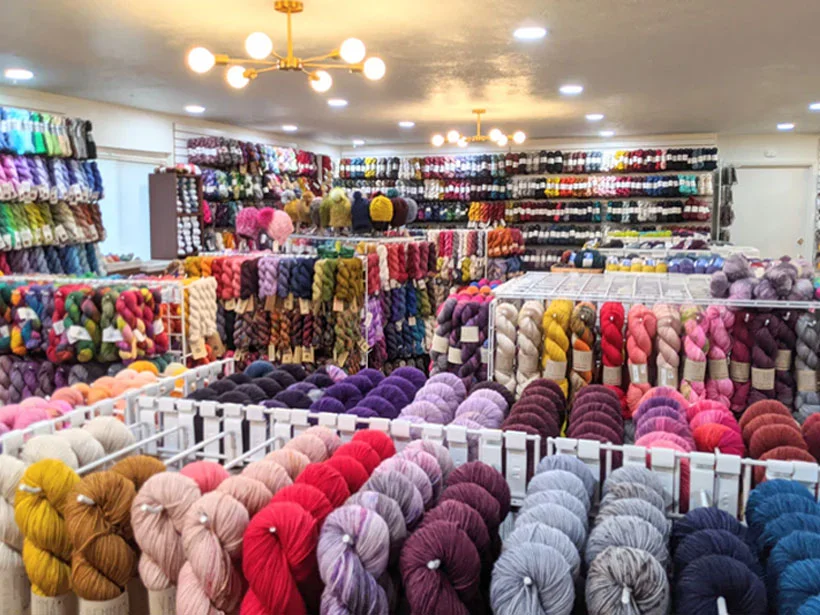
"Italian LP cashmere yarn" is frequently mentioned in the knitwear industry — it typically refers to cashmere yarn associated with the Italian brand Loro Piana (often abbreviated as LP in the market). For brands and buyers developing high-end cashmere sweaters, understanding the true characteristics of this type of cashmere yarn, how to identify quality, and what kind of factory to partner with for production is essential for making informed sourcing decisions.
This article covers five aspects: yarn background, cashmere properties, suitable products, identification methods, and factory selection criteria.
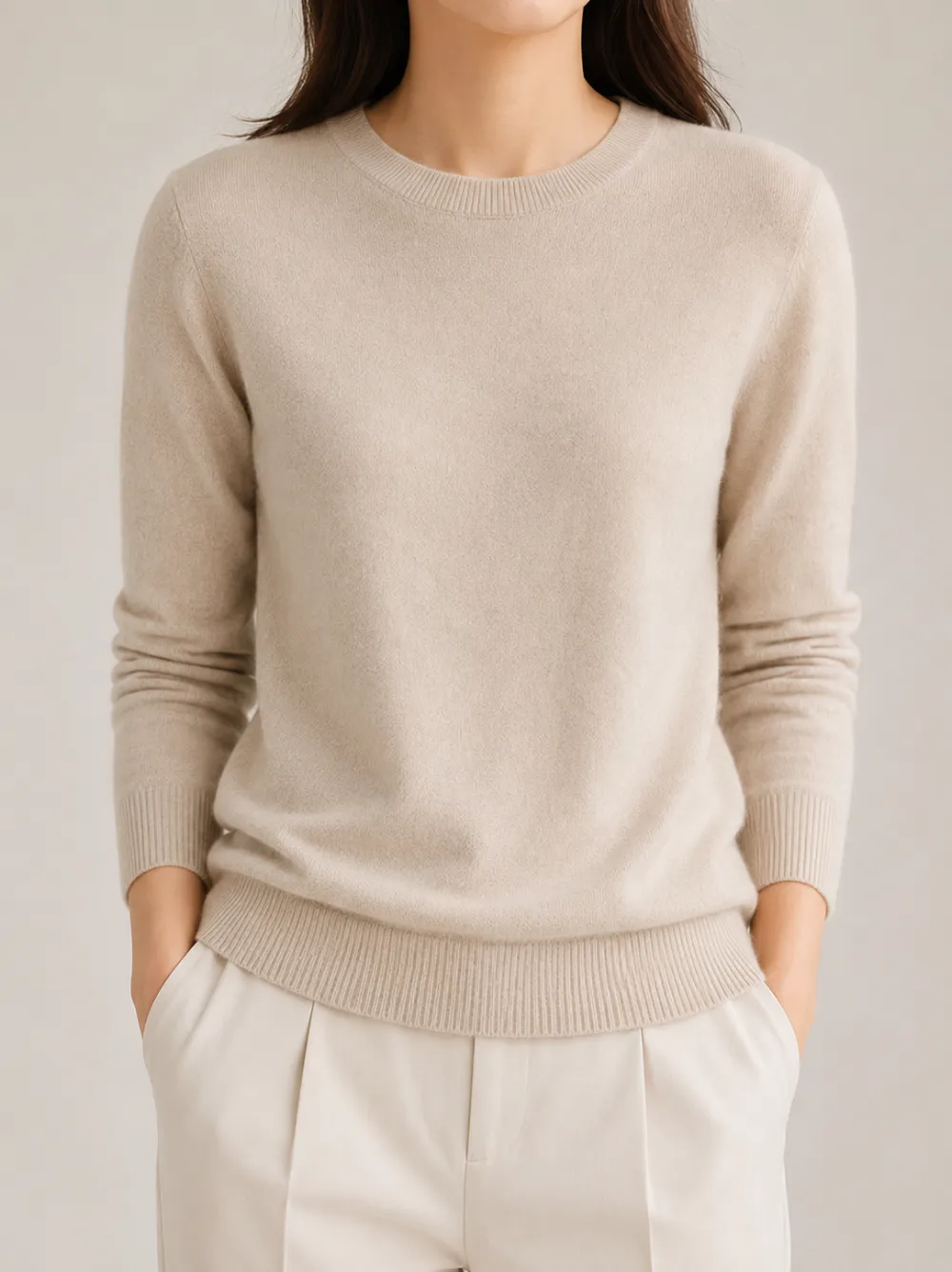
What "Italian LP Cashmere Yarn" Typically Refers To
In market contexts, "LP cashmere yarn" generally points to Loro Piana, the Italian luxury textile brand. Founded in 1924, Loro Piana is renowned for sourcing and processing premium cashmere, baby cashmere, and rare animal fibers such as vicuña.
It is important to clarify:
- "Italian brand" does not mean the cashmere raw material originates from Italy. Loro Piana sources its cashmere primarily from Inner Mongolia (Alashan, Ordos, and surrounding areas) and Mongolia. Approximately 70% of the world's cashmere raw material comes from China.
- Brand, raw material origin, spinning location, and garment production location are three distinct concepts. A sweater may use Italian-branded yarn spun from Inner Mongolian cashmere and be produced in a Chinese factory — these stages can be entirely independent.
- The actual yarn brand and source should be verified by hang tags, cone labels, batch numbers, and supplier purchase documents — not solely by phrases like "Italian imported" in product descriptions.
For apparel brands and buyers, the focus should not be "can I buy LP's original yarn" but rather selecting the appropriate grade of cashmere raw material for the garment's positioning and a factory capable of matching the required craftsmanship.
Why Cashmere Is Lightweight, Soft, and Warm
Cashmere comes from the fine, soft undercoat of the Capra hircus goat. Every spring during molting season, herders collect these fine fibers by hand combing.
Cashmere quality depends primarily on three fiber metrics:
| Metric | Premium Range | Impact on Finished Garment |
|---|---|---|
| Fiber fineness | 14.5–16μm | Finer fibers are softer and more comfortable against the skin |
| Fiber length | 30–40mm | Longer fibers pill less and provide better strength |
| Uniformity | Concentrated length distribution | More even spinning, stable yarn strength |
Even when both are labeled "100% cashmere," the hand feel, durability, and cost of finished garments can vary significantly depending on raw material origin, fiber diameter, and length. This is why quality cannot be judged by the word "cashmere" alone — the specific grade, lot, and yarn specification determine the actual quality.
Typical Characteristics of Italian LP-Grade Cashmere Yarn
Taking Loro Piana-level cashmere yarn as a reference, high-quality cashmere yarns generally share these characteristics:
- Soft, supple hand feel. Premium cashmere has a fiber diameter typically within 15.5μm, feeling plush and smooth against the skin with no itchiness.
- Lightweight yet warm. The hollow structure of cashmere fibers provides significantly better insulation than wool at the same weight. A fine-gauge cashmere sweater can be thin yet warm.
- Natural color and luster. High-quality white cashmere takes dye evenly and evenly, revealing a natural, hair-like sheen on the surface.
- Suitable for fine gauges, premium basics, and light luxury knits. This grade of cashmere is typically used on 12G–16G machines to produce lightweight, form-fitting pullovers, V-necks, and cardigans.
- Higher demands on knitting, washing, and finishing processes. Premium cashmere yarns often have lower twist (soft-twist) to maintain softness, but soft-twist yarns have lower strength on flat knitting machines, requiring precise machine calibration and process parameter control.
The characteristics above depend on the specific yarn's actual specifications (composition, yarn count, twist, lot) and cannot be generalized. Sourcing should be based on technical parameters provided by the yarn supplier.
Suitable Sweater Products to Develop
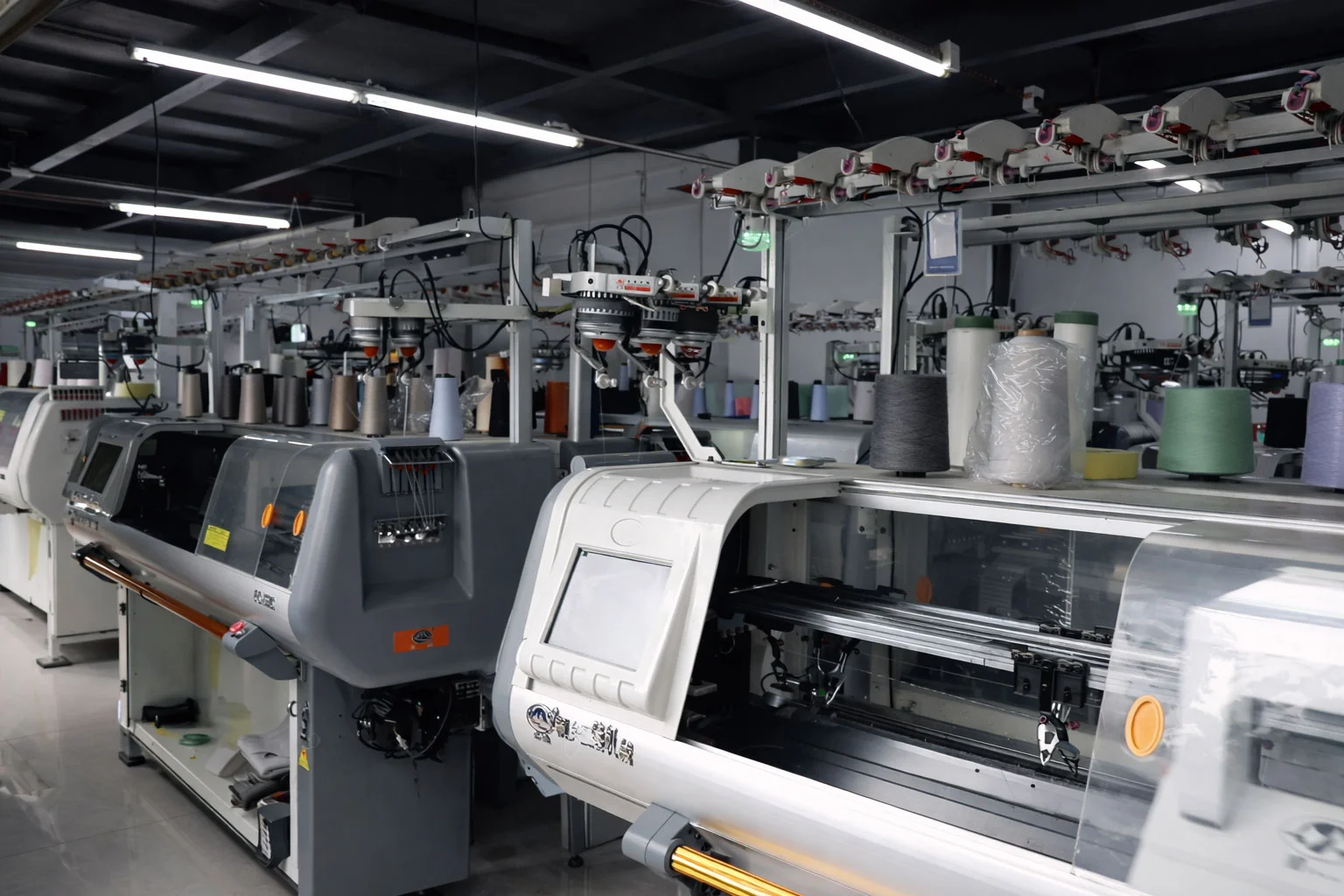
Based on Linknit's practical experience as a knitwear OEM/ODM factory, Italian LP cashmere yarn — or cashmere yarn of equivalent quality — is well suited for developing:
- Cashmere crewneck sweaters — classic basics where fit and hand feel are paramount
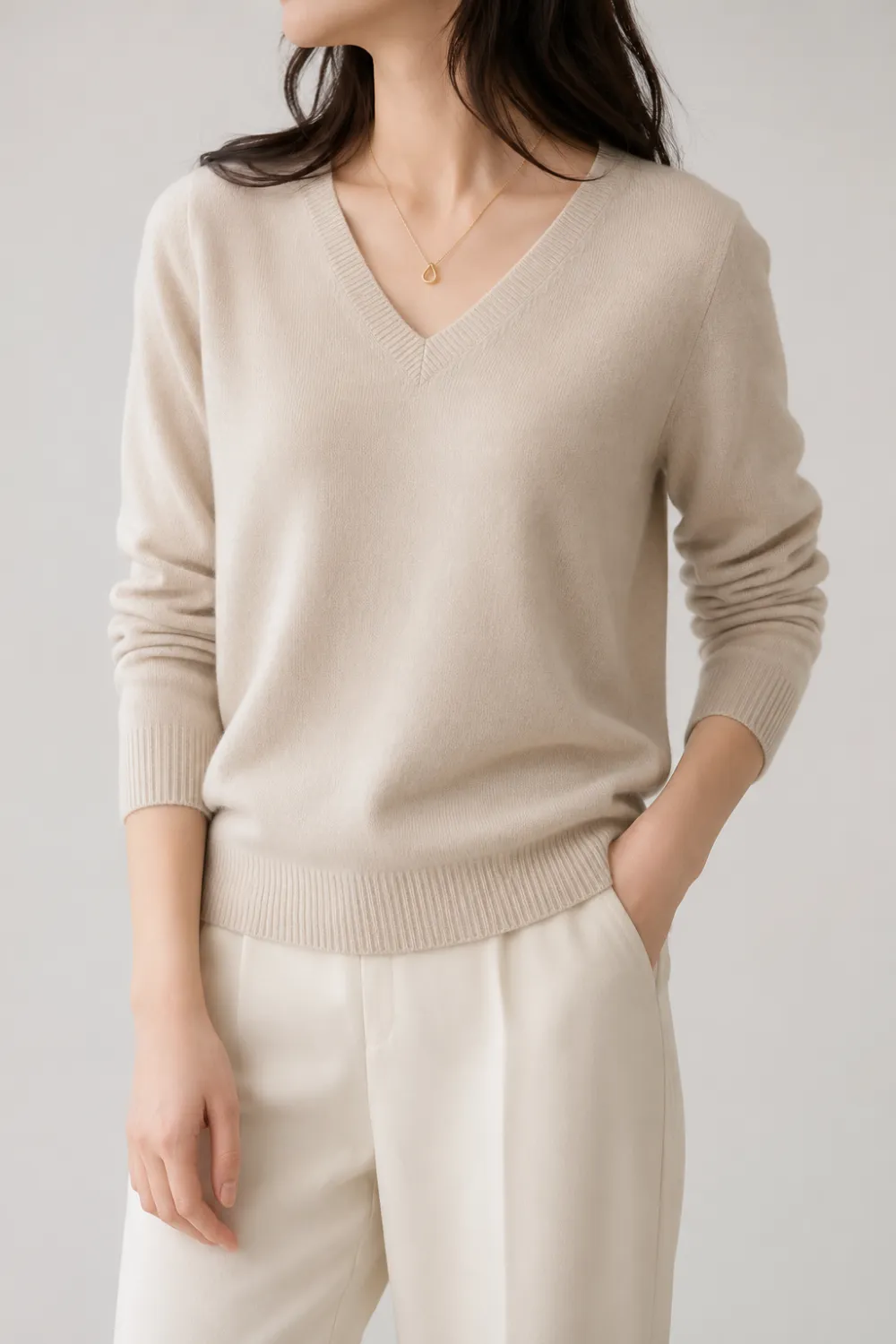
- Cashmere V-neck sweaters — versatile for layering or standalone wear, suitable for both business and casual settings
- Mock or turtleneck sweaters — winter warmth essentials with emphasis on surface texture
- Men's business knitwear — fine-gauge, refined structures conveying understated sophistication
- Women's lightweight cashmere tops — thin, close-fitting styles ideal for spring, fall, and air-conditioned environments
- Cashmere cardigans — casually elegant, broad styling range
- Cashmere blend sweaters — e.g., cashmere + silk or cashmere + merino wool, balancing cost and hand feel
- Knit accessories — cashmere scarves, hats, and more
During development, each style requires confirmation of yarn count (e.g., 2/26nm, 2/48nm), ply, gauge (12G, 14G, 16G), fabric density, weight, sizing, and washing effects. The same cashmere yarn can produce noticeably different results depending on gauge selection and finishing processes.
For more cashmere style references, browse the Linknit cashmere and wool product center.
How to Verify Whether So-Called LP Cashmere Yarn Is Genuine
For brands planning to purchase cashmere yarn or commission cashmere sweater production, here are practical inspection recommendations:
It is difficult for consumers to accurately judge the brand and true composition of cashmere yarn by touch alone. Brand buyers should develop the following awareness:
- The phrase "Italian imported" alone is not proof of yarn quality
- Always produce a small sample or sample garment first, evaluating hand feel, shedding, pilling, dimensional stability, and color consistency across multiple dimensions
- The quality of the finished garment depends not only on the yarn brand but also on gauge selection, knitting method, finishing, and washing processes
For more details on cashmere quality control, refer to our earlier guides on cashmere sweater sourcing and cashmere vs merino wool comparison.
What to Verify When Selecting a Cashmere Knitwear Factory
Choosing a factory capable of producing high-quality cashmere sweaters has different priorities than selecting a general sweater factory. Consider these dimensions:
- Does the factory have experience with high-end yarns? Cashmere yarns demand more precise flat knitting machine calibration than standard wool and acrylic — especially soft-twist and fine-count yarns.
- Can the factory adjust processes based on yarn characteristics? Cashmere yarns with different fineness, twist levels, and compositions require matching gauge, knitting method, and finishing parameters.
- Does the factory offer sampling services? Use sample garments to assess the factory's actual capability with cashmere — including surface finishing, size control, and hand feel adjustment.
- Are dimensional, appearance, hand feel, and washing checks performed? Quality inspection standards for cashmere garments are more stringent than for standard sweaters.
- Does the factory offer OEM/ODM services? Including full-process cooperation from design evaluation and yarn selection to finished garment delivery.
- MOQ and sample lead time. Linknit's cashmere category MOQ is approximately 200–300 pieces per style, with a sampling lead time of 6–10 days.
For more on Linknit's production process and sampling services, see our custom service page and production process page.
Is LP Cashmere Yarn Always Better Than Standard Cashmere Yarn?
The brand is a valuable reference but should not be the only factor considered.
The same cashmere yarn brand may have multiple series — with different yarn counts, compositions, batches, and suitable processes. Not every series under a brand is suitable for all sweater styles. More importantly:
- Inappropriate gauge matching may result in difficulty knitting the cashmere yarn, or a stiff hand feel in the finished garment
- Incorrect milling levels can mask or damage the natural texture of cashmere fibers
- The factory's development capability and quality control are every bit as important as the yarn brand
Genuinely high-end cashmere sweaters are the result of the right raw material + the right process + rigorous quality control working together.
How Linknit Supports High-End Cashmere Sweater Development
Linknit (Dongguan Tuosheng Garment Co., Ltd.) is a knitwear OEM/ODM factory located in Dongguan Dalang. Founded in 2000 with a facility of approximately 2,000 sqm, we offer the following capabilities for the cashmere category:
- Design and style evaluation — Recommend suitable styles and fit solutions based on the brand's target market and positioning
- Yarn and gauge recommendations — Based on the design drawing or reference sample's value positioning, provide cashmere yarn selection advice and corresponding gauge matching options
- Sample development — Transform design intent into physical samples within 6–10 days
- Size and process confirmation — Ensure finished garment dimensions, surface finish, hand feel, washing standards, and colorfastness meet expectations
- Bulk production — Standard MOQ of approximately 300 pieces, with complete production process management
- Quality inspection — Including yarn inspection, mid-knitting check, linking/looping inspection, final garment inspection, and post-washing check
- OEM/ODM communication — Develop from design sketches, tech packs, or physical sample garments
Disclaimer: Linknit is not an authorized factory or agent of Loro Piana. We offer cashmere sweater custom development services based on real factory experience and supply chain resources, helping brands achieve the complete process from yarn selection to finished garment delivery.
FAQ
Is LP cashmere yarn always 100% cashmere?
Not necessarily. Cashmere yarns marketed as "LP cashmere yarn" come in multiple series. The actual composition must be verified by checking the cone label and test reports — some series are 100% pure cashmere, while others are blends with fibers such as silk or merino wool. Do not assume composition based solely on the "LP" abbreviation; always verify against the actual yarn information.
Is Italian LP cashmere yarn always produced in Italy?
Not necessarily. The brand (Loro Piana as an Italian brand), the cashmere raw material origin (primarily Inner Mongolia and Mongolia), the spinning process (possibly completed in Italian mills), and the garment production location (possibly in China) are separate matters that should each be verified independently. "Italy" printed on a brand label typically indicates the brand's home country and spinning location, not the origin of the cashmere raw material.
Can small-batch sweaters be made with LP cashmere yarn?
Yes. If the buyer supplies the specified cashmere yarn directly, the factory can produce on a CMT (cut-make-trim) basis. Linknit's standard MOQ is approximately 300 pieces per style, but the actual MOQ depends on yarn inventory, color configuration, design complexity, and process requirements. Brands with a stable cashmere yarn supplier are welcome to share their yarn specifications and design drawings for sampling evaluation.
How can I reduce pilling on cashmere sweaters?
Pilling is closely related to fiber length, yarn twist, knitting density, wearing friction, and care methods. Longer fibers (≥36mm) and moderately higher twist can reduce pilling, but the hand feel will be correspondingly firmer. No manufacturer can guarantee a completely pill-free cashmere sweater — a good factory can control pilling to Chinese national standard Grade 3–3.5 or above. In daily wear, reducing friction, using cashmere-specific detergent, gentle hand washing, and laying flat to dry also help maintain a clean appearance.
Does the yarn brand alone determine sweater quality?
No. The yarn brand is an important reference, but the final sweater quality is determined by the combination of raw material grade, yarn specification, flat knitting machine model, gauge selection, knitting density, pattern design, milling process, finishing quality, and final garment QC. The same yarn can produce significantly different results in different factories.
If you are developing cashmere crewneck sweaters, cashmere cardigans, high-end knits, or cashmere blend products, welcome to send Linknit your design drawings, tech pack, reference samples, target composition, and estimated quantity. Our technical team will assist with yarn selection evaluation, gauge matching, process planning, and sampling quotation.