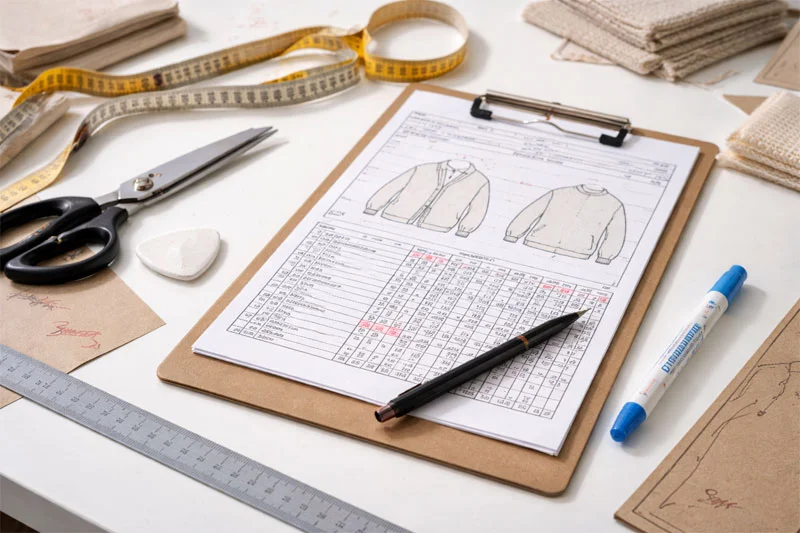
Many brands reaching out to a sweater factory for the first time simply send a picture and ask: "Can you make this style?"
We can — but the more detailed information you provide, the higher the success rate of sampling. A picture lets the factory see the general look of the style, but producing a sweater with precise fit requires more complete information.
This article compiles a checklist of materials you need for custom knitwear by image or sample, covering the three major categories: images, size specs, and craft requirements.
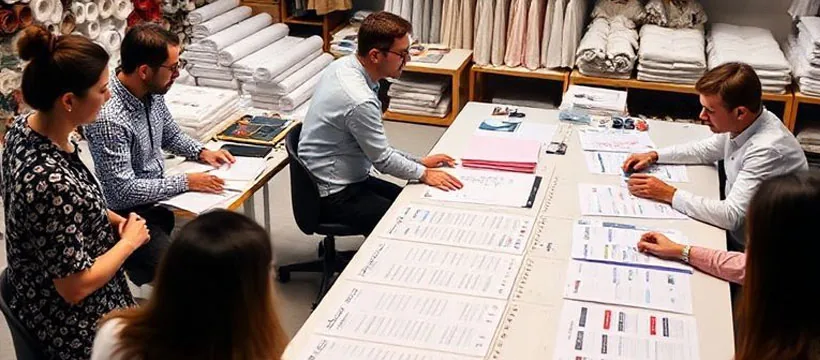
1. Image Materials — The Minimum You Need
Custom by Image (No Physical Sample)
If you only have style images, provide the following:
| Image Type | Description | Importance |
|---|---|---|
| Front view | Overall view of the garment front | ⭐⭐⭐⭐⭐ |
| Back view | Back design (many styles differ front and back) | ⭐⭐⭐⭐ |
| Detail close-ups | Close-ups of neckline, cuffs, placket, pockets, etc. | ⭐⭐⭐⭐ |
| Reference large image | Clear, large image showing knit structure | ⭐⭐⭐ |
Minimum requirement: Front view + back view + at least one detail image of neckline/cuff/hem.
Custom by Sample (Physical Sample Available)
If you have an actual sample garment, the factory gets the most accurate reference:
- Provide the sample along with a simple size spec sheet if possible
- Clearly note what can be changed and what must stay the same
- Does the sample need to be washed? Some process parameters (shrinkage rate, etc.) need to be confirmed through wash testing
2. Size Spec Sheet — The Key to Fit
A complete size spec sheet should include the following measurements (unit: cm):
| Measurement Point | Description |
|---|---|
| Chest/Bust | Horizontal circumference 2cm below underarm |
| Shoulder width | Left shoulder seam to right shoulder seam |
| Body length | Center back neck to hem |
| Sleeve length | Shoulder point to cuff |
| Neck width | Between left and right collar seams |
| Neck drop | Center back neck to lowest point of front neck |
| Hem width | Horizontal circumference at hem |
| Cuff width | Horizontal circumference at cuff |
Note: Knitwear has stretch; finished dimensions and post-wash dimensions may differ by 3%–5%. The factory will perform wash testing during sampling to confirm final dimensions.
3. Tech Pack — The Most Complete Documentation
The Tech Pack is the most standardized form of documentation and offers the highest sampling success rate.
A complete sweater Tech Pack should include:
Basic Information
- Style name/number
- Target price range
- Target market (affects the sizing system)
Yarn Requirements
- Composition ratio (e.g., 70% wool + 30% acrylic)
- Yarn count (e.g., 2/48nm)
- Color code and color swatch
Process Parameters
- Gauge (3G–16G)
- Knit structure (jersey, rib, jacquard, intarsia, etc.)
- Fulling requirements (full or not, shrinkage requirements)
- Finishing method (washing, pressing, softening, etc.)
Accessories List
- Buttons (type, color, quantity)
- Zippers (length, material, color)
- Labels (main label, care label, size label, hang tag)
Packaging Requirements
- Packaging method (hanging/folding)
- Bag type (OPP bag/PE bag/branded bag)
- Carton quantity and labeling requirements
4. What If You Don't Have a Size Spec Sheet?
Many brands don't have full data when working with a factory for the first time. In this case:
- Find an existing sweater with a similar style, measure it as a reference
- Tell the factory the target body type (e.g., model size M, 160/84A)
- Let the factory sample in standard proportions, then adjust after the first sample
For initial inquiry preparation, refer to What to Prepare Before Your First Knitwear Factory Inquiry.
For a complete Tech Pack format explanation, refer to Essential Tech Pack Preparation Guide for Sweater Development. For detailed sampling procedures and fee standards, also see Complete Guide to Custom Sweater Sampling.
Summary: The key difference between custom knitwear by image and by sample lies in the completeness of your documentation. Design image + size spec sheet + craft requirements is the optimal combination. The more complete your materials, the fewer sampling rounds needed, and the more efficient the collaboration.
Linknit supports both image-based and sample-based customization. Simply provide your style images or sample garment, and our pattern room team can complete sampling within one week. Welcome to contact us for pricing inquiries.