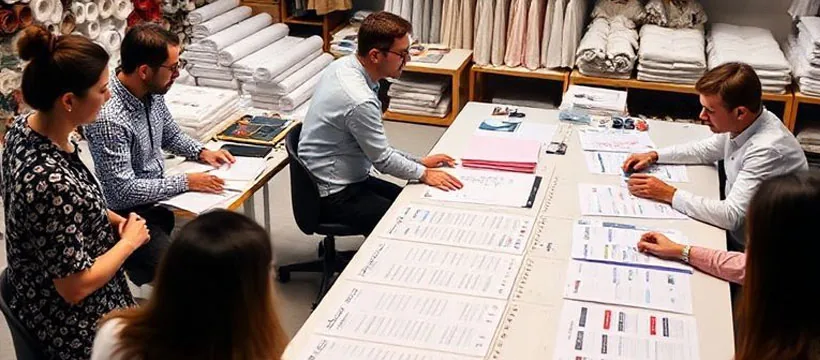
The most common mistake first-time knitwear factory buyers make: asking "how much is this sweater" right away.
The factory cannot answer — without a tech pack, size chart, or target quantity, the price can vary by 3 to 8 times. An inquiry is not buying a standard product; it is the first compatibility test between you and the factory. The more information you provide, the more accurate the quotation and the fewer revisions your samples will need.
This article organizes a pre-inquiry preparation checklist in three tiers: "Essentials → Bonuses → Advanced Information."
Tier 1: Essentials — Information the Factory Must Have to Quote
The following four items are hard prerequisites for most knitwear factories to provide a quotation. Missing any one means the quote will be a "rough range" rather than a "precise price."
| Essential Information | Description | How to Provide |
|---|---|---|
| Style drawing or reference image | Front + back, clearly showing fit, collar type, sleeve type, hem | Image/design draft/sample photo |
| Size chart | Garment length, chest, shoulder width, sleeve length, hem width | Excel or hand-annotated |
| Target quantity | How many pieces per style do you plan to make? (determines MOQ and unit price) | Integer or quantity range |
| Target market | Export to Europe/US/Japan, or domestic e-commerce? | Text description |
Why is target market important? European clients need REACH compliance, US clients require CPSIA compliance, Japanese clients have extremely strict requirements on fabric colorfastness and size tolerance — all of which affect yarn selection and testing costs.
If You Only Have One Reference Image Without a Size Chart
You can tell the factory your target demographic (men/women/children, US/EU/Asian sizing). The factory has a standard pattern database to work from. However, a sample fitting is mandatory before final confirmation — skip this step and the risk of bulk production failure is very high.
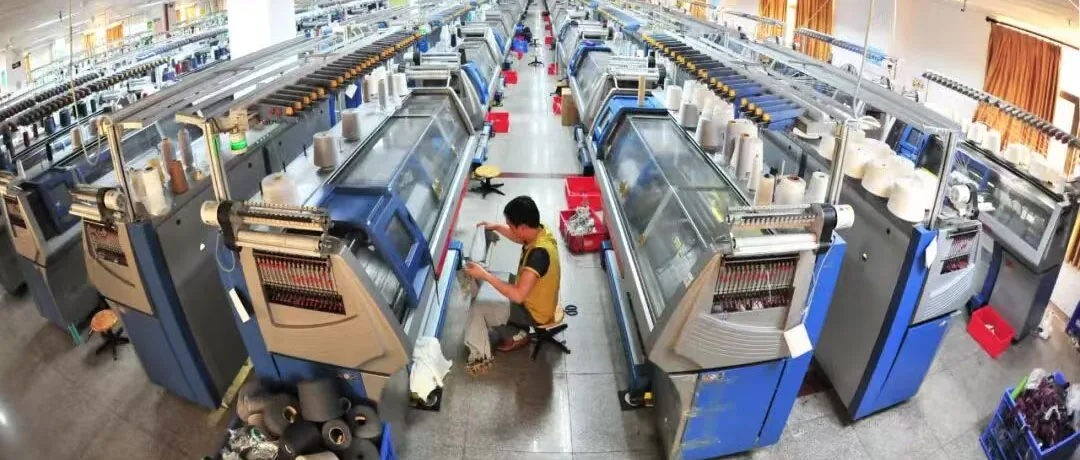
Part 2: Bonuses — For More Accurate Quotes and Fewer Sample Revisions
Providing only the essentials will get you a "basic quotation." To get a precise quote and first-time-right samples, bring the following as well:
2.1 Yarn Preference or Budget Range
| Yarn Information You Provide | Quotation Accuracy the Factory Can Deliver |
|---|---|
| Just "wool" | ±30% (wool ranges from 80 to 200 CNY/kg) |
| "Merino wool, budget within 120 CNY/kg" | ±10% |
| Pantone number + physical color swatch | ±5% (color deviation risk minimized) |
2.2 Process Requirements
Clearly specify where possible:
- Gauge: 7G (most common), 12G (fine-gauge refined styles), 3G (chunky thick styles) — if unsure, let the factory recommend
- Stitch Structure: Plain knit, rib, cable, jacquard, intarsia, eyelet, etc.
- Finishing Requirements: Mercerized treatment, anti-shrink treatment (Superwash), brushing, etc.
- Logo/Pattern: Knitted-in jacquard or post-embroidery? Exact positioning and dimensions
If you are unfamiliar with technical terms, just send the reference image and the factory will determine the process type.
2.3 Packaging and Labeling Requirements
| Requirement | Description |
|---|---|
| Standard packaging | Each piece in an individual poly bag, hang tag attached, carton packing |
| Private label packaging | Custom hang tags/care labels/main labels/price tags/carton boxes |
| Export compliance | CE labeling, composition labeling per destination country regulations |

Part 3: Advanced Information — The Dividing Line for Long-Term Cooperation
You don't necessarily need to provide these for a first cooperation, but if you can, it shows you are a professional brand — and the factory will prioritize your order:
- Tech Pack: A complete document with size chart, stitch diagram, and process instructions
- Third-party testing standards: e.g., requiring ICI pilling grade ≥ 3–4, shrinkage ≤ 3%, etc.
- Previous supplier issues: e.g., "The factory I worked with before had severe pilling — I need anti-pilling yarn this time"
- Expected repeat order frequency: When the factory knows you have ongoing orders, both the quotation and scheduling will offer better terms
From the factory perspective: A complete Tech Pack can eliminate 3–5 rounds of communication and confirmation. The more established the brand, the more complete the information provided. Vague information usually means the buyer hasn't figured out what they want yet — and the factory will factor that risk into the quotation.
Part 4: First Inquiry Script Template
No need to figure out the wording yourself — copy this template and send it to the factory:
Hello, we are [Brand Name], serving the [target market: Europe/US/domestic e-commerce] market, looking to develop a batch of [product category: sweaters/cardigans/sets]. Reference images/design drafts are attached. Style requirements: [fit description: crew neck/drop shoulder/cropped, etc.]. Initial quantity: [X] pcs/style, target FOB price: approximately [Y] CNY. Yarn preference: [wool/cashmere/blend/acrylic], budget approximately [Z] CNY/kg. Please help evaluate: (1) Process feasibility + recommended gauge (2) Reference unit price (including yarn and processing fees) (3) Sample fee + sample lead time (4) Bulk delivery time Thank you.
Send this standard script, and factories will generally reply within 24 hours. The quality of the reply is also your first filter for judging whether this factory is reliable — fast, accurate, and with recommendations is usually a professional factory.
Part 5: What to Do After Receiving a Quote
After the factory responds with a quotation, your next steps:
- Confirm sample or start sampling — Don't just compare prices. Select 1–2 factories with matching styles for sampling, and evaluate the finished quality
- Maintain communication during sampling — Pattern revisions, yarn confirmation, size fine-tuning — these are tests of the factory's cooperation attitude
- Keep a sealed sample — Sign and seal the final approved sample, use it as the reference for bulk delivery
- First order recommended at 300–500 pcs — Verify quality and delivery time before scaling up
Part 6: FAQ
For a first cooperation, what is the minimum order quantity?
It depends on complexity. Basic fine-gauge sweaters (12G/14G): most factories accept 200–300 pcs per style minimum. Jacquard/intarsia or coarse-gauge styles: usually 300–500 pcs minimum. Some factories specializing in small orders can accept 100 pcs, but the unit price will be higher. Linknit's standard MOQ is approximately 300 pcs, with split colors available.
We have no design drawings, only ideas — can we proceed?
Yes. Send reference images (find product photos of similar styles) + a text description of the desired pattern/collar type/length/fabric feel. The factory's pattern maker can produce a paper pattern plan. Under the ODM model, the factory can also recommend existing patterns modified to match your target price range and style preference.
How long does sampling take? How much does it cost?
Standard sampling lead time: 7–15 days (depending on process complexity). Sample fee: CNY 500–2,000 per style, lower for basic styles, higher for complex ones like jacquard/intarsia. Most factories will deduct the sample fee from the bulk order payment.
How many factories should I inquire with at once?
We recommend 3–5. Fewer means no comparison; more means you won't have the bandwidth to follow up. First, filter by region (Dongguan Dalang vs Zhejiang Puyuan), factory scale (suitable for your order volume), and main product categories (good at producing the styles you need), then send inquiries.
To learn more about the differences between cooperation models (OEM/ODM), check out OEM Knitwear Processing vs ODM Sweater Customization Comparison, or contact us directly to discuss your product needs.
With good preparation, you are one step closer to receiving a satisfactory bulk order.