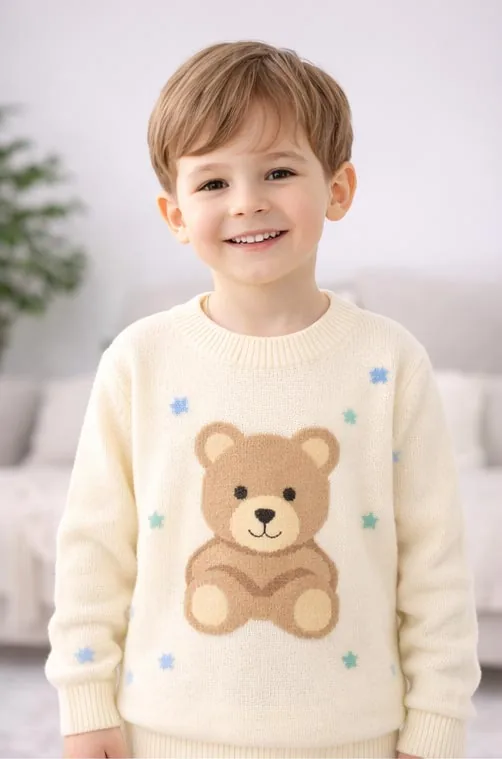
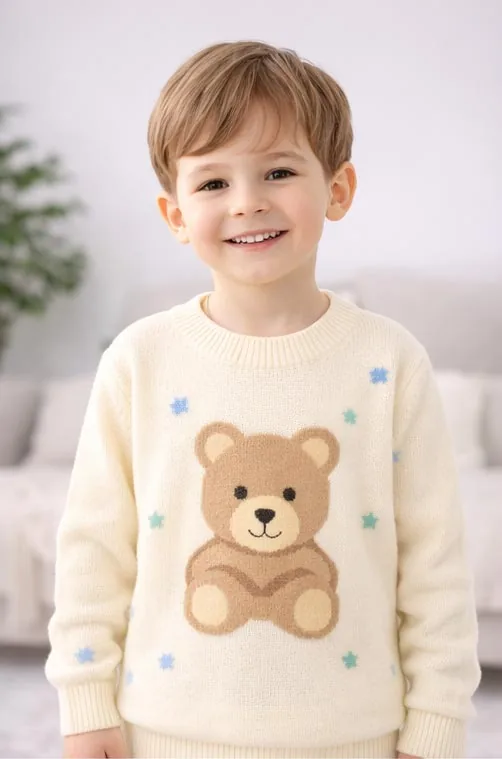
Want to create colorful patterns on sweaters? Jacquard is the most common choice. But not every sweater factory can execute jacquard well.
Jacquard knitting demands far more from flat knitting machines than plain knitting — multi-color yarn feeder switching precision, pattern programming capability, and color-matching management all affect the final result. A factory without sufficient jacquard experience may produce sweaters with misaligned colors, distorted patterns, or excessively long floats on the reverse side.
This guide provides a systematic approach for brands evaluating jacquard sweater factories.
1. Jacquard Fundamentals
Jacquard is a knitting technique where different colored yarns are directly knitted into the fabric to form patterns. Unlike embroidery — which is applied after knitting — jacquard is "grown into" the sweater itself.
Two Types of Jacquard
| Type | Characteristics | Best For |
|---|---|---|
| Single-sided jacquard | Pattern on face, floats on reverse | Budget-friendly designs, smaller pattern areas |
| Double-sided jacquard | Pattern on both sides, no floats | Premium garments, both sides visible |
Key point: If floats on the reverse side are too long, fingers can catch when putting on the sweater. A good jacquard sweater factory controls float length through optimized pattern design.
For a detailed comparison of jacquard, embroidery, and patch techniques, see Jacquard vs Embroidery vs Patch: Which Process to Choose.
2. Five Key Factors in Choosing a Jacquard Sweater Factory
2.1 Flat Knitting Machine Capability — Jacquard Demands More
Not all flat knitting machines are suitable for jacquard. Jacquard knitting requires machines with:
- Multi-color feeder switching — at least 4-6 colors simultaneously
- High needle-selection precision — each needle selects independently; finer patterns demand higher precision
- Pattern reading speed — complex jacquard patterns generate larger data files that older machines may struggle to process
Factories primarily doing plain knit and rib orders with limited jacquard experience will likely deliver unsatisfactory results.
2.2 Pattern Design Capability
A good jacquard sweater factory should have dedicated pattern design staff who can help optimize your design:
- Convert brand logos into knit-friendly patterns
- Keep total color count within a reasonable range (typically 3-5 colors)
- Optimize pattern edge transitions to minimize jagged appearance (for more on jagged edges, see Why Do Letters on Jacquard Sweaters Look Jagged?)
2.3 Color Yarn Management and Shade Matching
Color yarn management is critical in jacquard sweater production:
- All colors for a jacquard design must come from the same dye lot, or batch-to-batch color variation will occur
- A good factory will provide 2-3 colorway suggestions based on your design
- More professional factories offer strike-off service — knitting a small swatch to confirm color effect before proceeding to sample
2.4 Jacquard Sample Quality Assessment
When evaluating jacquard samples in person, focus on three areas:
- Pattern edges — Is the jagged effect within acceptable range? (Fine gauge 12G+ shows minimal jaggedness)
- Reverse floats — Are float lengths reasonable? (Floats exceeding 1cm are a quality concern)
- Color boundaries — Is there any color "bleeding" between adjacent colors?
2.5 Finishing Treatment
Because jacquard fabric has higher knitting density than plain knit, finishing also requires special attention:
- Milling/fulling degree must be adjusted based on pattern complexity — excessive milling can distort the pattern
- Pressing/steaming of jacquard sweaters needs more precision than plain knit — each color zone must be handled carefully
3. Common Jacquard Sweater Quality Issues
| Issue | Cause | Prevention |
|---|---|---|
| Pattern misalignment | Feed and needle selection out of sync | Choose high-precision machinery; inspect samples thoroughly |
| Color bleeding | Yarn feeder timing inaccuracies | Keep color count to 3-4 colors in pattern design |
| Snagging from reverse floats | Floats too long — fingers catch during dressing | Pattern designer must control floats to ≤1cm |
| Post-wash pattern distortion | Different shrinkage between jacquard and plain knit areas | Run 3 wash tests before bulk production |
4. Jacquard Cost-Effectiveness by Pattern Complexity
| Pattern Complexity | Recommended Gauge | Cost Premium per Piece | Best For |
|---|---|---|---|
| Simple stripes/geometric | 7G-12G | +15-25% | Entry-level upgrades, brand basics |
| Brand logo/letters | 12G-14G | +25-40% | Brand identity pieces, promotional wear |
| Complex large jacquard patterns | 7G-12G | +40-70% | Designer pieces, premium collections |
| Full-body jacquard | 12G | +60-100% | Luxury brands, limited editions |
Summary: When choosing a jacquard sweater factory, machine precision, pattern design capability, and color yarn management experience are the three core criteria. Jacquard's complexity means not every sweater factory can do it well — choosing the right factory matters more than choosing the lowest price.
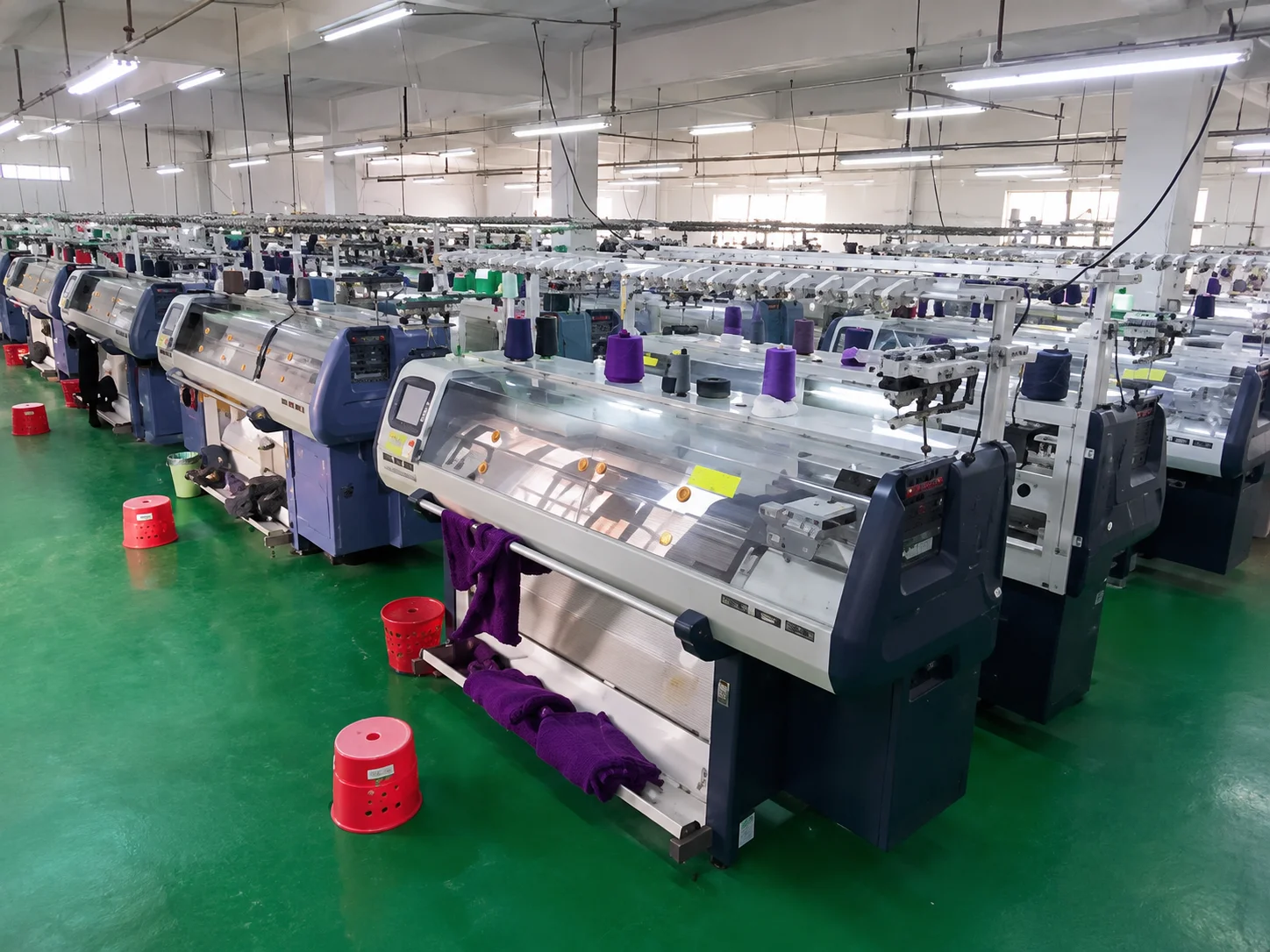
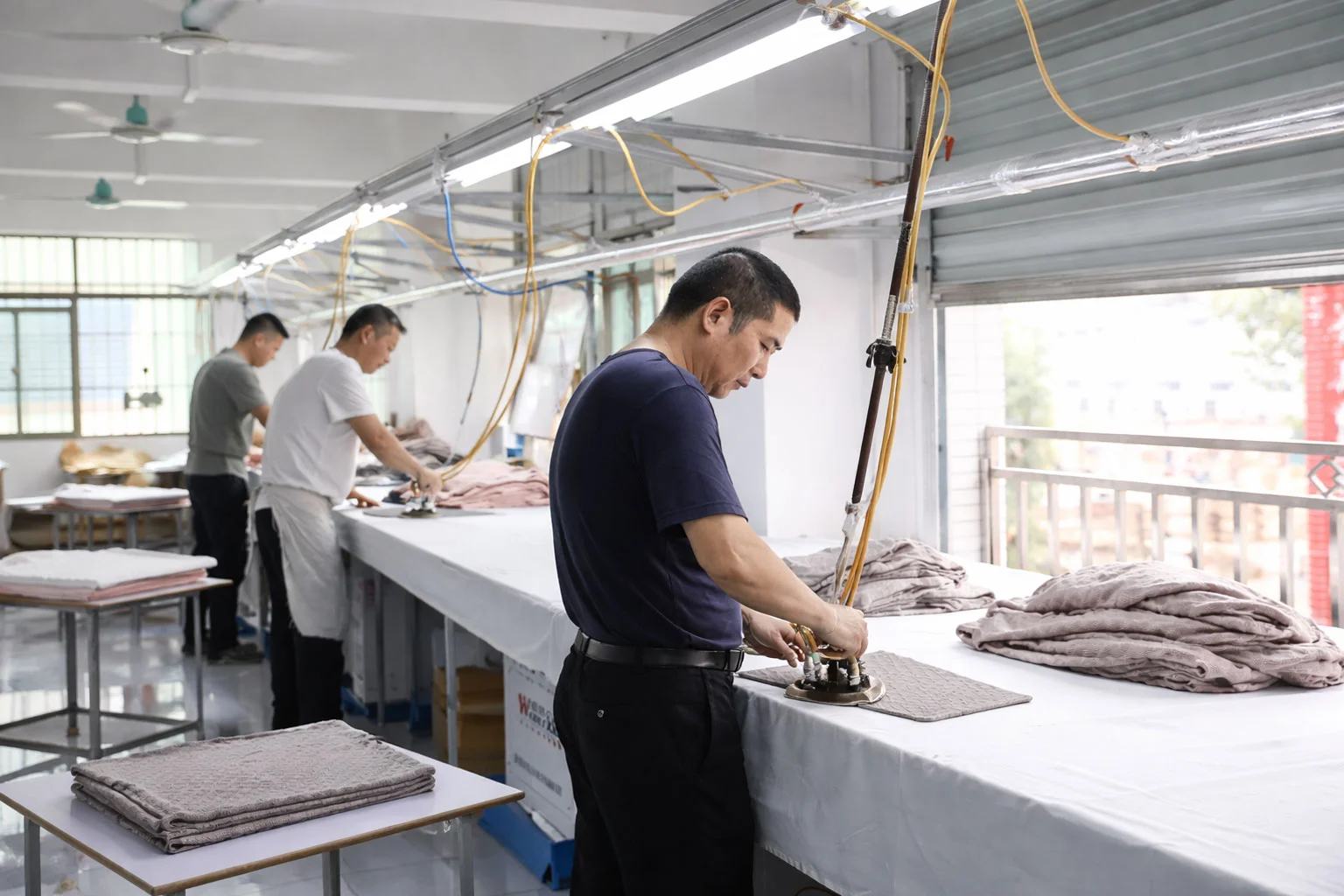
Linknit is equipped with multi-color jacquard flat knitting machines and has an experienced pattern design team capable of handling all types of jacquard sweater customization orders. Feel free to contact us to send your design for evaluation and receive a free process recommendation and quote.
For more comparisons between jacquard and other techniques, see Cable Knit, Jacquard, Intarsia, Crochet, Embroidery: A Complete Guide to Knitwear Techniques.