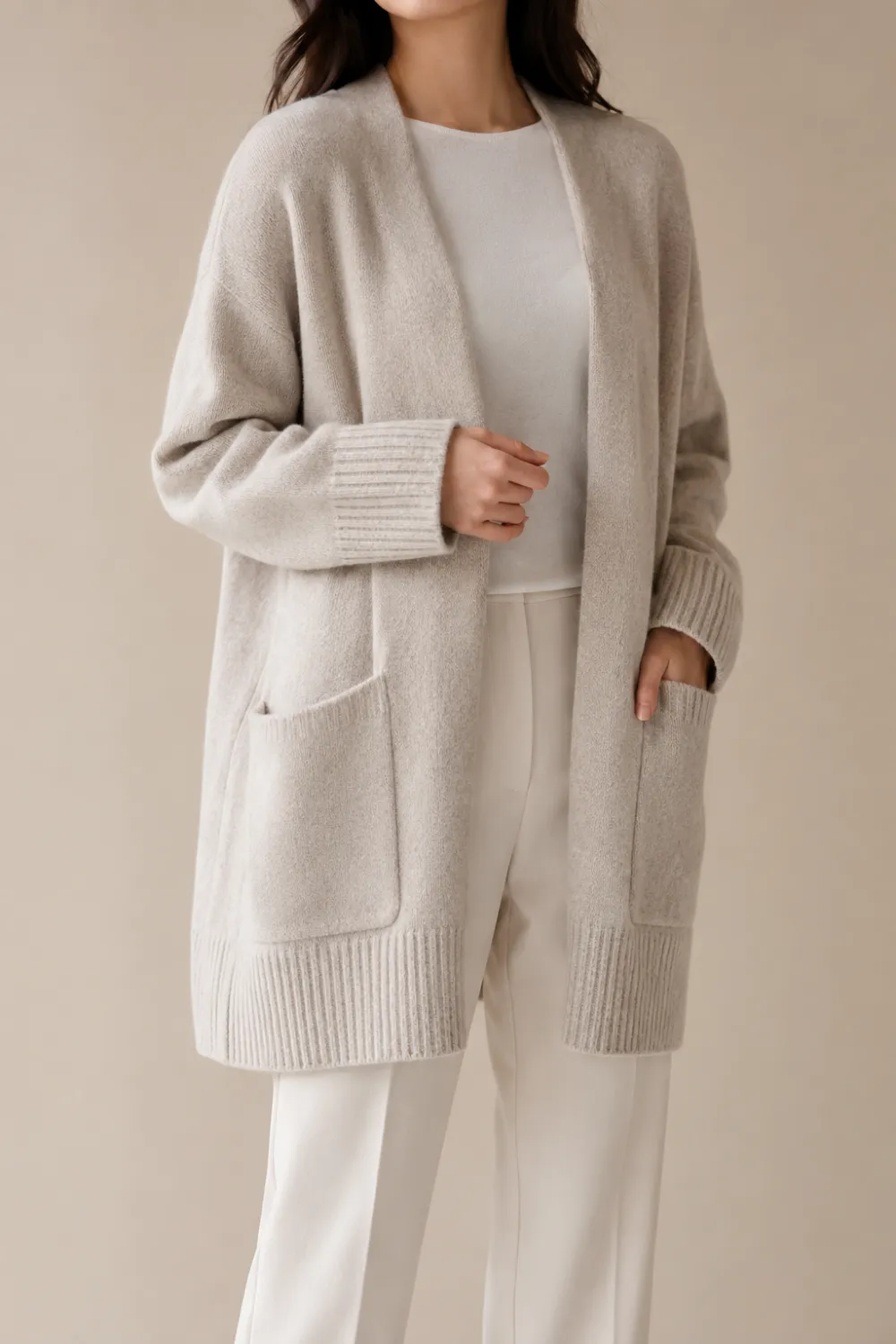
Knit cardigans occupy a unique place in knitted apparel — structurally they are just a pullover with an added front placket, but that single placket separates good factories from great ones.
Puckered plackets, misaligned buttons, placket distortion after washing — these are the most common complaints brands encounter with cardigans. The root cause is rarely the design or the yarn, but rather the factory's depth of experience with cardigan-specific craftsmanship.
This article helps brands find a professional knit cardigan factory, starting from the category's unique characteristics.
1. Knit Cardigan Category Breakdown
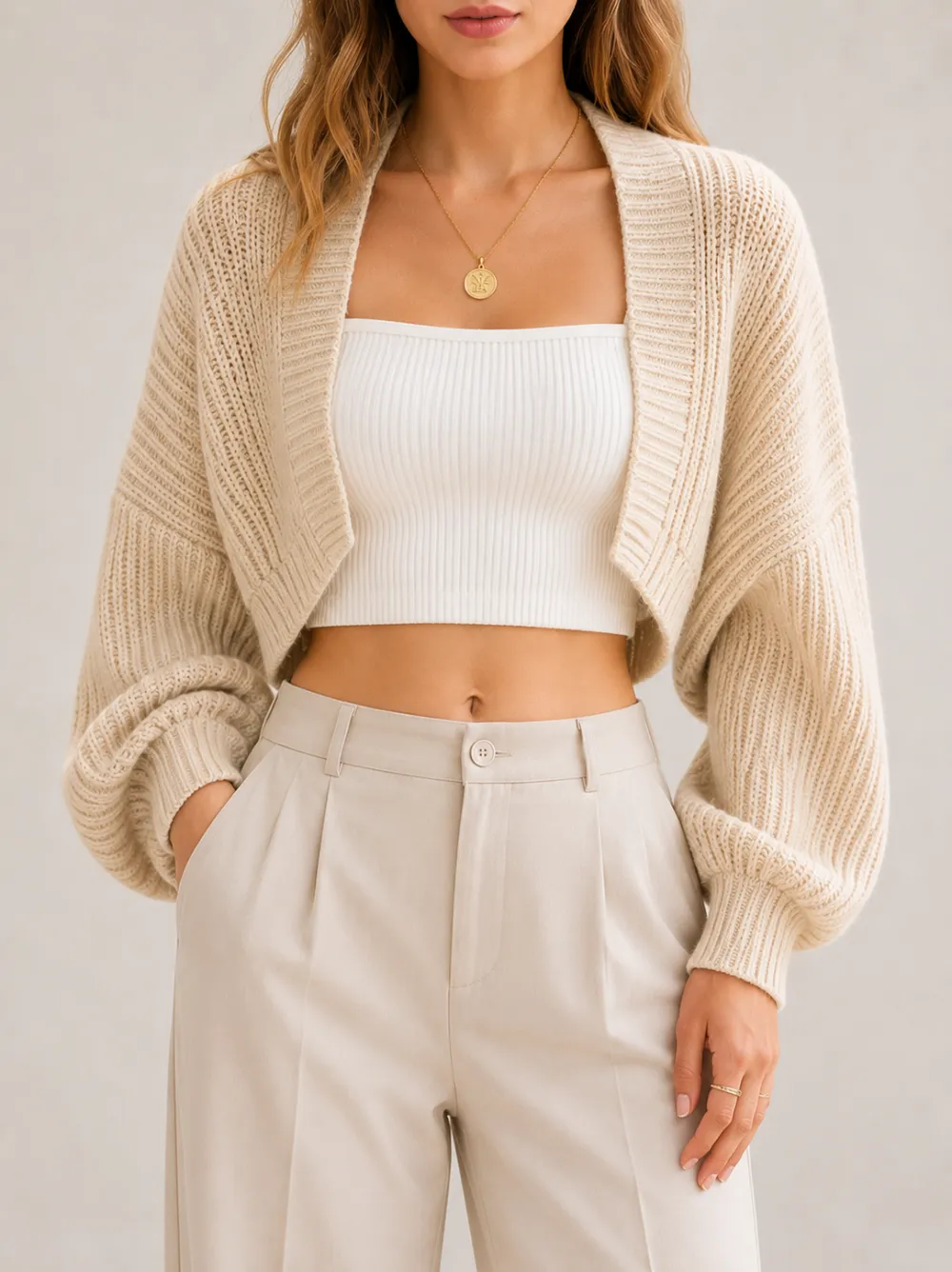
Cardigans are not simply "a garment with a zipper or buttons down the front." Different cardigan styles have very different manufacturing requirements.
| Cardigan Type | Craft Focus | Suitable Gauge | Target Audience |
|---|---|---|---|
| Classic cardigan | Placket crispness, button alignment | 7G-12G | Business casual |
| Long cardigan | Drape control, distortion prevention | 7G-12G | Women's layering |
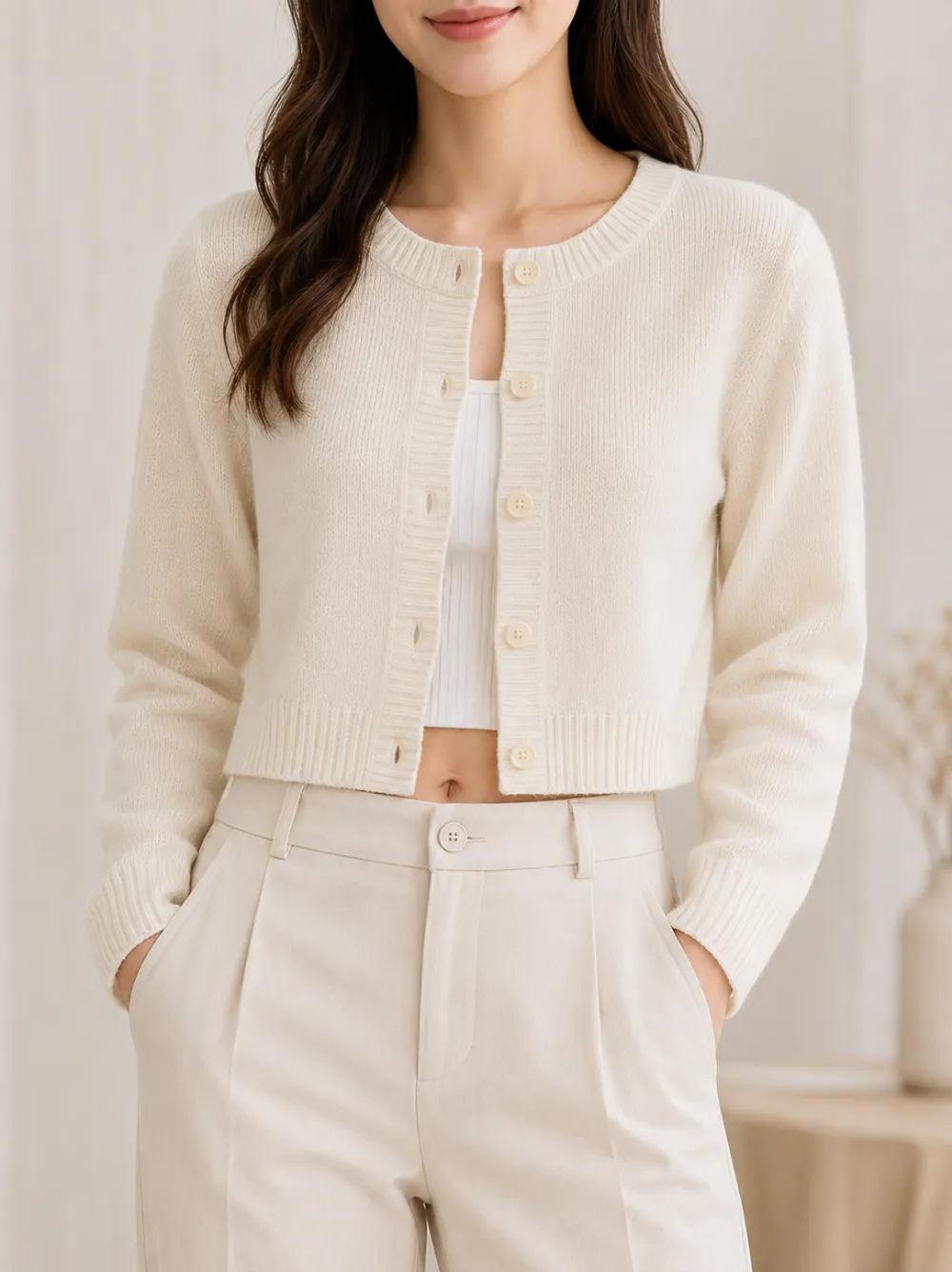
| Cropped / fitted cardigan | Bust-to-waist transition, stretch control | 12G-14G | Women's commuters |
| Casual / oversized cardigan | Drop shoulder angle, hem recovery | 5G-9G | Younger consumers |
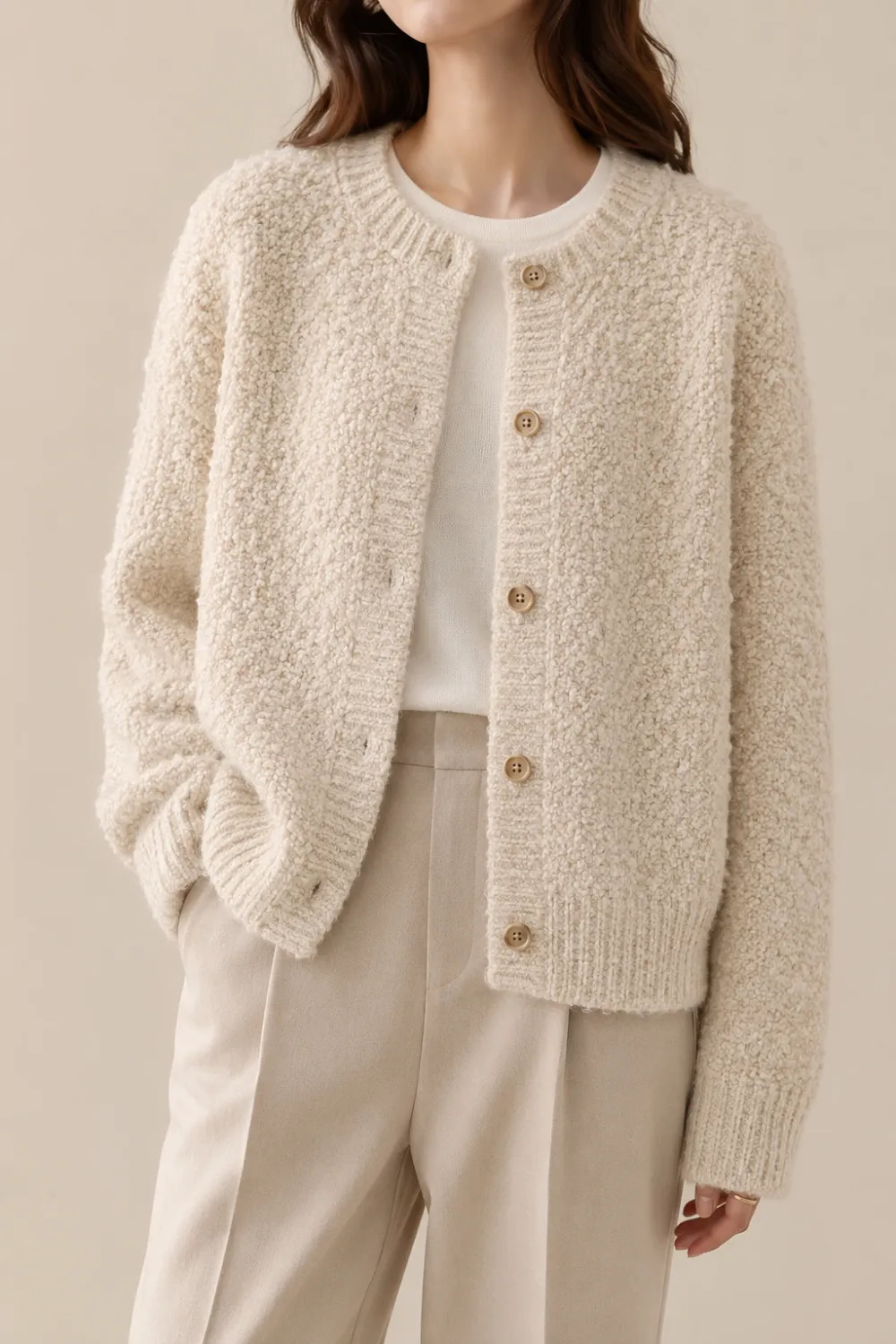
| Chunky knit cardigan jacket | Placket strength, button pull resistance | 3G-7G | Texture-focused boutique buyers |
For a complete procurement guide on cardigans, see Knit Cardigan Procurement Guide — How Brands Find a Reliable Factory.
2. The Core Craft of Cardigan Production — The Placket
The placket is the most important quality indicator for a cardigan. A good placket should achieve:
2.1 Flat, No Puckering
Placket puckering usually has three causes:
- Inconsistent knitting density: the placket's knitting density doesn't match the body, leading to different shrinkage rates after washing
- Uneven seam tension: linking tension is not uniform, causing the placket to twist
- Insufficient finishing: inadequate pressing and setting
Solution: A good cardigan factory will add an elastic thread or inner reinforcement along the placket to reduce post-wash distortion.
2.2 Precise Button Alignment
Buttons may seem like a small detail, but mid-to-high-end brands have very high expectations:
- Buttonhole and button centerlines must align perfectly
- Button spacing must be uniform (tolerance ≤ 2mm)
- Button sewing strength must meet pull test standards
2.3 Placket-to-Body Transition
The placket should not look "attached" — it should transition naturally from the body. This requires clean edge finishing: no curling, no bulging, no tightness.
3. Fit Essentials for Cardigan Production
3.1 Shoulder Width and Armhole
Because cardigans have a placket, they are easier to put on and take off than pullovers, but this also makes shoulder width and armhole coordination more important:
- Shoulder too narrow: tension at the placket area
- Armhole too shallow: placket gets pulled when raising arms
- Rule of thumb: cardigan shoulder width should be 1–2 cm larger than a sweater in the same size, with armhole depth increased by 2–3 cm
3.2 Body Length and Hem
The body length defines a cardigan's "style":
- Cropped: hem at waist level, pairs with high-waisted bottoms
- Standard: hem at hip level, most versatile
- Long: hem around knee level, requires careful drape and weight control
4. Quality Inspection Priorities for Knit Cardigan Factories
Cardigan inspection standards differ from pullovers. These three areas must be checked:
| Inspection Item | Method | Acceptance Standard |
|---|---|---|
| Placket flatness | Visual inspection on flat surface, stretch test | No twisting, no puckering, recovers after stretching |
| Button alignment accuracy | Button up all buttons, visual check | Button centerlines align, front panels sit straight |
| Post-wash distortion rate | Measure after 3 washes | Placket lengthwise shrinkage ≤ 3%, no twisting |
5. 3 Questions to Ask a Knit Cardigan Factory
- How do you handle post-wash placket puckering? — Professional factories will offer specific solutions: elastic reinforcement, placket lining, density adjustments
- What is the tolerance for buttonhole and button positions? — Quality factories keep it within ±1mm
- How much larger is the cardigan shoulder width compared to a pullover in the same size? — Experienced factories can give you specific ease values directly
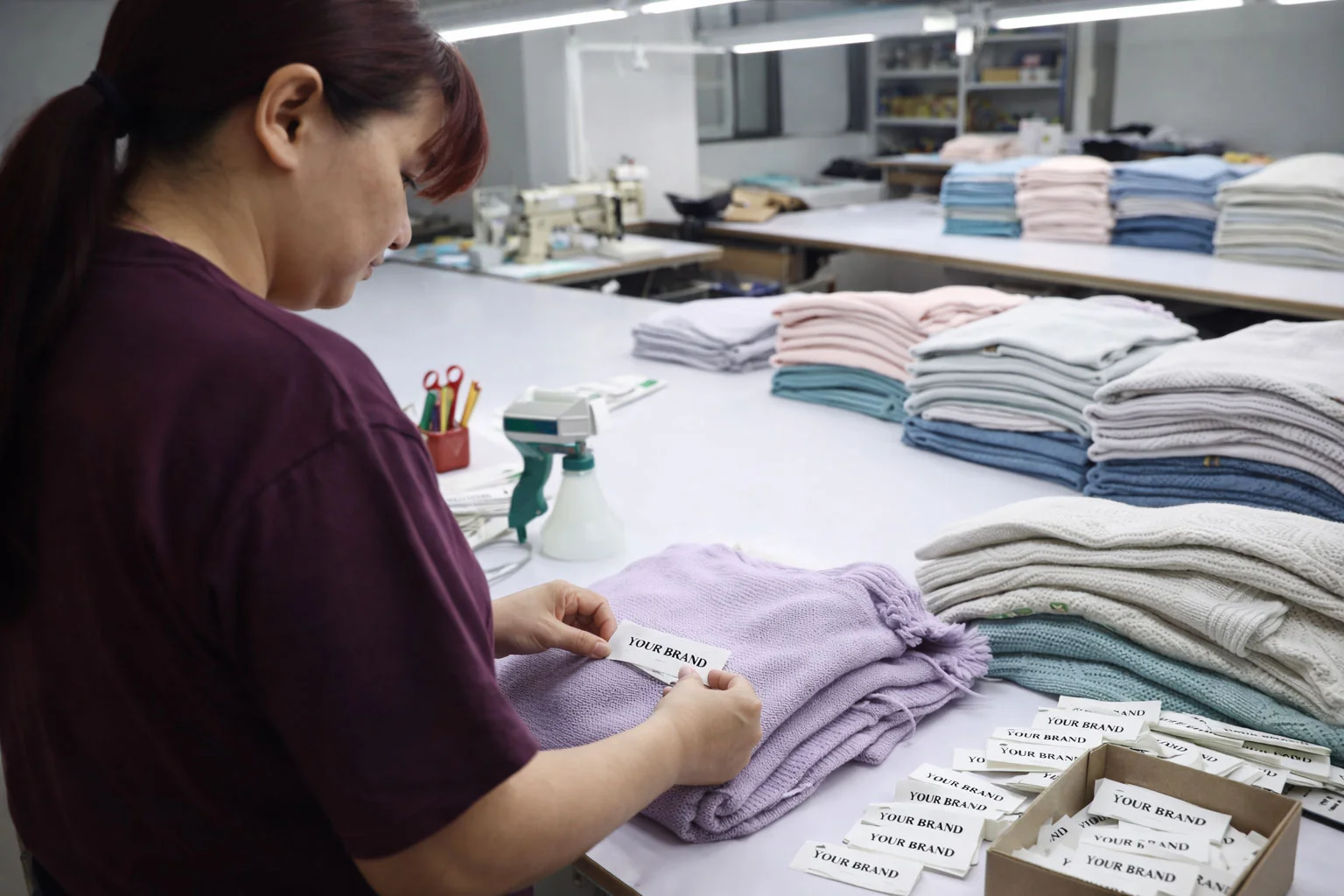
Summary: When choosing a knit cardigan factory, the core criterion is placket craftsmanship — placket flatness, button alignment precision, and post-wash shape retention are hard indicators of a factory's cardigan expertise.
Linknit has extensive craft experience in the knit cardigan category, with production experience ranging from classic styles to chunky knit cardigan jackets. Contact us to evaluate your designs or view cardigan samples.
For cardigan fit and design advice, see How to Choose a Women's Knitwear Factory and How to Choose a Men's Knitwear Supplier to understand different audience preferences for cardigans.