When a brand receives a factory quotation for the first time, the most confusing thing is: why can two factories quote a 30% difference for the same style?
The cheaper one makes you worry about quality; the expensive one makes you feel overcharged.
A quotation is not a guessing game — it is made up of five cost components. Understanding each one tells you where your money goes, where you can negotiate, and where you cannot.
Part 1: The Five Components of a Sweater Quotation
The manufacturing cost of a sweater is roughly divided into five parts, each with different proportions:
| Cost Item | Approx. Share | Description | Flexibility |
|---|---|---|---|
| Yarn Cost | 40%–55% | Raw material, the biggest item | High (depends on yarn quality) |
| Knitting Processing | 20%–30% | Machine hours + piece-rate labor | Medium |
| Finishing Cost | 10%–15% | Linking, washing, ironing, inspection | Medium |
| Packaging & Trims | 3%–5% | Hang tags, poly bags, cartons, care labels | Low |
| Overhead & Margin | 10%–15% | Factory's reasonable profit | Low |
Yarn cost sets the price floor; finishing quality sets the product ceiling. A suspiciously low quotation will always cut corners on yarn first.
Part 2: Yarn Cost — The Biggest Variable in a Quotation
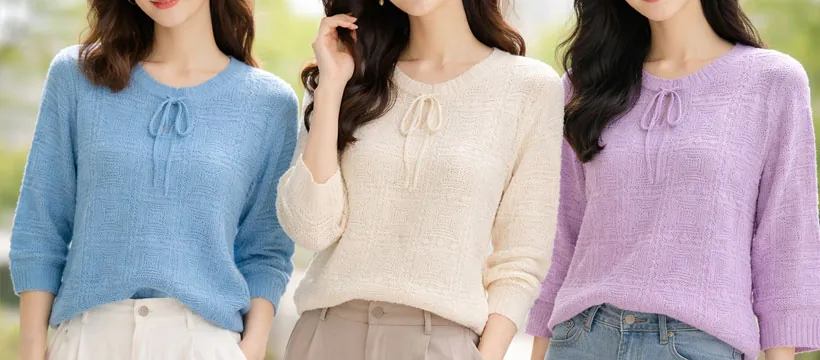
Yarn cost accounts for nearly half of the total quotation and is the biggest source of price differences between factories.
Cost Comparison: Same Sweater, Different Yarns
Using a standard women's plain-knit pullover (approx. 250g) as an example:
| Yarn Type | Raw Material Price (CNY/kg) | Yarn Cost Per Piece | Share of Quotation |
|---|---|---|---|
| Acrylic (Standard) | 30–50 | 7.5–12.5 CNY | 12%–20% |
| Cotton-Wool Blend 50:50 | 60–100 | 15–25 CNY | 22%–35% |
| Merino Wool | 100–180 | 25–45 CNY | 30%–50% |
| Pure Cashmere | 600–1,200 | 150–300 CNY | 55%–70% |
Rule #1 for price comparison: Confirm you are comparing the same yarn. Both labeled "wool" — standard wool (CNY 80/kg) and Merino (CNY 180/kg) can result in a doubled quotation.
Three Things to Confirm About Yarn When Inquiring
| Factor | Why It Matters |
|---|---|
| Composition | Pure wool or blend? What percentage of wool? (e.g., 70% wool + 30% acrylic) |
| Fineness | Fiber diameter in microns (18μm vs 21μm Merino is a grade apart) |
| Supplier | From a reputable yarn brand (e.g., UPW, Xinao)? |
Part 3: Knitting and Finishing — The Craft Costs That Determine Quality
What Affects Knitting Processing Costs?
| Factor | Cost Impact | Explanation |
|---|---|---|
| Gauge | ±20% | 7G is most affordable; 3G coarse and 14G fine needles are both more expensive |
| Complexity | +10%–50% | Plain knit is cheapest; jacquard + intarsia + cable mix is most expensive |
| Color Count | +5%–15%/color | Each additional color requires extra yarn change and machine tuning |
| Order Volume | -5%–20% | Larger volume reduces per-piece setup cost |
Finishing Costs Hide the Quality Divide
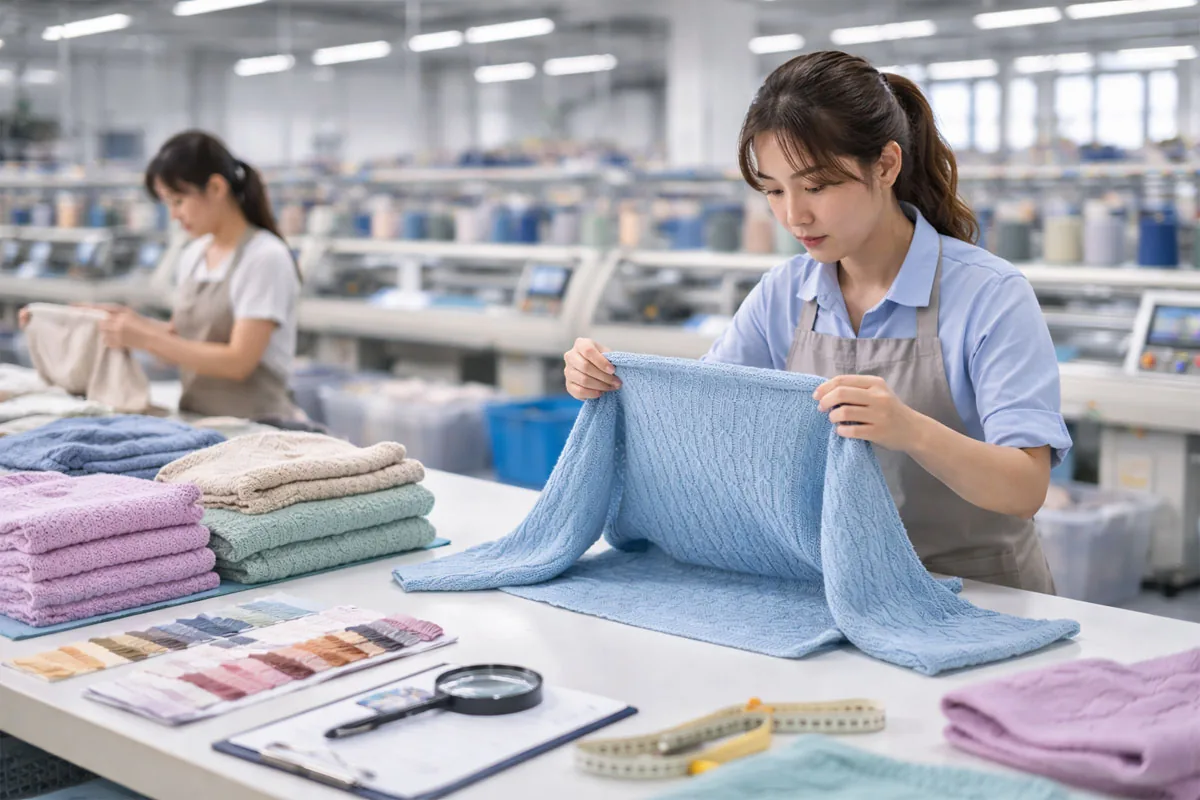
Finishing is the stage most often "skipped" — and the key to how a sweater feels when you receive it:
| Finishing Step | What Happens If Skipped | Impact on Quotation |
|---|---|---|
| Linking (Looping) | Uneven seams, excess yarn ends | ±0 (mandatory) |
| Washing/Fulling | Stiff hand feel, no softness | +3%–5% |
| Steam Ironing/Shaping | Loose fit, inaccurate sizing | +2%–3% |
| Piece-by-piece Inspection | Higher defect rate | +3%–5% |
| Anti-shrink Treatment (Superwash) | Possible shrinkage after washing | +5%–10% |
Negotiate on trims and packaging, not on finishing. Savings on finishing will eventually become losses from customer returns.
Part 4: Reading a Real Quotation — A Case Study
Suppose you have a basic women's crew-neck sweater and you receive three factory quotations:
| Quotation Item | Factory A | Factory B | Factory C |
|---|---|---|---|
| Quoted FOB Price | CNY 65/pc | CNY 88/pc | CNY 120/pc |
| Yarn | Acrylic (brand not specified) | Merino Wool (Xinao) | Merino Wool (UPW) |
| Gauge | 12G | 7G | 7G |
| Finishing | Basic wash | Wash + fulling + ironing | Wash + fulling + full inspection |
| Packaging | Standard poly bag | Private label hang tag + bag | Full private label + carton |
| MOQ | 500 pcs | 300 pcs | 200 pcs |
| Sample Fee | Free | CNY 500 (refundable on bulk order) | CNY 800 (refundable on bulk order) |
How to Judge?
Factory A (CNY 65): Acrylic with 12G fine gauge and simplified finishing. Suitable for low-cost volume-driven styles. If your target retail price is $9.9–$19.9, it may be acceptable — but be aware of pilling risks.
Factory B (CNY 88): A reasonable mid-range configuration — Merino wool, 7G standard gauge, complete finishing. Ideal for quality-focused styles, offering the best value-for-money balance.
Factory C (CNY 120): Premium yarn + lower MOQ + stricter quality control. Suitable for a brand's premium line, or for the first small-batch order where quality is paramount.
Key insight: Don't look at the total price alone. Break it down into yarn + processing + finishing, and compare each component. Only then will you know exactly where the savings are and where the extra cost goes.
Part 5: Three Hidden Issues to Watch for When Comparing Prices
1. Are the process descriptions consistent?
The same term "jacquard" — one factory may do single-sided jacquard (floats on the back) while another quotes double-sided jacquard (pattern on both sides). The cost difference is 20%–30%. Make sure the terminology on the quotation is clearly defined.
2. Does the yarn specification include the brand?
If the quotation says "Merino wool" without naming a brand, it could be CNY 150/kg or as low as CNY 80/kg for inferior yarn. A professional factory will specify the yarn brand and grade.
3. Does the finishing stage include inspection?
Some factories exclude piece-by-piece inspection from their quotation, relying on worker self-checking. Confirm the inspection process to avoid batch-level defects at delivery.
Part 6: How to Ask for a Genuine Cost Breakdown
Don't just ask "how much per piece." Ask this instead:
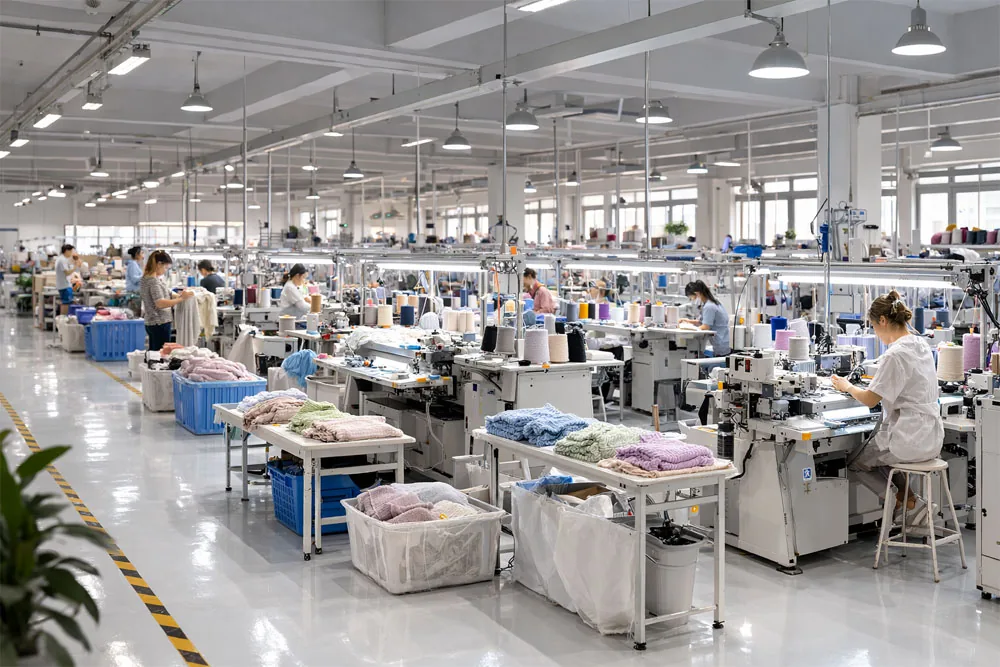
Can you break down the quotation: Which yarn supplier and specification are you using? What processes are included in knitting and finishing? Is inspection done by sampling or piece-by-piece? Does the above price include packaging (hang tags/poly bags/cartons)? If not, how much extra is the packaging?
If a factory answers each item in detail and explains everything clearly — it is a professional factory and the quote is trustworthy. If the answers are vague, along the lines of "that's just the price" — move on to the next supplier.
FAQ
Why do two factories using the same yarn still have a 20% price difference?
When the yarn cost is the same, the difference comes from: (1) Knitting efficiency (newer machines knit faster), (2) Completeness of finishing (washing/fulling/inspection), (3) Management overhead allocation (larger factories have higher overhead but spread it over more volume), (4) Profit margin. A 10%–15% gap is reasonable; anything over 20% demands a detailed comparison of the process specifications.
Is a lower quotation always better?
No. A quotation more than 20% below the industry average should raise red flags: possible yarn downgrading (using lower-grade yarn to replace high-grade yarn), skipping finishing steps (no fulling, no piece-by-piece inspection), or no invoicing. Always order samples to verify quality before placing a bulk order. For branded products, a medium-range quotation with stable quality is more cost-effective than the lowest price.
When is the sample fee usually paid?
The sample fee is typically paid before sampling begins. Most factories accept WeChat, Alipay, or bank transfer. Once the sample is approved and a bulk order is placed, most factories will deduct the sample fee from the bulk order payment.
If you have a specific quotation you're unsure about, feel free to contact us. We can help you analyze whether the quote is reasonable.