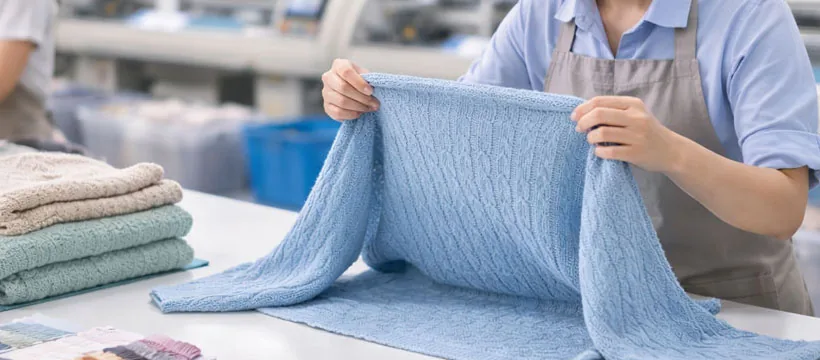
The sweater category in cross-border e-commerce is one of the fastest-growing segments in apparel.
But for cross-border sellers, the supply chain challenges of sweaters are much greater than for T-shirts or hoodies: fast-changing styles, multi-season adaptability, quality standards varying by destination country — if the supply chain isn't built properly, you can't deliver when a bestseller hits, and if quality fails, the return shipping costs more than the garment itself.
This article systematically covers how to build a cross-border e-commerce sweater supply chain, starting from the category's unique characteristics.
1. Supply Chain Characteristics of the Cross-Border Sweater Category
The cross-border sweater supply chain differs fundamentally from domestic brands:
| Dimension | Cross-Border E-Commerce | Domestic Brands |
|---|---|---|
| Product selection logic | Data-driven — test → hit → reorder | Design-driven — plan → develop → order |
| Number of styles | High — 50–100+ SKUs per season | Relatively low — 20–50 SKUs |
| Quantity per style | Small — 100–300 pieces for testing | Large — 500–2,000 pieces minimum |
| Reorder speed | Extremely fast — 7–15 day replenishment for hits | Standard — 15–25 days |
| Quality standards | Destination country regulatory compliance | Brand's own standards |
| Logistics | Cross-border sea/air freight + overseas warehouse | Primarily domestic logistics |
For cross-border sellers, the core of the sweater supply chain is: flexible and fast response, regulatory compliance, and cost control.
2. 5 Key Points for Cross-Border Sweater Factory Auditing
The biggest risk with remote cooperation is that you can't visit the factory in person. Here are several ways to assess a factory remotely:
2.1 Video Factory Tour: Check Equipment, Process, and Management
Ask the factory to film:
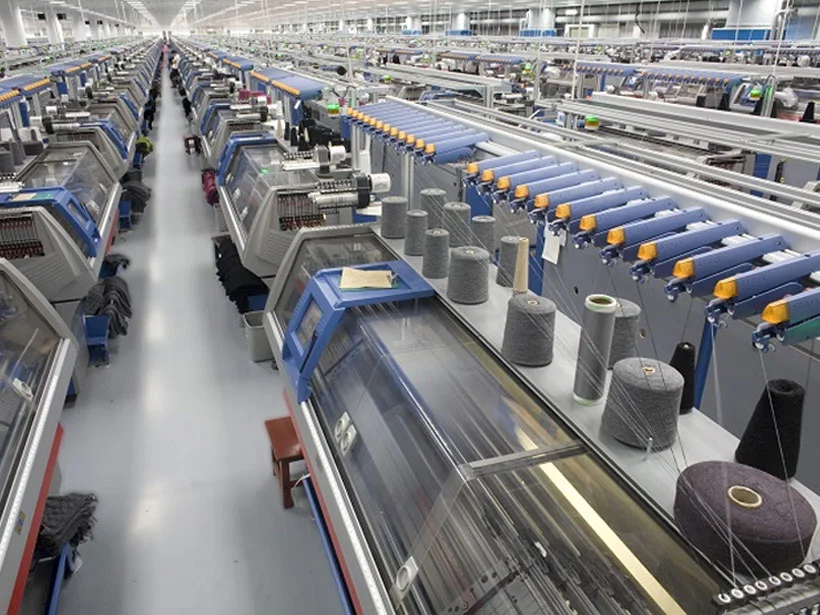
- Flat knitting workshop: machine count, brands, operating status
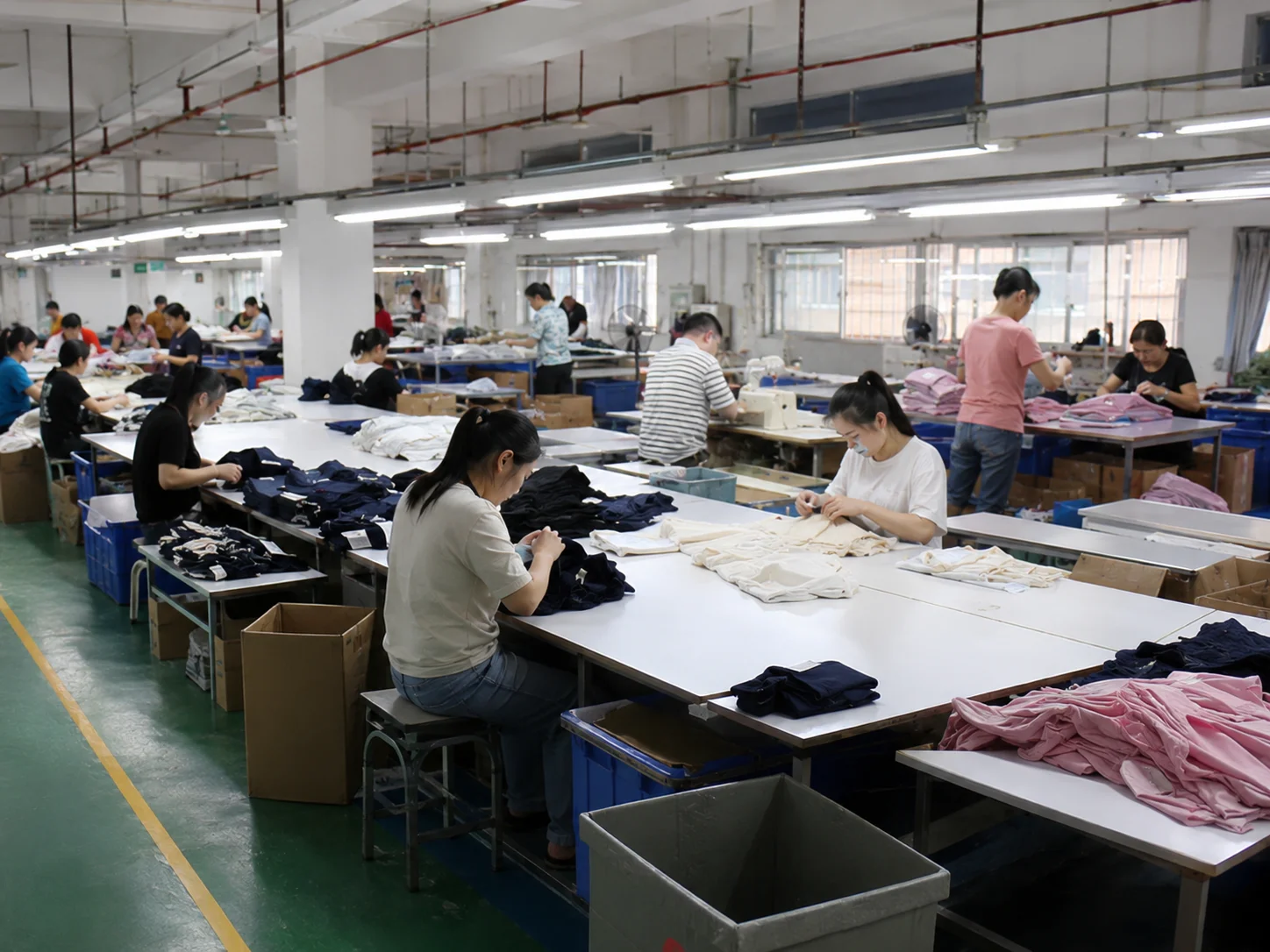
- Linking workshop: worker numbers and process flow
- Finishing workshop: washing, pressing, inspection equipment
- Finished goods warehouse: storage conditions
2.2 Regulatory Compliance: Hard Requirements for Export Destinations
| Market | Mandatory Certifications / Standards |
|---|---|
| United States | CPSIA (children's products), 16 CFR 1610 (flammability) |
| European Union | REACH, OEKO-TEX Standard 100 |
| United Kingdom | UK REACH, CE marking |
| Australia / Canada | Independent national standards |
For detailed export compliance information, see Sweater Export to EU/US: Quality Testing, Factory Auditing, and Certification Guide.
2.3 Sampling Capability: Determines the Test Cycle
The testing cycle for cross-border brands is critical:
- Standard sampling: 7–10 days
- Rush sampling: 3–5 days (expedited fee applies)
- The quality of the factory's samples directly reflects its technical and QC level
For standard sampling cycle information, see How Long Does Sweater Sampling Take? Sample Fees, Revisions, and Approval Process.
2.4 Reorder Capability: Don't Drop the Ball When a Bestseller Hits
What cross-border e-commerce fears most is the factory being unable to deliver when a bestseller hits. Ask the factory:
- How do you prioritize reorder scheduling?
- What is the maximum rush order volume you can handle?
- Do you guarantee lead times for existing customers during peak season (July–November)?
For reorder cycle information, see Who Benefits from a 300-Piece MOQ Sweater Factory.
2.5 Acceptance of Third-Party Inspection
Good Chinese sweater factories should accept third-party inspection (SGS/Intertek/BV):
- AQL levels: Critical 0%, Major ≤ 2.5%, Minor ≤ 4.0%
- Brands can also send their own QA for on-site monitoring
3. Cross-Border Sweater Testing Strategy
| Phase | Number of Styles | Quantity per Style | Cycle | Goal |
|---|---|---|---|---|
| Test 1.0 | 20–30 styles | 50–100 pieces | 10–15 days | Identify top 20% potential bestsellers |
| Small batch reorder | 3–5 styles | 200–500 pieces | 15–20 days | Validate market capacity |
| Scale-up reorder | 1–3 styles | 500–2,000 pieces | 18–25 days | Capture bestseller traffic |
During the cross-border sweater testing phase, 50–100 pieces per style is sufficient — the goal isn't to make money, it's to find the styles worth reordering.
4. Cross-Border E-Commerce Sweater Packaging and Logistics
4.1 Packaging Requirements
Cross-border logistics has stricter packaging requirements than domestic:
- Individual OPP or PE bag packaging (moisture and dirt protection)
- Each bag must be perforated (to prevent bursting during transit)
- Outer cartons must carry FBA labels or destination warehouse addresses
- Brand hang tags and care labels (must indicate fiber content and washing symbols per destination country regulations)
4.2 Logistics Nodes
A typical cross-border e-commerce sweater logistics chain:
Factory (Dalang, Dongguan) → Domestic warehouse → Port (Yantian, Shenzhen / Nansha, Guangzhou) → Sea freight (15–25 days to EU/US) → Destination port → Overseas warehouse / FBA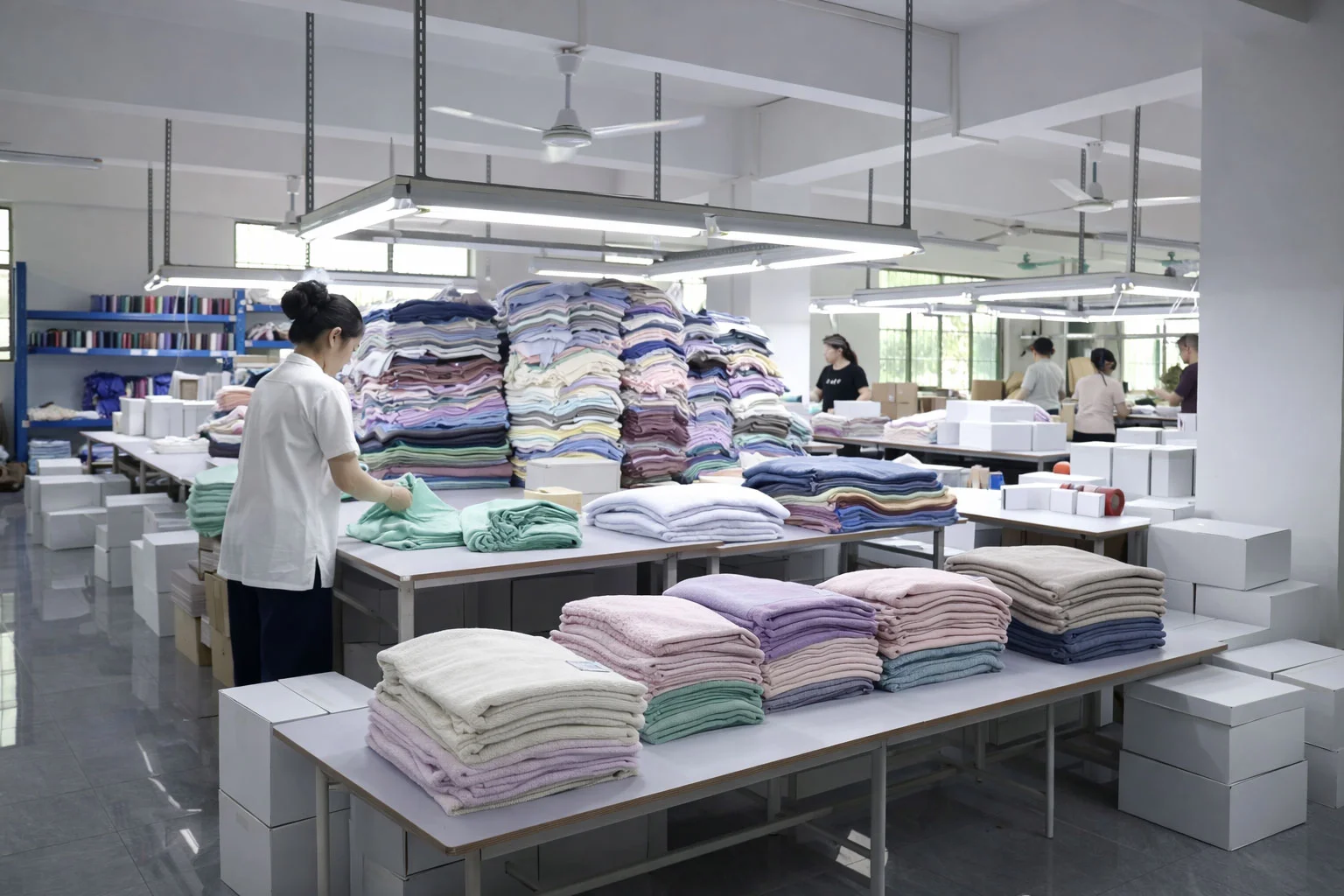
Summary: The core of a cross-border e-commerce sweater supply chain is a flexible, fast-response factory partnership. Video factory tours confirm equipment capability, compliance certifications ensure smooth export, small-batch testing validates the market, and reorder speed determines bestseller capture — these four links are all essential.
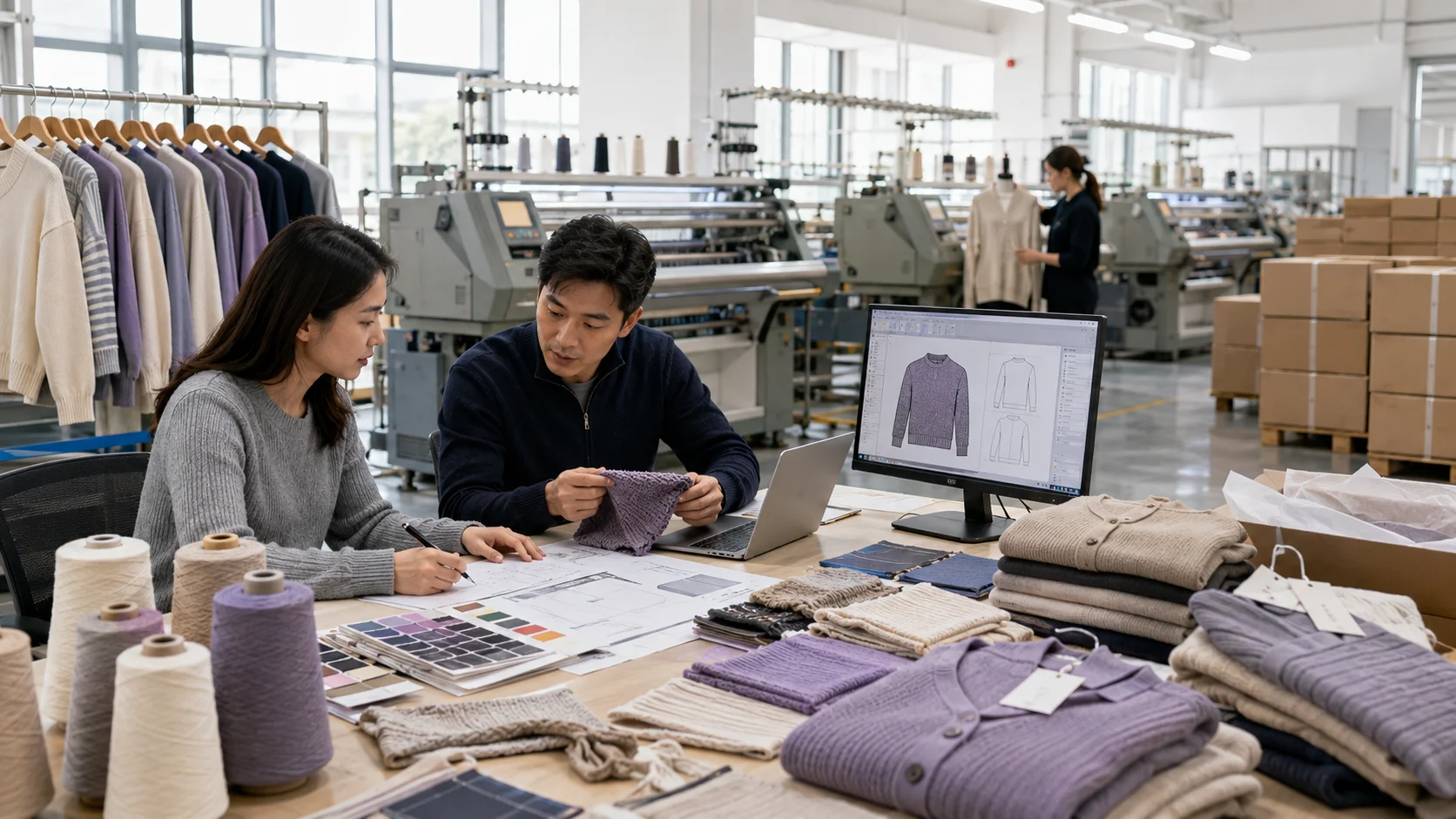
Linknit regularly serves cross-border e-commerce brands, is familiar with EU/US compliance requirements, accepts BSCI/Sedex audits and third-party inspection, and supports 200-piece minimum test orders. Contact us for a video factory tour or a quote.
For more on how foreign brands work with Chinese sweater factories, see How Foreign Brands Find Chinese Sweater Factories and Complete Knitwear OEM/ODM Service Guide.