Factory Tour
From yarn to packing — walk through our 2,000 m² workshop with real photos. We are a knitwear source factory in Dalang, Dongguan. Real machines, real workers, real workshop. Factory audit appointments are welcome.
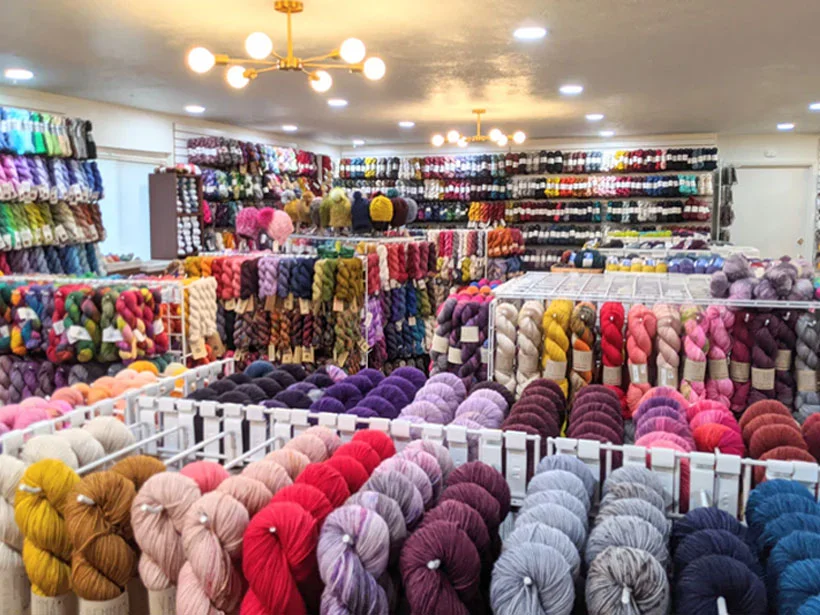
Yarn Warehouse · 300+ Yarn Specs Regularly Stocked
Quality control starts at the yarn stage. Our yarn warehouse carries over 300 specifications in regular stock, covering cashmere (14–16μm Inner Mongolia white cashmere), Merino wool (19.5μm worsted), pure new wool, combed cotton, cotton/acrylic blends, fancy yarns, and more.
All yarns are stored in a humidity-controlled environment. Incoming lots are spot-checked for composition, and batch numbers are verified before release. For confirmed bulk orders, yarn batches remain consistent with the PP sample to avoid inter-batch color variation.
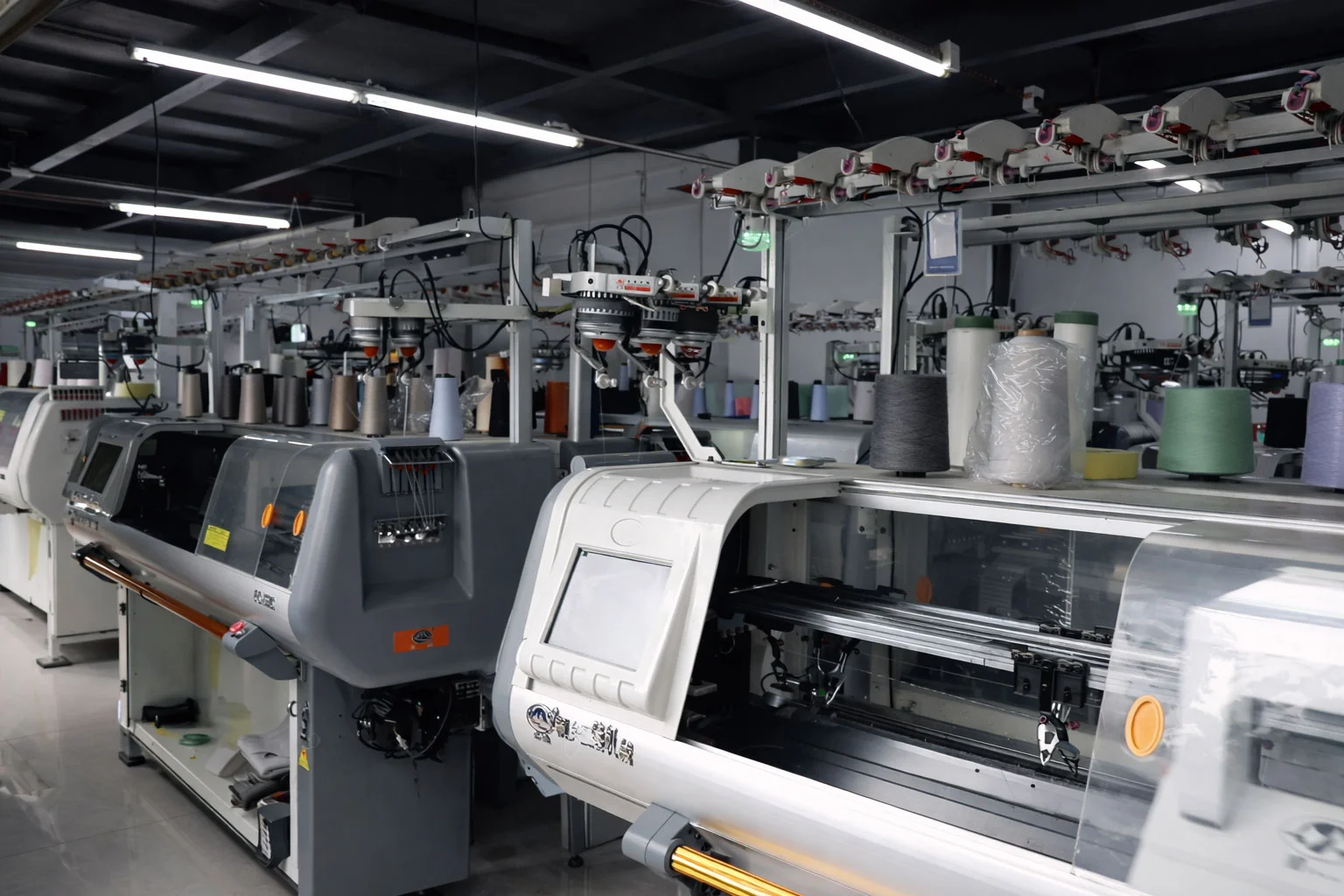
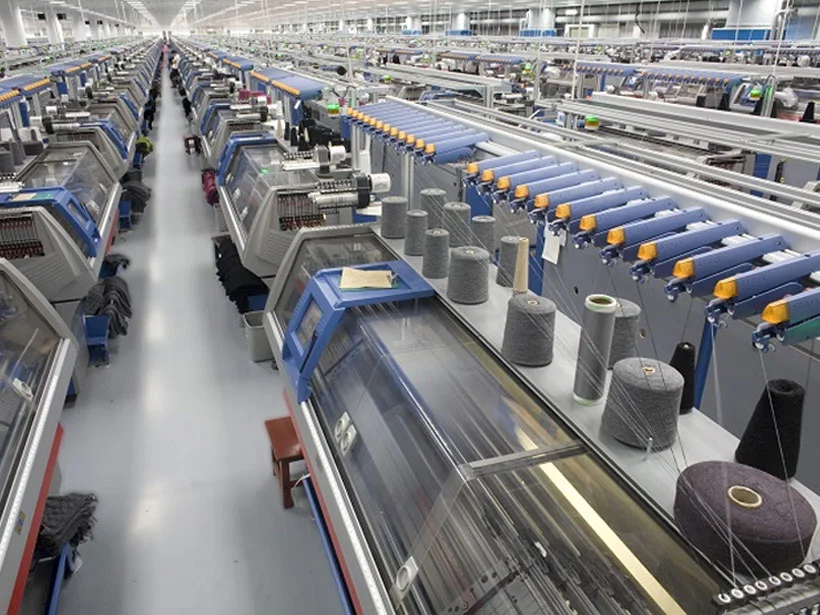
Flat Knitting Workshop · 3G–16G Full Gauge Coverage
From coarse gauge (3G outerwear) to ultra-fine gauge (16G lightweight garments), our computerized flat knitting machine cluster covers the full gauge range. The machines knit automatically based on programmed patterns — the pattern master inputs the parameters, and the machines execute production.
Each knitting machine is assigned a production batch number. Finished panels are sorted and stacked separately, then transferred in sequence to the next process.
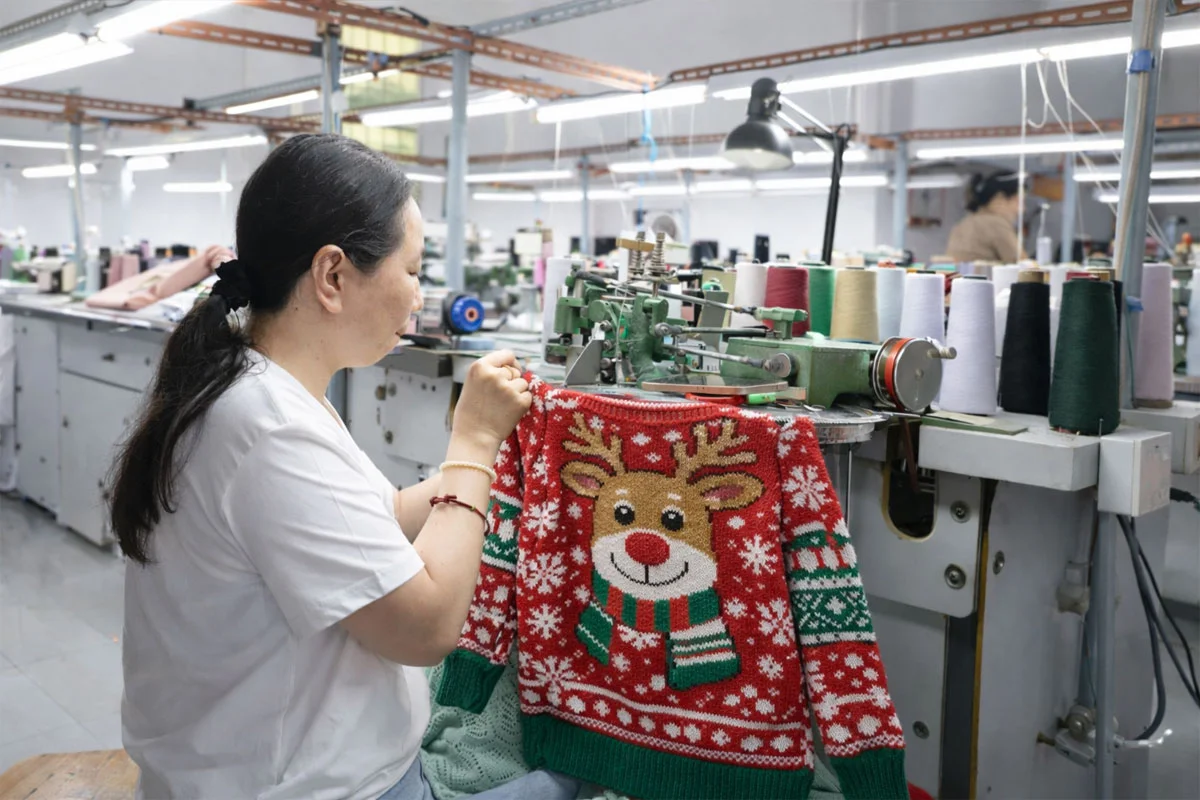
Linking & Sewing · The Critical Transition from Panels to Garments
After knitting, the individual panels (front, back, sleeves, collar, etc.) go through the linking (linking machine) process for assembly. The linking operator's skill directly affects the garment's appearance and durability — smooth seams, concealed connections, and even stitch spacing are the baseline requirements.
After linking, workers perform a self-inspection, marking any seams or loose threads that need rework, before transferring the garment to the finishing area.
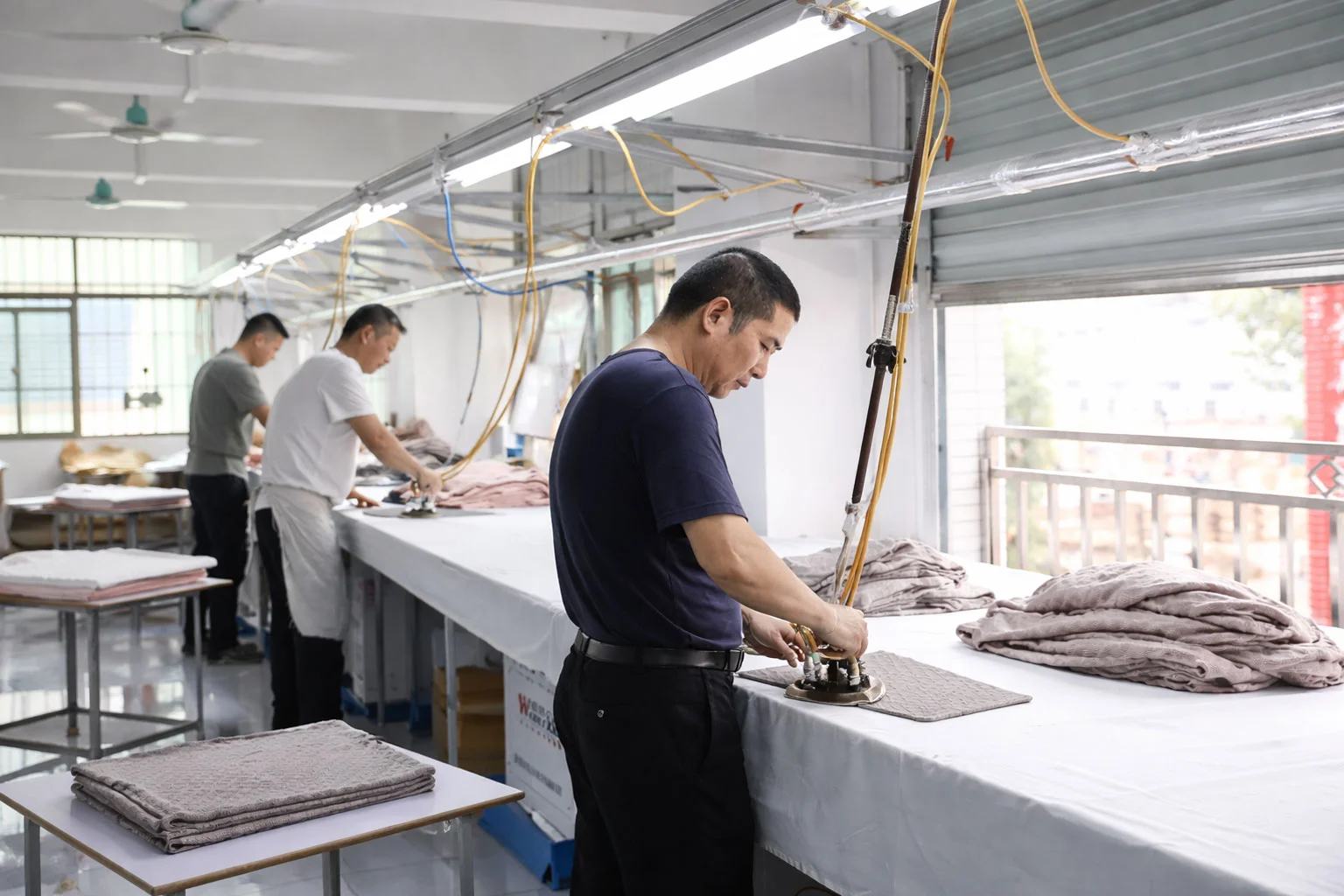
Washing & Finishing · The Most Important Pre-Shaping Step
Assembled garments go through a washing/fulling process — washed in professional equipment according to programmed parameters to achieve the target shrinkage, hand feel, and density. This step directly determines the final hand feel and dimensional stability of the garment.
Different yarns (wool vs. cashmere vs. cotton) require different washing parameters — temperature, time, and detergent dosage must be precisely controlled. Cashmere washing is especially delicate: under-washing leaves a harsh hand feel, while over-washing causes excessive shrinkage.
Steam Shaping · The Final Form of the Garment
After washing, the garments are steam-pressed for shaping — each piece is placed on a shaping form, treated with high-pressure steam to set the fibers to the pattern dimensions, then air-dried or tumble-dried. Once shaped, the garment's size, shape, and hand feel are essentially finalized — subsequent tag sewing and packing will not alter them.
This is where many small factories fall short. Ill-fitting forms, uneven steam temperature, or insufficient steaming time all lead to deviations between the finished garment and the PP sample.
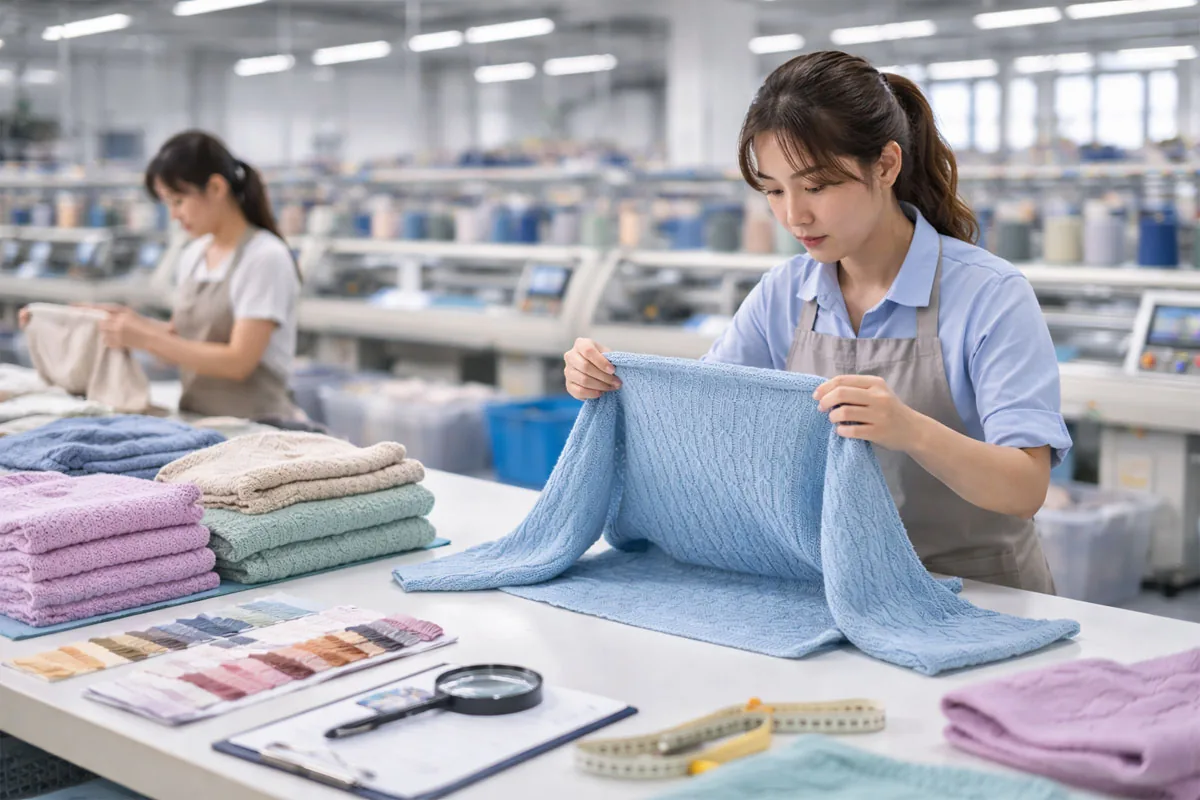
Quality Inspection · 100% Inspection + AQL Spot-Check
Our quality control operates at three levels:
1. In-Process Inspection — Knitted panels are checked for density, pattern accuracy, and defects. Machine parameters are adjusted promptly when issues are found.
2. 100% Finished Garment Inspection — Every finished garment is inspected after shaping: size measurements, appearance defects, loose thread trimming, and button/zipper security. Each inspector uses standard measuring tools and checks every piece per the procedure.
3. AQL Spot-Check & Third-Party Testing — Random sampling per AQL standards. Periodic third-party testing for shrinkage rate, color fastness, and fiber composition analysis.
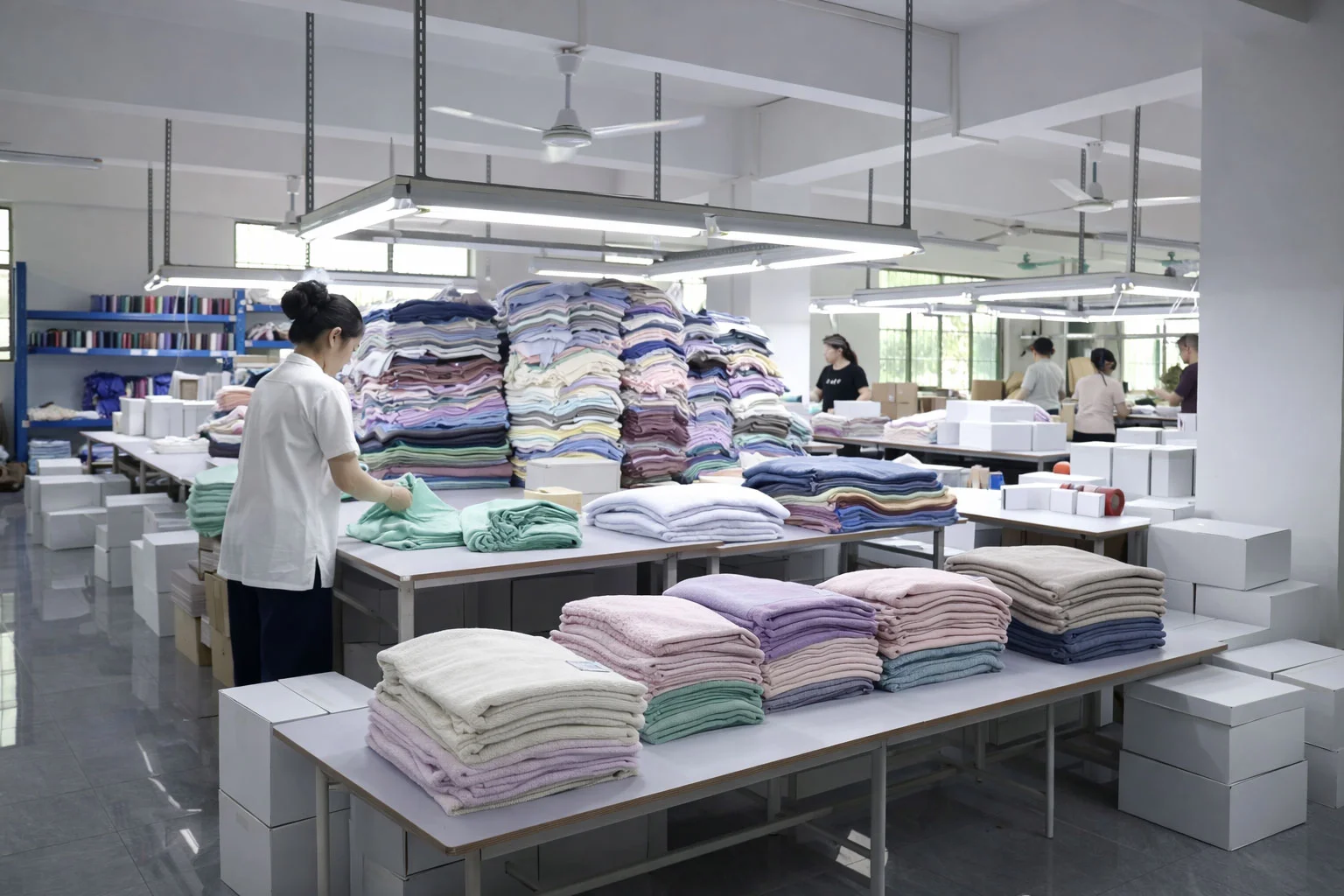
Packing & Export · From Labels to Export Documents, One Stop
After passing QC, garments enter the packing line. Per customer requirements:
Sew care labels/woven labels (composition + care instructions + brand ID) → attach hang tags/price tags → bagging (single-piece / set / hanger pack) → carton packing (export cartons + shipping marks + packing list).
Export orders are prepared simultaneously: commercial invoice, packing list, certificate of origin (CO/Form A/Form F), and test reports. We work with multiple freight forwarders and can handle FOB, CIF, DDP, and other trade terms.
All photos are real shots from the Linknit factory in Dalang, Dongguan.
See also: Factory Capabilities · About Us · Schedule a Factory Audit
Want to See Our Production Line in Person?
Schedule a factory audit — come to Dalang, Dongguan and see our workshop, equipment, and team. Let's discuss your custom knitwear needs.