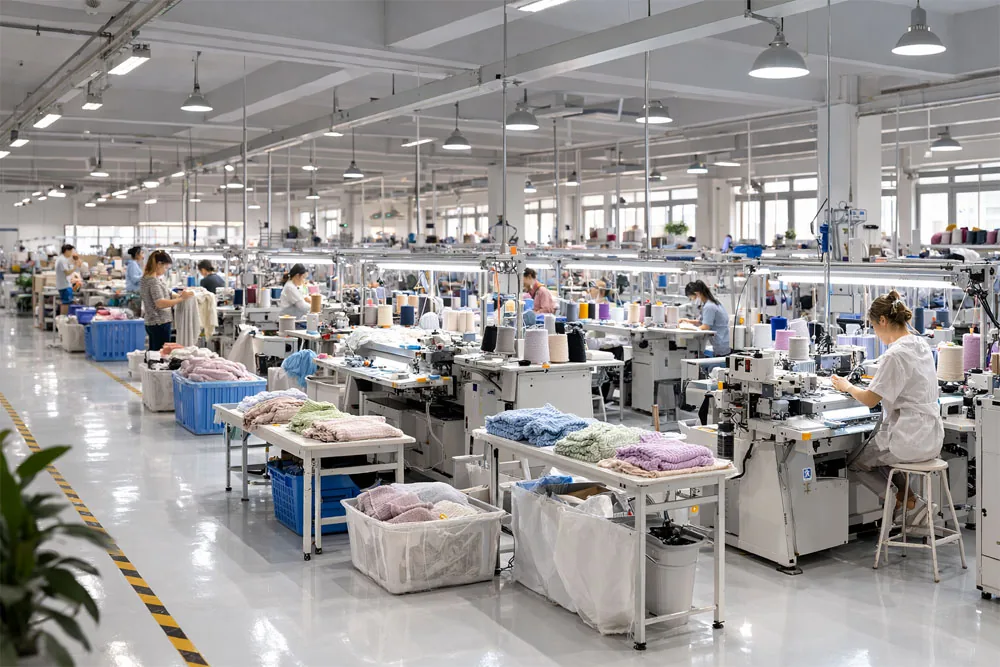
A key difference between knitwear and ordinary T-shirts or woven garments is the ability to create rich patterns through yarn structure, knitting techniques, and post-processing. From premium cashmere sweaters to trendy fashion knits, each technique directly affects the garment's appearance, cost, hand feel, and market positioning.
Common knitwear decoration techniques include: jacquard, intarsia, embroidery, printing, appliqué, cable, and lace. While all add visual interest, their production methods and suitable applications are quite different.
1. Jacquard — Pattern Formed During Knitting
Jacquard patterns are created directly during the computerized flat knitting process by controlling which colored yarns participate in the knit at each stitch. Common applications include Nordic snowflake sweaters, diamond patterns, logo lettering, animal motifs, and all-over geometric designs.
The biggest advantage of jacquard is that the pattern is fused into the fabric itself — durable, wash-resistant, and won't peel or fade. However, because multiple yarns are knitted simultaneously, more colors and complex patterns increase production difficulty.
| Feature | Jacquard |
|---|---|
| Method | Formed during knitting |
| Pattern style | All-over, small repeating motifs |
| Hand feel | Consistent with the fabric |
| Durability | High — won't detach |
| Cost | Medium to high |
| Best for | Nordic style, fall/winter, premium knitwear |
2. Intarsia — Ideal for Large Color Blocks
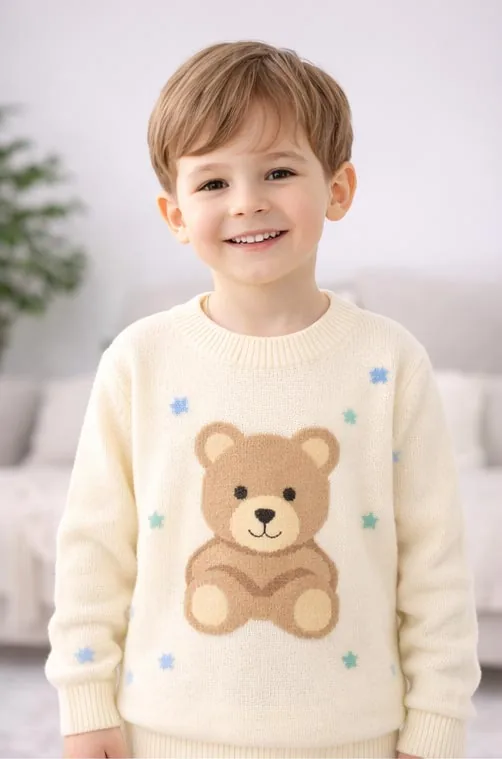
Intarsia is also completed during knitting, but differs from jacquard. While jacquard switches yarns within the same area, intarsia assigns each color its own section — a large heart on the chest, a cartoon animal, or an oversized logo lettering.
Intarsia typically has no long floats on the reverse side, so the sweater doesn't become overly thick from patterning. It's better suited for large-scale artistic designs.
| Feature | Jacquard | Intarsia |
|---|---|---|
| Pattern type | Small, repeating | Large color blocks |
| Reverse side | May have floats | Mostly float-free |
| Fabric thickness | Can add bulk | Relatively thin |
| Production difficulty | Moderate | Higher |
| Best style | Nordic, classic | Trendy, designer |
3. Embroidery — Added Surface Detail After Knitting
Embroidery is applied after the sweater is completed, using computerized embroidery machines or hand stitching to attach patterns to the fabric surface. Common types include flat embroidery, 3D embroidery, terry stitch, and sequin embroidery.
Embroidery can achieve very fine, detailed patterns and is one of the most common techniques for branded garments. However, knit fabrics have stretch — large embroidery areas can cause stiffening, puckering, or deformation during wear.
| Feature | Embroidery |
|---|---|
| Method | Post-knit processing |
| Pattern detail | Very high |
| 3D effect | Strong |
| Best area | Small to medium |
| Cost | Varies by stitch count |
| Common use | Logo, floral, childrenswear |
4. Printing — Color Applied to the Surface
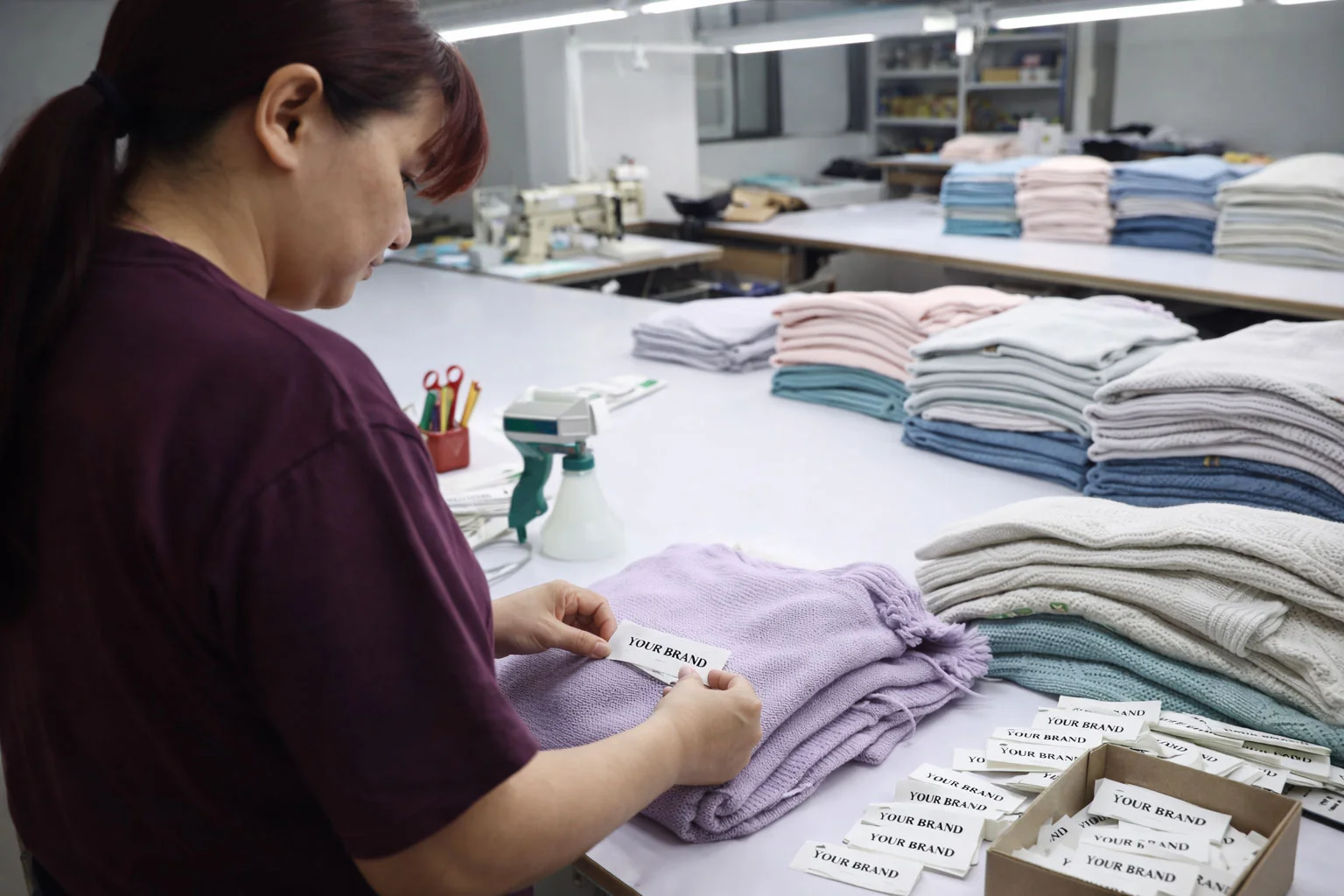
Printing applies color to the knitwear surface. Common methods include screen printing, digital printing, heat transfer, puff printing, flocking, and foil stamping.
The biggest advantage of printing is rich color reproduction, including photographic and gradient effects, with flexible small-batch development. However, knit fabrics are not flat like T-shirts — coarse-gauge and wool sweaters are not suitable for all print types.
| Feature | Printing |
|---|---|
| Method | Surface color application |
| Color range | Widest — unlimited colors |
| Hand feel | Varies by technique |
| Best for | Fine knits, fashion pieces |
5. Appliqué — Material Layering for 3D Effect
Appliqué attaches external materials (felt, woven fabric, leather, denim, PVC, patches) onto the sweater surface. Common looks include collegiate lettering, baseball-style logos, animal shapes, and patchwork effects.
The main advantage of appliqué is strong dimensional effect and the ability to combine different textures. A gray sweater with denim lettering and terry-stitch edging creates a distinctly trendy look.
| Feature | Appliqué |
|---|---|
| Method | External material attachment |
| 3D effect | Very strong |
| Material variety | Wide |
| Cost | Medium |
| Style | Collegiate, streetwear, trendy |
6. Structural Texture — Pattern Without Color
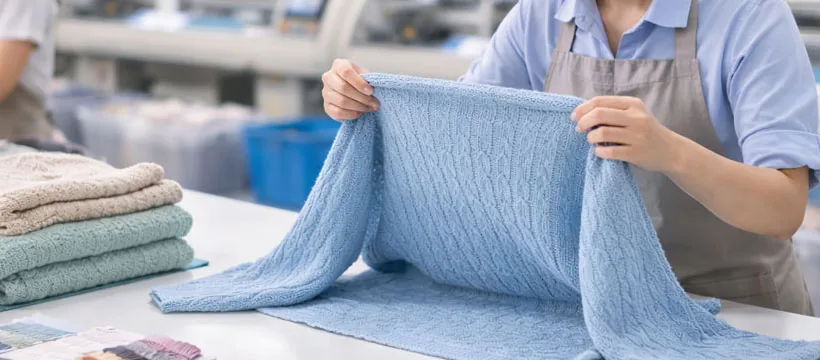
Beyond adding color or decoration, sweaters can create patterns by changing the knit structure itself.
Cable Knit uses crossed stitches to form braids, ropes, and diamond patterns — a premium look often used in wool and cashmere sweaters.
Pointelle / Lace Knit creates small eyelet holes, mesh patterns, and lace effects through knit structure variations — ideal for women's spring/summer lightweight knits.
| Technique | Characteristic | Best Style |
|---|---|---|
| Cable | 3D textured | Premium, classic |
| Lace/Pointelle | Light, breathable | Women's, spring/summer |
| Rib | Elastic texture | Fitted styles |
7. Comprehensive Comparison
| Technique | Pattern Source | 3D Effect | Cost | Best For |
|---|---|---|---|---|
| Jacquard | Knit-in structure | Medium | Mid-high | Nordic, classic sweaters |
| Intarsia | Color-block knitting | Medium | Higher | Large logos, big patterns |
| Embroidery | Surface addition | High | Mid-high | Brand logos |
| Printing | Surface ink | Varies | Low-mid | Fashion graphics |
| Appliqué | Material layering | Very high | Medium | Collegiate, streetwear |
| Cable | Structure change | High | Medium | Premium wool |
| Lace | Structure change | Medium | Medium | Women's spring/summer |
8. Choosing the Right Technique
In production, high-quality knitwear often combines multiple techniques — intarsia + embroidery + appliqué for children's cartoon effects, jacquard + embroidered logo for brand fall/winter collections, or cable + sequin embroidery for premium women's wear.
Choosing the right technique determines not just how a sweater looks, but also its cost, production difficulty, durability, and market positioning. For knitwear manufacturers, technique selection is one of the most critical decisions in the design and development stage.
If you are developing knitwear products, contact us. Linknit was founded in 2000 with a 2,000 sqm facility. Sampling takes 7-10 days, bulk production 20-26 days, MOQ ~300 pieces. We specialize in multi-technique knitwear production.